Portuguese
  Spanish


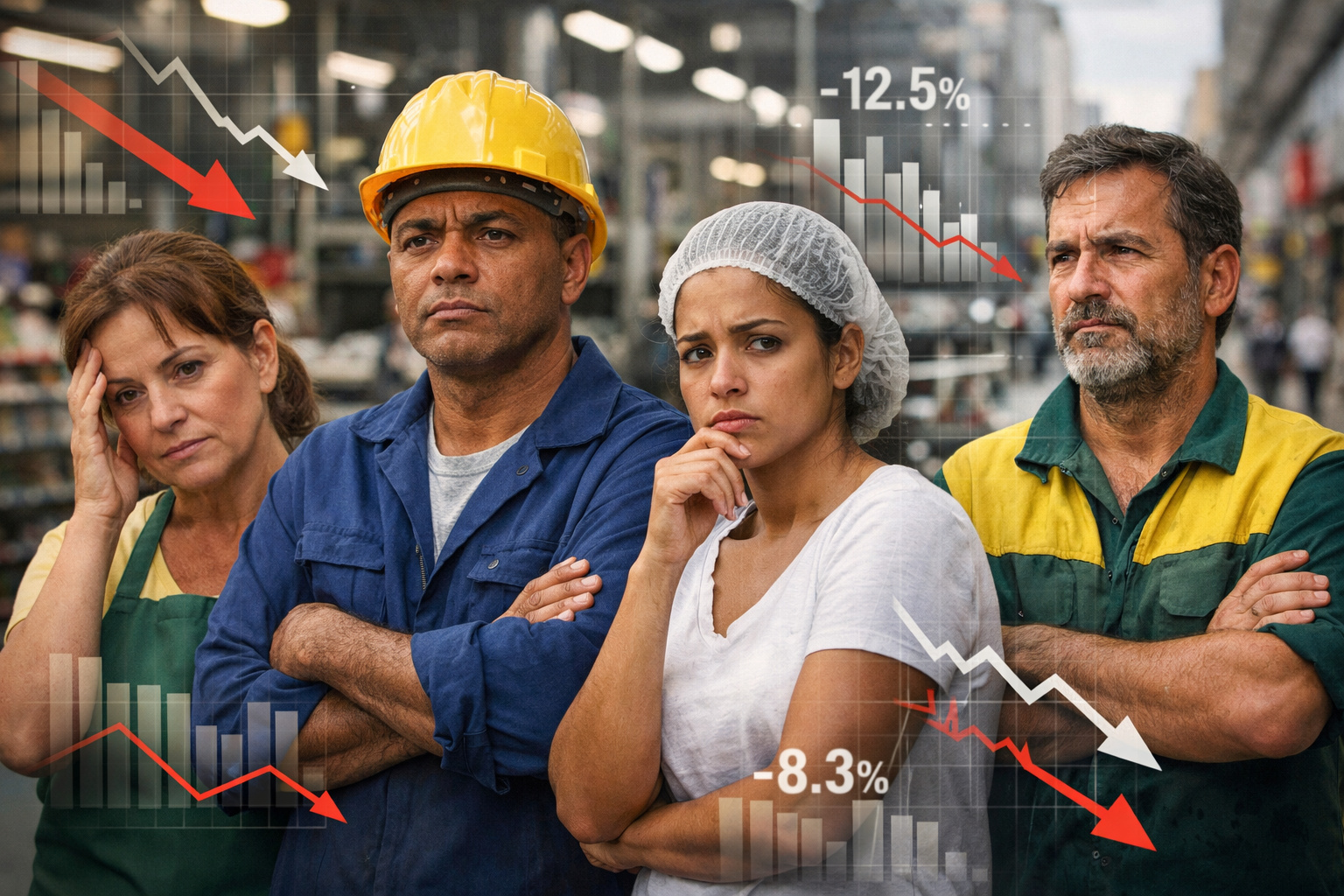


The Government-Backed Proposal Reignites The Debate Over Productivity, Operational Costs, And The Risk Of Direct Price Pass-Through To The Final Consumer
The possible approval of the end of the 6×1 scale, widely supported by the federal government and placed as a priority on this year’s legislative calendar, has provoked a strong reaction among experts, representatives of the productive sector, and business entities. The main concern revolves around the direct economic impacts of the measure, especially regarding productivity, production costs, prices to consumers, and the competitiveness of the national industry.
According to analysts consulted by CNN Brasil, the change in the work schedule represents a structural challenge for the Brazilian labor market. This is because, by reducing the weekly workload without a proportional increase in efficiency, companies would face an immediate imbalance between hours worked, production, and operational costs. Consequently, the chain effect tends to affect not only the productive sector but also the pocket of the final consumer.
The information was released by CNN Brasil, in a report authored by journalist Danilo Molito, who gathered assessments from economists, industry representatives, and business leaders regarding the impacts of the proposal on strategic sectors of the economy.
-
Payment Infrastructure Expert Highlights Diverse Realities in Latin American E-commerce, with Card Usage Ranging from 89% in Ecuador to 50% in Colombia

-
Brazil’s Central Bank’s Tight Monetary Policy Risks Stifling Both Production and Demand Amid High Inflation and Fiscal Imbalance

-
Over a Century After the Sinking, US Takes Legal Action to Stop Auction of Over 100 Titanic Artifacts

-
Chinese Rail Port in Inner Mongolia Surpasses 25,000 China-Europe Trains, Connecting 75 Routes Across Over 10 Countries, Showcasing Central Corridor as a Strong Land Alternative to Long Sea Routes



Reduction of Work Hours Pressures Productivity Already Considered Low in Brazil
One of the central points of the debate is the productivity of the Brazilian worker, which already shows significantly inferior performance compared to developed economies. According to specialists interviewed, the average productivity of a worker in Brazil is only 23% of the productivity of a worker in the United States.
In this context, the reduction of the weekly work hours tends to intensify an existing structural problem. As analysts highlight, producing the same amount of goods and services with fewer hours worked requires significant gains in technology, professional qualification, and productive organization—factors that, according to them, have not yet been fully addressed in the country.
Furthermore, sectors such as commerce and services would be the most affected. For these segments, maintaining current operations with a reduced work schedule is considered extremely difficult. One of the specialists consulted classified the change as a true “tectonic shift” for these areas of the economy, precisely due to the difficulty of immediate adaptation without a loss of efficiency.
According to this assessment, the reduction of work hours directly pressures productivity indicators, with concrete effects on economic growth, job generation, and the sustainability of companies in the medium and long term.
Study Points to A Decline of Up to 16% in Economic Activity Without Efficiency Gains


The potential impacts of the measure were also measured by sector studies. A survey conducted by the Industries of Minas Gerais indicates that the reduction of working hours to 40 hours per week, without real productivity gains, could lead to a reduction of up to 16% in economic activity in the productive sectors.
This scenario creates a clear chain effect: fewer hours worked result in lower production; lower production reduces the supply of goods; lower supply tends to increase prices; and rising prices directly pressure inflation and the cost of living for the population. In parallel, there is the risk of replacing domestic production with imported products, which would be especially detrimental to Brazilian industry.
Representatives of the industrial sector state that the increase in costs cannot be absorbed by companies. Thus, the pass-through to the consumer becomes practically inevitable if the proposal advances without structural adjustments.
A concrete example comes from the footwear sector. The executive director of the Sindicato das Indústrias de Calçados de Nova Serrana explained that, currently, a shoe that costs R$ 50 to produce reaches stores for about R$ 125. With the reduction of the work hours, production costs would rise by approximately 12%, increasing the industrial cost to R$ 56.
However, the final impact on the price is amplified. According to the sector, each R$ 1 increase in cost represents about R$ 4 in the selling price. Thus, the same shoe would cost around R$ 149 to the final consumer, becoming less competitive both in the domestic market and in exports.
Lack of Debate About Education and Technology Increases Economic Risks
Another point highlighted by specialists is the absence of in-depth discussion regarding the structural conditions of the Brazilian labor market. According to them, productivity is directly related to education, use of technology, and quality of the workforce—factors that still exhibit significant deficiencies in the country.
Without concrete advances in these areas, a reduction in working hours could jeopardize economic growth, reduce the competitiveness of the national industry, and hinder Brazil’s integration into the international market. Currently, around 15% of everything Brazil produces is exported, and rising costs would make these products even less attractive abroad.
Specialists warn that the proposal, although well-intentioned, ignores the mathematical and operational reality of companies. For them, discussing the reduction of working hours without considering the practical impacts on labor-intensive sectors could lead to effects deemed “devastating”, especially for commerce and services.
Despite the criticisms, the topic remains a priority for the government and could advance even in an election year. Analysts assess that, from a political standpoint, approval is entirely possible. However, from an economic perspective, the risks remain high if the measure does not come accompanied by structural reforms capable of increasing the country’s productivity.
Source: CNN Brasil