Portuguese
  Spanish


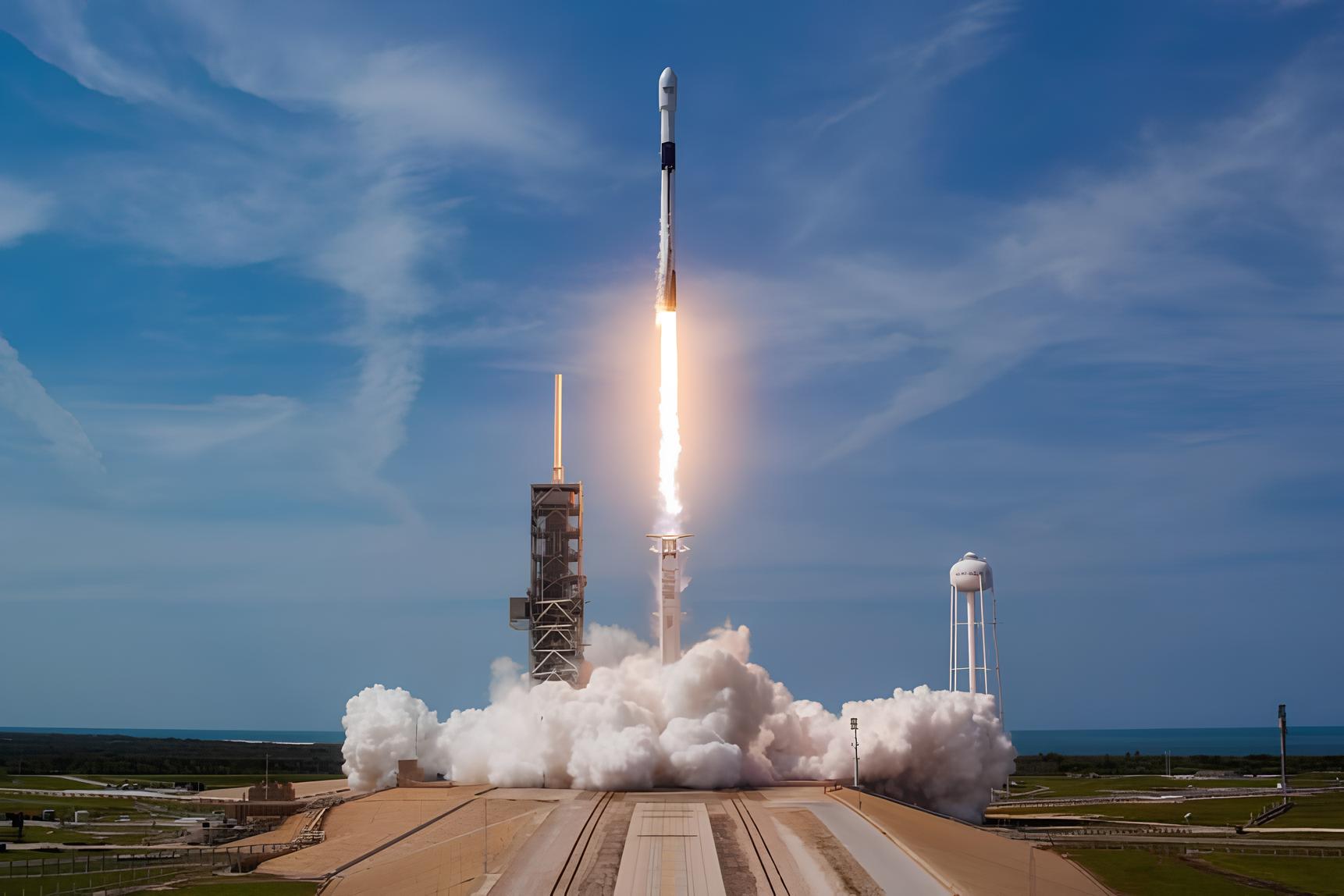

New Record for SpaceX, Billionaire Elon Musk’s Company, with Launch on Saturday. SpaceX’s Falcon 9 Rocket Flies for the 26th Time, Breaking Previously Established Records.
On Saturday, February 15, 2025, SpaceX reached a new milestone with the Falcon 9 rocket during the launch of 21 Starlink satellites. The liftoff occurred at 3:14 AM (Brasilia time), from the Cape Canaveral Space Force Station in Florida. This launch marked the 26th successful mission of the specific first stage of the Falcon 9, establishing a new rocket reuse record for Elon Musk’s company. The first stage successfully returned and landed on the drone ship “A Shortfall of Gravitas” in the Atlantic Ocean, approximately eight minutes after liftoff. This achievement highlights the efficiency and reliability of SpaceX’s reuse systems, contributing to cost reduction and sustainability in space missions.
Learn What the New Record for SpaceX with the Falcon 9 Was
On Saturday, the first stage of SpaceX’s Falcon 9 rocket flew for the 26th time, breaking the reuse record established by Elon Musk’s company in January. Of this total of missions, 15 were aimed at launching Starlink satellites.
With the addition of 21 more satellites to its network, Starlink now has nearly 7,000 operational devices in orbit, increasingly advancing to deliver large-scale connectivity and high-quality internet access in diverse conditions around the world.
-
Ultrasound Body Scanner Promises Full-Body Mapping in 60 Seconds Without Radiation or Contrast, Enhanced by AI for a Faster, More Comfortable Preventive Exam Experience

-
In the US, researchers attached iPhones to a $25 grabber, turning 22 homes into a database to teach robots to open drawers and handle objects like humans.

-
IBM Breaks 1-Nanometer Barrier with 0.7 nm Chip Featuring Nearly 100 Billion Transistors and 3D Architecture, Promising AI Revolution

-
Apple Raises MacBook and iPad Prices as Memory Costs Surge by Up to 98%, Losing Edge Over Rivals and Highlighting AI Boom’s Impact on Consumers


About eight minutes after the launch of SpaceX’s Falcon 9 rocket, the booster landed on a pre-prepared platform in the Atlantic Ocean. According to Elon Musk’s company in a post on social media X, the rocket, which established SpaceX’s new record, landed on the ShortFall of Gravitas platform, completing the 26th launch and recovery of an orbital-class rocket.
Meanwhile, the upper stage continued on its journey and released the 21 Starlink satellites into low Earth orbit about 65 minutes after launch. Of these, 13 are equipped to transmit connections to cell phones without the need for ground antennas.
Understand How the SpaceX Falcon 9 Rocket Works
The rocket, which set a new record for SpaceX, is a two-stage model designed for the safe and economical transport of payloads to space. After launch, the rocket’s first stage is responsible for boosting the payload to a predetermined altitude before separating and returning to Earth.
Elon Musk’s rocket stands 70 meters tall, with a diameter of 3.7 m, weighing up to 549,054 kg and capable of carrying a payload of up to 22,800 kg.
It is important to highlight that this is the world’s first reusable orbital-class rocket. Reuse allows Elon Musk’s company to refurbish the most expensive parts of the rocket, which, in turn, reduces the cost of access to space.
The rocket’s engine is a Merlin, developed by SpaceX itself for use in its launch vehicles. These use rocket-grade kerosene and liquid oxygen as rocket propellants in a gas generator cycle.
The Impact of SpaceX’s Record
With this record from SpaceX’s Falcon 9 rocket, the Starlink mega-constellation continues to expand, aiming to facilitate global high-speed internet access, especially in hard-to-reach areas.
With the arrival of these 21 new satellites, the constellation approaches its main goal of covering the entire planet. Of this total, 13 have the capability for direct communication with Earth, further expanding the connectivity network.
The project by Elon Musk’s company is one of the most ambitious initiatives, and its success could significantly transform the telecommunications market, providing a viable alternative to traditional internet infrastructures.
The company plans to continue launching satellites regularly, and in addition, SpaceX is exploring new technologies and partnerships to further improve the efficiency and accessibility of its services.