Portuguese
  Spanish


Discover how the professionalization of recycling with international support has generated income, job formalization, and positive environmental impact in Brazil.
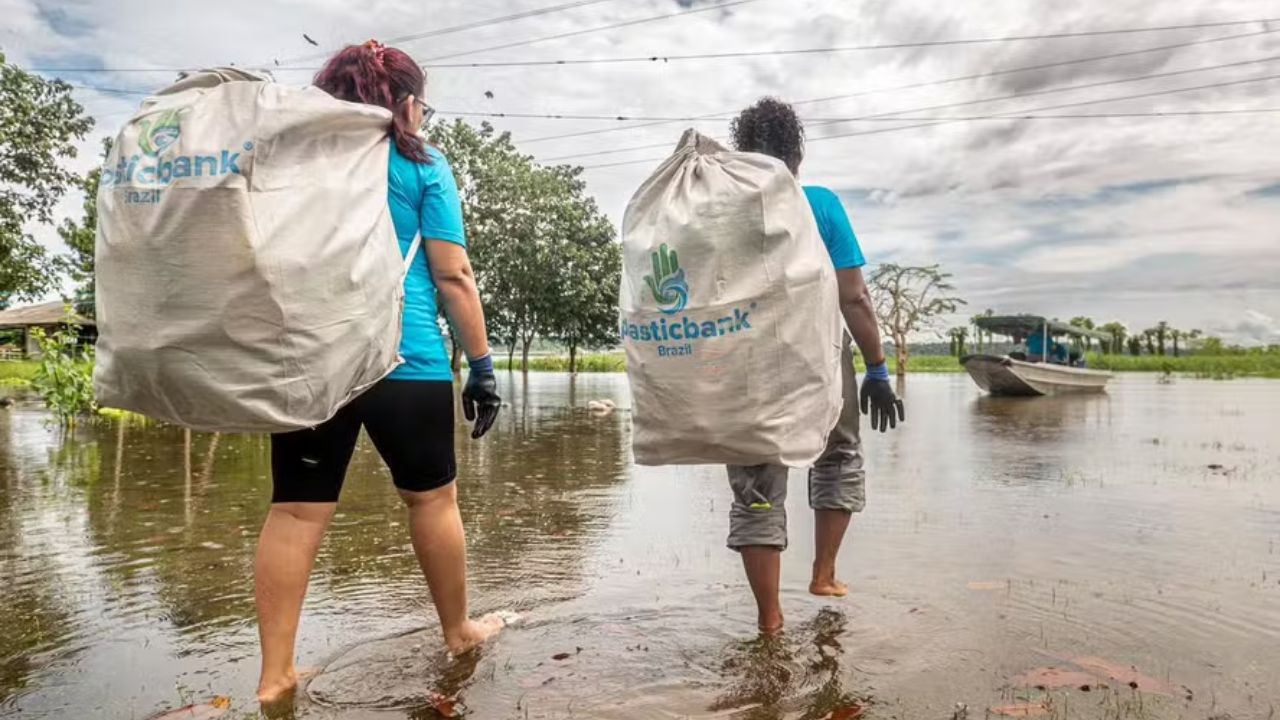
With the strategic support of Plastic Bank, a Canadian company that combats poverty through recycling, thousands of Brazilian workers are turning an old subsistence activity into highly profitable and structured businesses.
Since the bonus model per kilo of collected plastic was implemented in the country, more than 4,700 waste pickers have been benefited, reaching revenue levels of up to R$ 20,000 monthly in professionalized operations.
This new dynamic, which combines efficient management, waste traceability, and social valorization, has allowed cooperatives and small entrepreneurs in the sector to invest in infrastructure, formalize teams, and consolidate recycling as an essential pillar of the circular economy in Brazil.
-
At 10 years old, the American Michael Kearney entered the Guinness World Records by graduating from college, accumulated four degrees before turning 18, and today dedicates his life to helping other gifted individuals.

-
A 550-million-year-old fossil found in Australia reveals a worm-like creature that already chose the right side to move and may be the first “right-handed” animal known to science.

-
Will it come off the drawing board? Conceived in the 1990s, a floating city for 80,000 people will have a football stadium, hospital, schools, hotels, and parks, but it still hasn’t come off the drawing board.

-
Mbappé makes a decision and refuses to advertise bets: “they have destroyed many people,” says the French star, who witnessed gambling addiction devastate families and entire neighborhoods where he grew up, becoming a global example of responsibility.




Expressive results and expansion goals
The impacts of this initiative are quantified in robust numbers. So far, the program has allocated R$ 3.5 million in bonuses and benefited more than 4,700 waste pickers. From an environmental perspective, the reach is even more impressive: 8.7 million kilos of plastic have been removed from the environment — equivalent to 435 million bottles.
With the success achieved, the strategy for the coming months includes expanding operations, including opening new collection points in Rio de Janeiro and Manaus, with a strategic focus on protecting the Amazon region.
The effectiveness of the model is proven by the stories of those at the forefront of the operation. In Curitiba, Jaminson José Arcanjo, 39, coordinates the Eco União Recicla Cooperative. Leaving metallurgy behind, he now leads a team of 25 people processing 80 tons monthly.
Thanks to focused management, the cooperative managed to build a cafeteria, expand the warehouse, and invest in equipment like presses and conveyors. For Jaminson, the difference is clear: “When work is recognized and there is management, it stops being survival and becomes opportunity. The cooperative is proof of that.” The average income there reaches R$ 2,800 monthly.
In Serra, Espírito Santo, Gabriel Siqueira, 27, is another example of entrepreneurship. After leaving his job at a gas station, Gabriel started his activities alone. Today, his company processes 100 tons of materials per month, employs 12 workers with signed contracts, and reaches a revenue of R$ 20,000 monthly.
He highlights the lessons learned:
- The importance of team formalization;
- The challenge of learning about cost management and leadership;
- The need to see work as a source of dignity and financial ascension.
The recycling sector in Brazil
For Gabriel, the waste pickers are the “heart of the circular economy,” as they are responsible for transforming what many call waste into raw material. However, he warns: more public policies and institutional recognition are still needed for this work to reach its full potential in the country.
Even so, the results achieved demonstrate that, with the necessary support, recycling can be the great engine of a more just socio-environmental development.
The sector, which previously operated in invisibility, now occupies warehouses that function as small businesses, driving the economy and proving that sustainability, when well managed, is a viable and transformative business.
Source: Um Só Planeta