






 Portuguese
  Spanish


In Patrocínio Paulista, Bruno and Michele Florêncio transformed an abandoned site into a diversified rural business. Rancho BF started with horses, coffee, and family structure, but integrated poultry farming entered just over a year ago, already operating with two climate-controlled aviaries and aiming for expansion to 10 sheds.
Poultry farming entered Rancho BF as a new front in rural business, not as an isolated bet. In Patrocínio Paulista, in the interior of São Paulo, Bruno and Michele Florêncio went from an abandoned site to a property with coffee, horses, management structure, two climate-controlled aviaries, and the capacity to house 295,000 birds in a system integrated with Seara.
The journey was presented on the program Interligados Vida no Campo, on YouTube, and shows how the farm began to occupy a strategic space within the property. The couple’s plan now is to expand the operation to 10 sheds, a goal that reinforces the scale change of Rancho BF and places poultry farming at the center of the family’s growth project.
Before the farm, the abandoned site became a family rural project
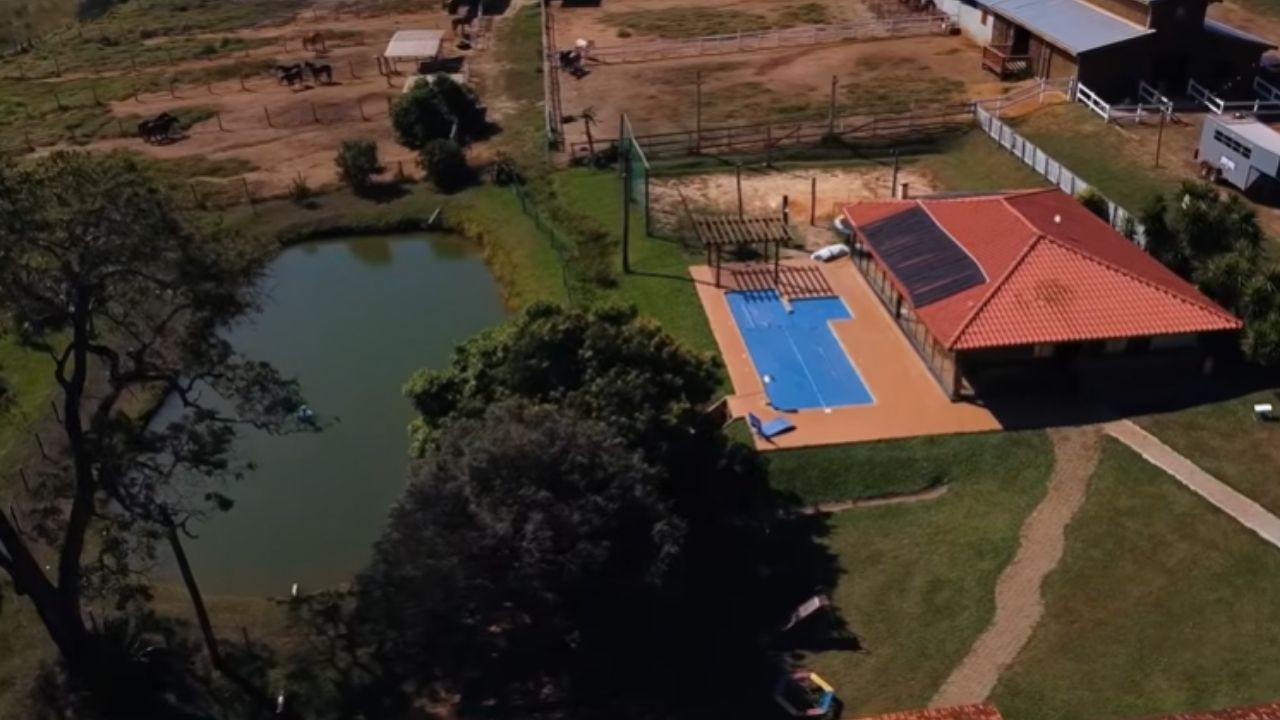
When Bruno and Michele Florêncio bought the site, the property was still far from its current structure. Michele said that the place was an abandoned area and needed to be reorganized gradually, with house renovation, barn construction, improvements in the horse area, and advancement of coffee production.
-
U.S. Giants Oppose New 25% Tariff on Brazilian Imports, Warn of Impact on Electric Cars, Coffee, and Orange Products

-
Off-Duty Firefighter Rescues Three Children Trapped Under Overturned Boat in Brazilian Lake

-
Workers near the Vatican uncover lead pipe revealing Emperor Caligula’s name and site of his opulent garden from nearly 2,000 years ago

-
Workers renovating a playground in northern England uncover 176 World War II bombs buried underground; training artifacts still contained explosives.



Bruno’s connection with the countryside came from before. He reported that he grew up having contact with farms, especially during times spent with family in the Sacramento region, in Minas Gerais. Even though he graduated in civil engineering and worked in construction, he maintained an interest in rural life, horse competitions, and building his own structure in the countryside.
This path led Rancho BF to be born with a diversified base. Before poultry farming, the property already gathered horses, coffee, a competition track, and a family-related routine. The farm came later, as a new stage of the business, adding scale production to an area that was already being recovered.
The difference is that poultry farming brought shorter cycles and a different predictability from traditional agriculture. Michele highlighted that while some rural activities depend on annual periods, batch farming allows organizing revenue entries at shorter intervals, which helps in property planning.
The idea of poultry farming was born within the farm’s own routine
The entry into the sector didn’t happen by chance. Bruno mentioned that an employee who worked with him, and already had connections with farms, presented the possibility of investing in integrated poultry farming. From this contact, the couple began to better understand the model and the demand for producers interested in the activity.
After the recommendation, Bruno sought information, visited structures, and received an evaluation from an expansionist linked to Seara, mentioned in the program as Paulo or Paulinho. According to the account, the property was analyzed and considered viable for investment.
The project was initially approved for four aviaries, but the pandemic interrupted the plans. Faced with the uncertainty of that period, the family decided to step back and wait for a safer moment to move forward.
The resumption came in 2024, when Bruno again contacted Seara to see if there was still a possibility to proceed with the project. After a new approval process, the couple decided to invest. The first accommodation took place in June 2025, marking the official start of the farm’s operation at Rancho BF.
Two climate-controlled aviaries put Rancho BF on another scale
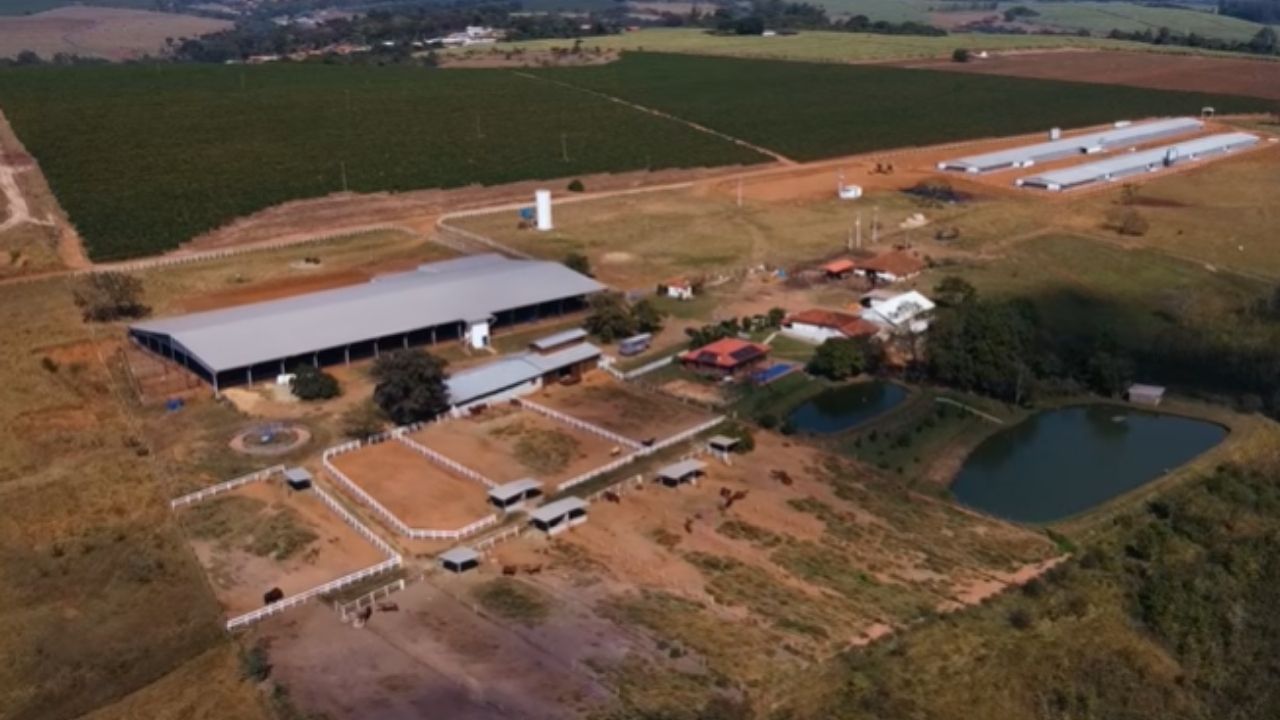
Today, the poultry farming structure at Rancho BF includes two complete climate-controlled aviaries. According to Bruno, the barns operate with negative pressure, gas heating, and masonry construction with curtains, a combination aimed at controlling the internal environment and the performance of the batches.
The capacity is impressive: 295,000 birds housed in two barns. The number shows how integrated production can achieve a high scale even within a relatively limited area of the property, provided there is technical structure, proper management, and constant monitoring.
In practice, poultry farms do not function only as rural constructions. They depend on temperature control, properly functioning equipment, quick response to failures, technical guidance, and a monitoring routine. Bruno stated that each batch brings a different learning experience because factors like lineage, gender, and climate can change from one cycle to another.
This point reinforces the business nature of modern poultry farming. The farm requires investment, technology, operational discipline, and management. It’s not enough to build the sheds; it’s necessary to monitor the development of the batches, organize materials, maintain equipment, and make quick decisions daily.
Michele took over the technical and financial management of the farm


In the division of tasks, Michele began to command the poultry routine. She oversees the financial part, management, batch growth, material purchases, and farm controls. The work is done together with Nil, the farmer responsible for daily operations.
Bruno is more connected to the structure, heavy maintenance, and support when any equipment has a problem. As a civil engineer and construction entrepreneur, he also participated directly in the construction of the sheds and began to see opportunities to work in building poultry farms for other producers.
This division shows that the farm became an organized operation within Rancho BF. The activity requires financial management, productive control, technical monitoring, maintenance, and a prepared team. Therefore, poultry farming entered the property as a structured rural business, not just another side activity.
Michele reported that, at first, the world of poultry farms was new to the family. The choice of equipment, understanding the structure, and adapting to management required research, conversations with partners, and technical support from Seara.
Integrated model helped in the first year, but did not eliminate challenges
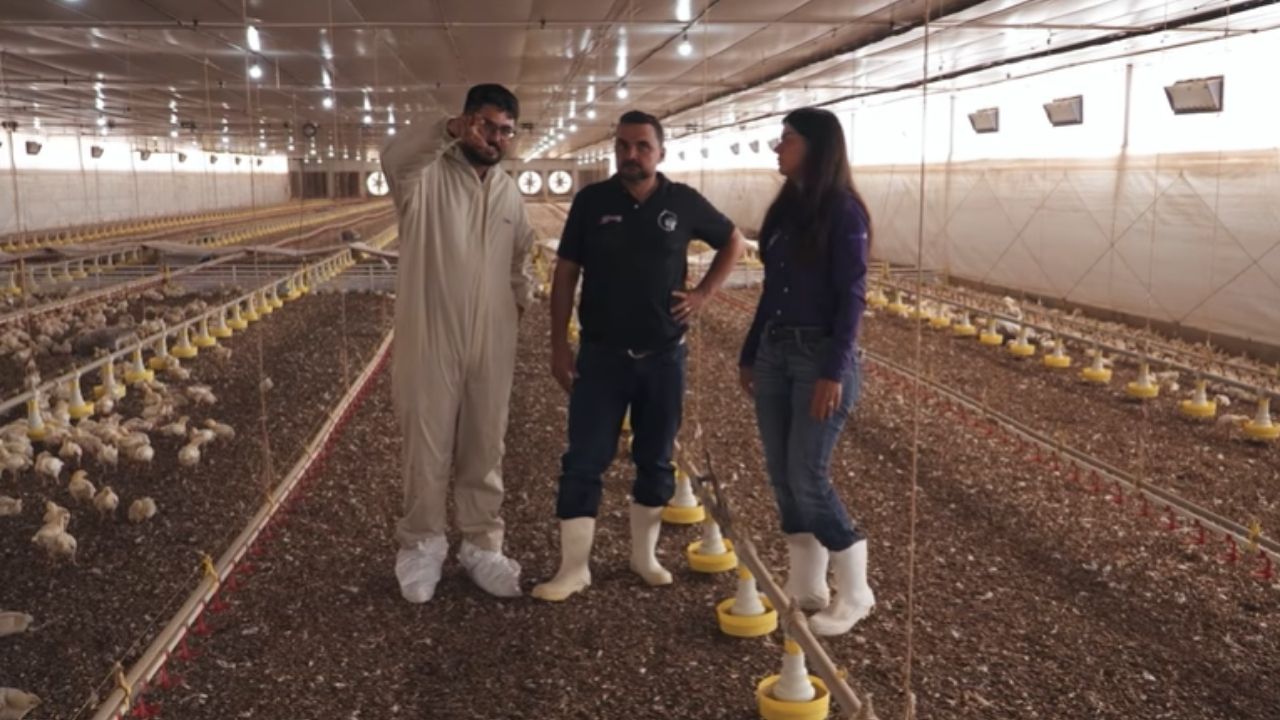
During the program, the couple highlighted the technical support received from Seara. Michele stated that the technicians monitored the operation and that the family closely followed the guidelines, especially in the beginning, when they were still learning the practical routine of the batches.
Bruno acknowledged that the investment was high and that there was apprehension as it was a new activity for the family. At the same time, he said he likes challenges and saw in poultry farming a dynamic business, with potential for return and intense production in a smaller area.
In the integrated model, the partner company offers technical support and helps the producer through the initial learning phase. Even so, performance depends on local execution. Management, discipline, maintenance, team, and attention to detail remain decisive for the outcome of each cycle.
The first year was described as a phase of constant learning. Bruno stated that there is always something new to adjust, even after several accommodations. For him, each batch functions as a new experience within the operation.
Goal of 10 barns shows that the farm has become a future plan
Although the operation is still recent, Michele has already set a clear goal: to reach 10 aviaries. She explained that she likes to work with a defined number because it helps guide planning and gives direction to the growth of the rural business.
Bruno also stated that he now considers himself a poultry farmer and intends to expand production to become a major producer. For him, the activity stands out for allowing scale in a smaller area, with yield per hectare or per square meter difficult to compare with some traditional farm activities.
The goal of 10 barns shows that poultry farming has ceased to be a test and has become a strategic axis of Rancho BF. The farm now shares space with coffee, horses, agriculture, and the engineering company within a broader expansion project.
The plan is also linked to family succession. Bruno and Michele stated that they hope to leave a productive structure capable of showing future generations the origin of food, the value of rural work, and the possibilities for growth within the field.
Small area, high scale, and intense management explain the advancement
The experience of Rancho BF shows an important characteristic of modern poultry farming: the possibility of producing on a large scale within a relatively small area, provided there is technology, environment, management, and technical monitoring.
In the case of the Florêncio family, the farm was incorporated after a trajectory that began with the recovery of an abandoned property, went through horses, coffee, and the family structure, and reached integrated production as a new growth front.
The story also shows that rural expansion does not always start with large ready-made structures. At Rancho BF, growth occurred in stages, with investment, learning, and reorganization of the property over time.
Now, with two climate-controlled aviaries in operation and a goal of reaching 10 barns, the couple places poultry farming at the center of a long-term strategy. What started on an abandoned farm in the interior of São Paulo has transformed into a diversified, technical rural business with ambitions of scale.
Do you think integrated poultry farming can be a real alternative for small and medium-sized properties, or does the initial investment still limit the entry of new producers? Leave your opinion in the comments and tell us if the goal of 10 barns seems bold or necessary to grow in the sector.




