Portuguese
  Spanish


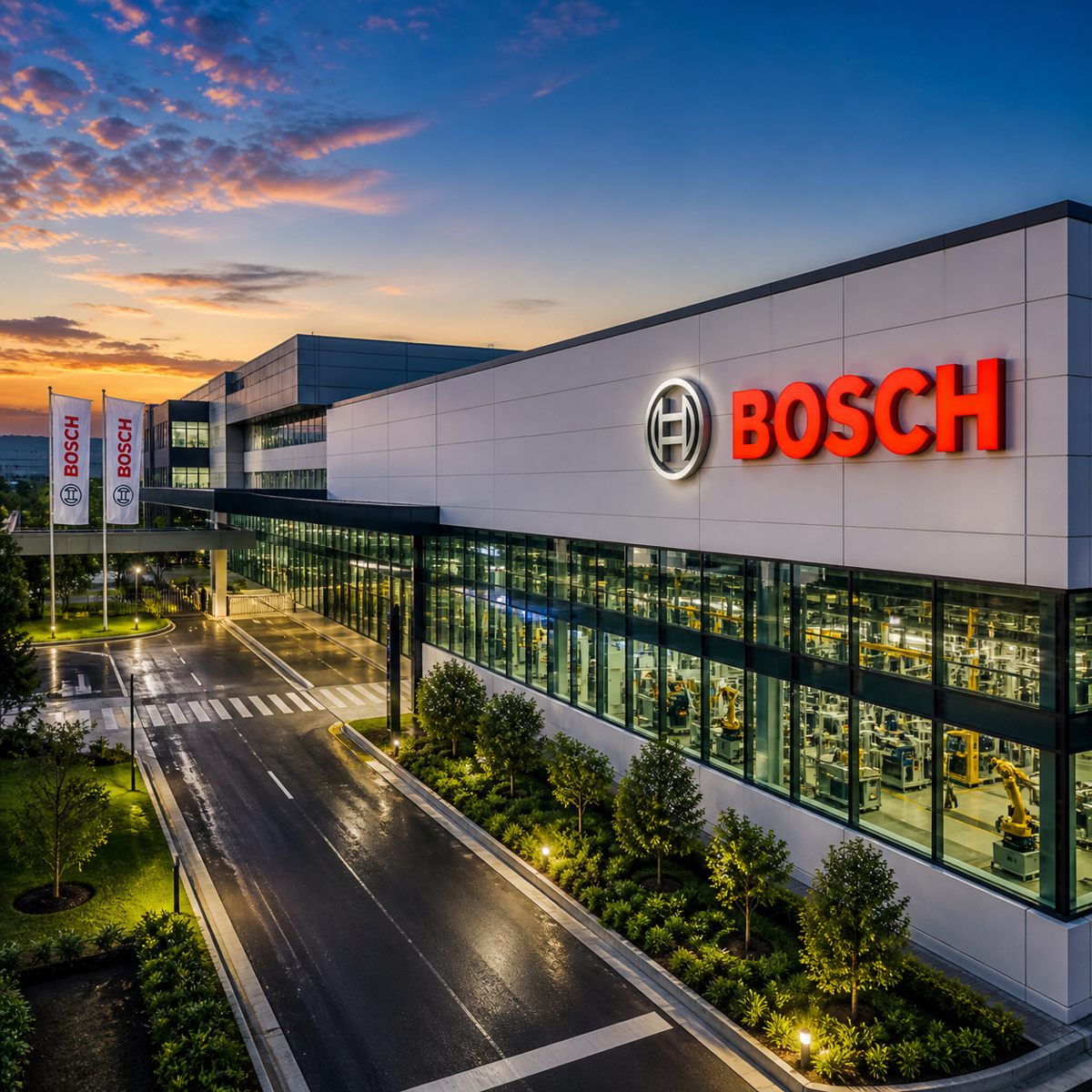

German multinational expands presence in Latin America with billion-dollar Bosch investment, focused on technology, production, and job creation in regional industry
The German multinational confirmed a new 1 billion BRL investment cycle in Latin America throughout 2026, with priority for Brazil. The announcement reveals a clear strategy for productive expansion, industrial modernization, and technological strengthening, with direct impacts on job creation and the advancement of regional industry.
Bosch‘s move comes at an important time for the Latin American economy, especially for the Brazilian industrial sector, which has been showing signs of recovery. The company’s decision also reflects the region’s relevance within the company’s global operation.
According to data released by the German multinational itself, revenue in Latin America reached approximately 11.6 billion BRL in 2025, with about 80% of that value generated in Brazil. These figures help explain why the new investment is heavily concentrated in Brazilian territory, even though it is announced for the entire region.
-
As Brazil Expands Social Welfare, Survey Reveals 40% Blame Poverty on Laziness, While 58% Cite Lack of Opportunities

-
China Tightens Control on Antimony, Driving Prices from $22,000 to Nearly $40,000 per Ton as U.S. Rushes to Bolster Strategic Reserves

-
BlackRock Freezes $1 Billion in Brazilian Renewable Energy, Impacting 1.5 GW of Planned Projects and Highlighting Investor Concerns Over Infrastructure Bottlenecks Cutting Up to 25% of Solar and Wind Generation
-
Labor Shortage: Despite Record Average Salary, 90% of Brazilian Bar and Restaurant Owners Struggle to Hire Key Roles Like Sushi Chefs and Head Cooks


Productive Expansion and Industrial Modernization with a Focus on Brazil
The German multinational‘s strategy involves expanding production and modernizing industrial units, with a focus on the Campinas factory in São Paulo. Bosch aims to strengthen its local production capacity, reducing external dependencies and increasing operational efficiency.
The plan includes a series of structural initiatives:
- Expansion of automotive component production lines
- Modernization of industrial equipment
- Automation of production processes
- Strengthening of the local supplier chain
This type of investment has a direct effect on the competitiveness of industry in Latin America, especially in a global scenario increasingly demanding in terms of innovation and productivity. The consolidated presence of the German multinational in Brazil also favors expansion, as the country represents the company’s main market in the region.


Investment in Automotive Technology and Advanced Industrial Solutions
One of the main pillars of the investment announced by the German multinational is the development of technologies aimed at the automotive and industrial sectors. Bosch seeks to expand its operations in strategic areas, such as electrification and automation.
Among the main technological focuses are:
- Production of electric motors
- Development of components for commercial vehicles
- Advances in sustainable propulsion systems
- Industrial solutions based on automation
This move follows a global trend. The electric vehicle market, for example, is forecast for significant growth in the coming years. Industry estimates point to an expansion of about 25% by 2027, which reinforces the importance of this type of investment. In Latin America, the German multinational‘s activity in this segment can accelerate technological transition and increase the competitiveness of local industry.
Job Creation and Direct Economic Impact on the Production Chain
The creation of jobs is one of the most relevant effects of the German multinational‘s new investment cycle. The expectation is that productive expansion will generate both direct and indirect opportunities, strengthening the regional economy.
Estimates indicate that the project could result in up to 2,000 new jobs, considering the entire production chain. This impact is not limited to Bosch‘s factories but extends to suppliers, service providers, and industrial partners.
The president of an industrial association in the sector, José Carlos, highlighted the importance of this type of initiative for the economic environment. In his assessment, investments of this magnitude help to boost industry and strengthen Brazil’s position on the global stage.
Furthermore, the movement by the German multinational contributes to:
- Stimulating the local economy
- Increasing income in industrial regions
- Encouraging professional qualification
- Strengthening small and medium-sized enterprises
In Latin America, this type of investment has a multiplier effect, consistently expanding its economic impact.
Nationalization of production and reduction of external dependence
Another relevant point of the German multinational’s investment is the nationalization of production. Bosch intends to expand local manufacturing of components, reducing the need for imports.
An example of this is the production of batteries for 18V power tools, which is expected to gain momentum with the modernization of the Campinas factory. This strategy meets the growing demand for more sustainable and efficient solutions.
Nationalization brings important benefits:
- Reduction of logistics costs
- Greater control over production
- Increased competitiveness
- Strengthening of local industry
In Latin America, this movement also contributes to the development of a more solid industrial base, capable of competing internationally.
Technological modernization and digitalization of factories in Latin America
Industrial digitalization is another central pillar of the German multinational’s investment. Bosch is betting on advanced technologies to transform its operations in Latin America.
Among the main initiatives are the adoption of Industry 4.0 solutions, the use of artificial intelligence, and the integration of production systems. These changes increase efficiency and allow for greater flexibility in production.
Modernization also requires qualified professionals, which reinforces the generation of jobs in technical and engineering fields. This scenario creates new opportunities and raises the technological level of the regional industry.
Economic context favors new investment by the German multinational
The announcement of the investment comes at a time of economic recovery. In recent years, Brazil faced challenges but has returned to significant growth.
Gross Domestic Product (GDP), for example, registered a 5% expansion in 2021 and remained stable in 2022. This scenario contributes to increasing the confidence of investors and global companies.
Analyst Mariana Lopes, specialized in the industrial sector, believes that contributions like that of the German multinational are fundamental to improving the country’s competitiveness. According to her, the combination of innovation and local production tends to generate important structural gains.
In Latin America, Bosch’s presence reinforces the region’s potential as a destination for new industrial investments.
Expansion of exports and strengthening of global presence
In addition to serving the domestic market, the German multinational also seeks to expand its international operations from Latin America. Exports are expected to grow in the coming years.
With increased production, Bosch projects to increase the export of industrial and automotive components by up to 20% in the next two years. This advance reinforces Brazil’s importance as a strategic base for the company.
The increase in exports also contributes to job creation and the strengthening of the trade balance, amplifying the positive effects of the investment.
A move that reinforces the region’s industrial competitiveness
The new investment by the German multinational demonstrates a consistent growth strategy in Latin America. By combining productive expansion, technological innovation, and job creation, Bosch strengthens its presence and contributes to the industrial development of the region.
The impact goes beyond numbers. The modernization of factories, the nationalization of production, and technological advancement create a more competitive environment prepared for global challenges.
With revenues of R$ 11.6 billion in 2025 in Latin America and a strong presence in Brazil, the German multinational demonstrates that the announced investment is not just a one-off, but part of a long-term strategy.
This move positions the region as a protagonist in a scenario of industrial transformation, with more innovation, productivity, and job creation.
With information from Diário do Estado.