Portuguese
  Spanish


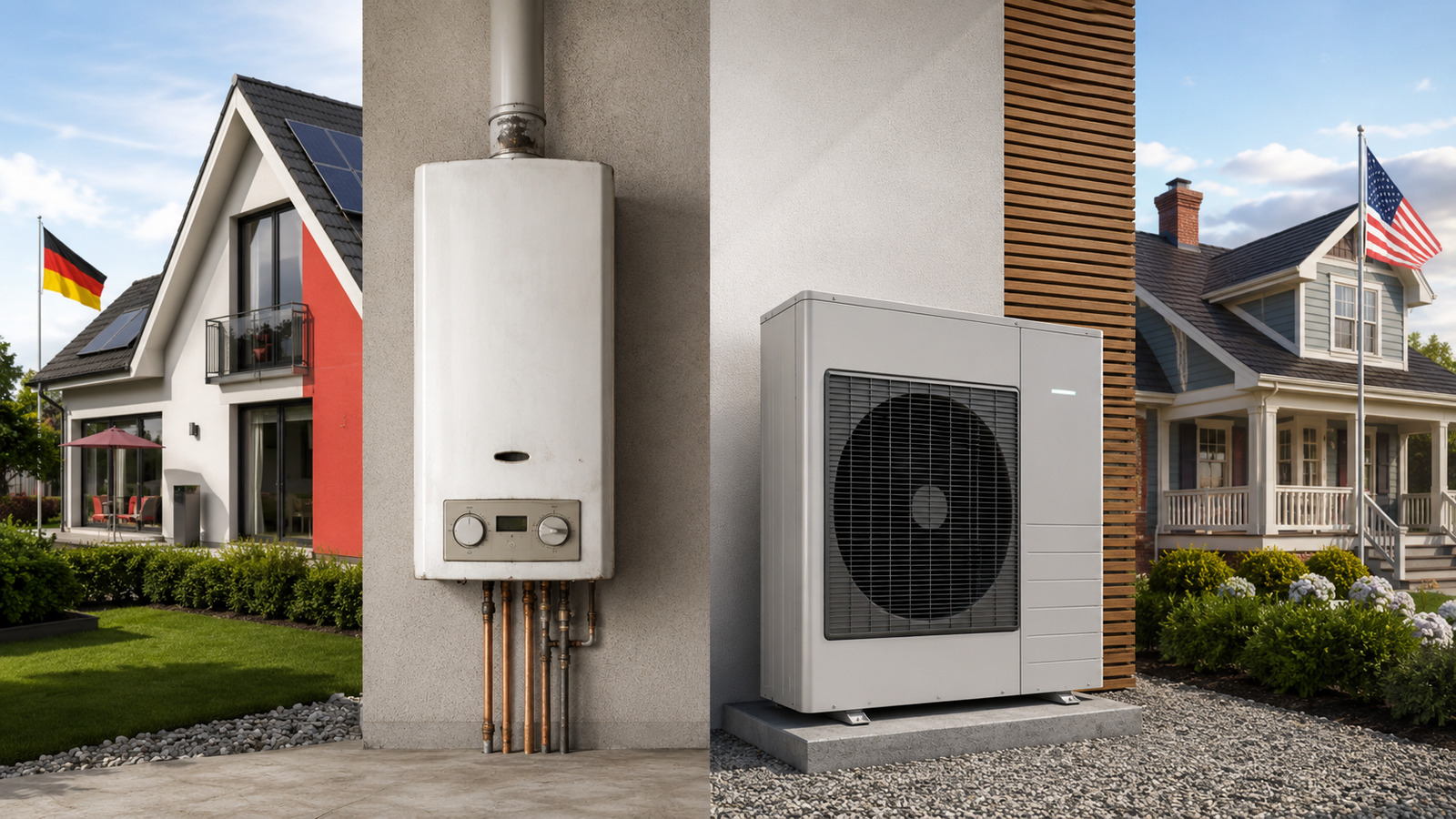


Germany and New York accelerate restrictions on gas heaters in new constructions, while the heat pump gains ground for greater efficiency, continuous use savings, and less dependence on fossil fuels
The heat pump has become the main bet to replace gas heaters in new constructions, as Germany and cities like New York restrict fossil fuels to reduce emissions and modernize domestic systems. The data in this article was provided by Monitor do Mercado in this article (READ HERE).


Why gas heaters are being restricted
The change reflects a tougher global energy policy against fossil fuel-burning technologies. Germany has passed strict laws to reduce this use in domestic systems.
In the United States, New York leads the ban on gas heaters in buildings. The goal is to curb greenhouse gas emissions and accelerate urban modernization.
-
App Drivers Unite in Major Solidarity Effort to Aid Venezuela Earthquake Victims, Mobilizing the Brazilian Amazon with Donation Campaign

-
Green Roofs on Homes Gain Popularity for Reducing Heat, Noise, and Rain Impact in Brazil
-
Brazilian promises his children to save a river, creates an eco-barrier in his backyard, has already removed more than 40 tons of trash from the water, and even inspires the idea in other states of the country.

-
How a Brazilian company created a system that transforms broken pallets of any brand into new assets, recycles 80 tons of plastic per month, and found a profitable solution to a problem that challenges industries across the country.



Governments argue that old equipment hinders climate goals. Energy security has also gained priority in the face of fuel supply crises.
Thus, incentives target high-performance electrical systems. The transition seeks less environmental impact, more sustainability, and reduced dependence on fossil sources.
Heat pump gains ground as the main alternative
The heat pump is the most mentioned technology to take this place. The equipment transfers thermal energy from the external environment to the internal one, instead of producing heat only by burning or electrical resistance.
This logic allows for superior performance. While the gas heater has an average efficiency of 90% and electrical resistance reaches 100%, the heat pump achieves between 300% and 400%.
The difference appears in the primary source. The gas heater depends on fossil fuel, electrical resistance uses electricity, and the heat pump combines electricity and air to deliver greater efficiency.
Unlike common air conditioning, this system is bidirectional and works in different climates. It can heat water and air at the same time, with high efficiency and low noise.
The International Energy Agency indicates that large-scale adoption will significantly reduce global residential consumption, reinforcing the role of the equipment.

Higher cost initially and savings later
The initial investment in advanced electrical systems is usually higher than that of conventional models. Even so, the reduction in the monthly energy bill can offset the expense after a few years.
For the homeowner, the switch can also increase the resale value of the property. By reducing fixed expenses, the system gains asset weight.
Among the positive points are lower monthly operational costs, safety against carbon monoxide leaks, integration with photovoltaic solar panels, and less frequent maintenance than traditional boilers.
The technical concept is already validated in temperate climates and is advancing to tropical regions. In hot locations, the system can help with cooling in the summer.
Brazilian market follows the trend
In Brazil, the transition appears in the search for devices with inverter technology and maximum efficiency rating. The construction industry considers robust electrical infrastructures to support climate control.
The industrial market is also moving to offer solutions that consume fewer resources. Besides homes, large complexes seek to decarbonize water heating and reduce fossil dependency.
The import of European and North American technology grows annually, bringing innovation to São Paulo and Curitiba. This advancement strengthens local suppliers and requires training for complex installations.
Planning avoids renovations and loss of value
Anticipating adaptation to future environmental standards can avoid costly renovations and asset depreciation.
Efficient systems enhance the architectural project and meet real estate sustainability requirements.
Early electrical planning facilitates a smoother transition. It also helps integrate climate control, water heating, and solar energy in smart homes, with lower operational costs and greater control.
The global scenario points to increasingly restricted use of fossil fuels. Clean technologies offer thermal comfort, real savings, and protection against fluctuations in traditional fuel prices.
With information from Market Monitor.