Portuguese
  Spanish



Purification technology advances with instant heating, app control, and high-precision filtration, expanding integration between appliances and connected home while manufacturers bet on performance, automation, and new standards of domestic consumption.
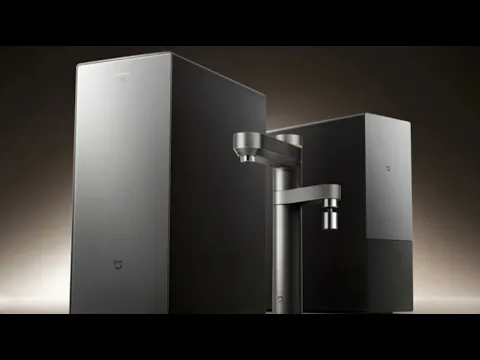
Xiaomi has expanded its line of connected appliances in China with the Mijia Instant Hot Water Purifier 2 Pro, launched in two versions, 1200G and 1600G.
The devices combine reverse osmosis filtration, instant heating, dual water output, and integration with the brand’s ecosystem, clearly betting on convenience and mobile monitoring.
Xiaomi’s Strategy for Smart Home
The announcement reinforces a well-known strategy of the company in the smart home segment.
-
Brazilian Researcher Unveils Innovative Intraocular Lens for Cataract Treatment with High-Precision Optics, Enhancing Vision at Multiple Distances and Reducing Unwanted Visual Effects

-
World’s Largest Particle Accelerator Begins Four-Year Hiatus for Magnet Overhaul, Aiming to Hunt Dark Matter by 2030
-
“Sahara Dust Turns Rain Red, Startling Residents Across Europe”
-
Stanford Scientists Develop 20-Cent Paper Centrifuge Inspired by Ancient Toy, Spins at 125,000 RPM Without Electricity, Separates Plasma in 1.5 Minutes, Aiding Diagnostics in Remote Areas





After expanding its portfolio with vacuums, air purifiers, and other connected items, the manufacturer now brings this same automation package to the kitchen, focusing on filtered water, thermal control, and real-time usage tracking.
Instant Heating and Temperature Control

Among the main differentiators is the instant heating system, referred to by the company as Dual Instant Heating 3.0.
According to the information released at the launch, the technology provides hot water at a flow rate of up to 1.5 liters per minute.
In heat exchange mode, the device can also release up to 10 liters of water at 95 °C in a single session, without relying on a traditional thermal reservoir.
The proposal is to meet domestic uses that require higher temperatures, such as preparing beverages and food.
Additionally, the system works with fine temperature adjustment and includes four predefined levels.
Through the Xiaomi app, the user can adjust the water between 40 °C and 90 °C in increments of 1 °C, while the brand reports thermal accuracy of approximately ± 3 °C.
Advanced Filtration with 0.0001 Micron Membrane
Another central point of the new line is filtration.
Xiaomi claims that the purifiers use an imported RO membrane, with a precision of 0.0001 micrometer, to retain up to 145 types of contaminants.
In this group, the company’s communication and specialized vehicles include bacteria, heavy metals, viruses, and organic pollutants.
In product promotional materials, there are also references to the reduction of lead and compounds such as PFAS and PFOA.
The filtration structure does not rely solely on the main membrane.
The set also includes activated carbon produced from Sri Lankan coconut shells, a component used to improve the taste and odor of water.
In the material associated with the product, Xiaomi attributes a lifespan of up to eight years to the RO filter, with a total purification volume reported at 29.2 tons of water, equivalent to about 29,200 liters.
Dual water outlet and functional design

Xiaomi also highlights the adoption of a system with two faucets and two water routes, separating the purified water intended for direct consumption from the filtered water for other household uses.
The company claims that this physical architecture prevents cross-mixing between the circuits.
In the launch materials, the upper outlet is presented as dedicated to drinking water, while the lower one serves cleaning and general preparation uses.
Integration with app and smart alerts
In the product design, the brand adds features that aim to connect the purifier with the rest of the smart home.
The models are compatible with HyperOS Connect, allowing users to monitor temperature, usage, and filter status through the manufacturer’s app.
Part of this information also appears on the device itself, with light indicators and sound alerts to guide daily operation.
There are also finishing and maintenance elements designed for continuous use.
Xiaomi mentions IPX7 protection, a metal structure with anti-corrosion treatment, quieter operation, and a simplified filter replacement mechanism.
Differences between the 1200G and 1600G models

The differences between the two versions are mainly in the flow rate.
The 1200G model delivers an initial flow of up to 3.65 liters per minute, while the 1600G reaches 4.46 liters per minute.
In practical terms, the second option is the most robust in the line, aimed at those seeking a higher volume of treated water in less time.
Prices and availability in China
In the Chinese market, the new purifiers were announced with prices of 3,699 yuan for the 1200G version and 4,299 yuan for the 1600G.
Sales began in China in April 2026, through the brand’s local channels and partner retailers.
So far, there is no official indication of a launch in other regions, including the Brazilian market.
The new product arrives at a time when Chinese manufacturers are expanding the competition for space in categories previously seen as peripheral within the connected home.
Instead of treating the purifier merely as a functional appliance, Xiaomi positions it as part of a broader home system, where filtration, heating, digital interface, and remote monitoring operate in an integrated manner.
In this scenario, the product’s appeal goes beyond just treated water and also involves precision, automation, and continuous usage control.