






 Portuguese
  Spanish
  3 min of reading
  0 comments


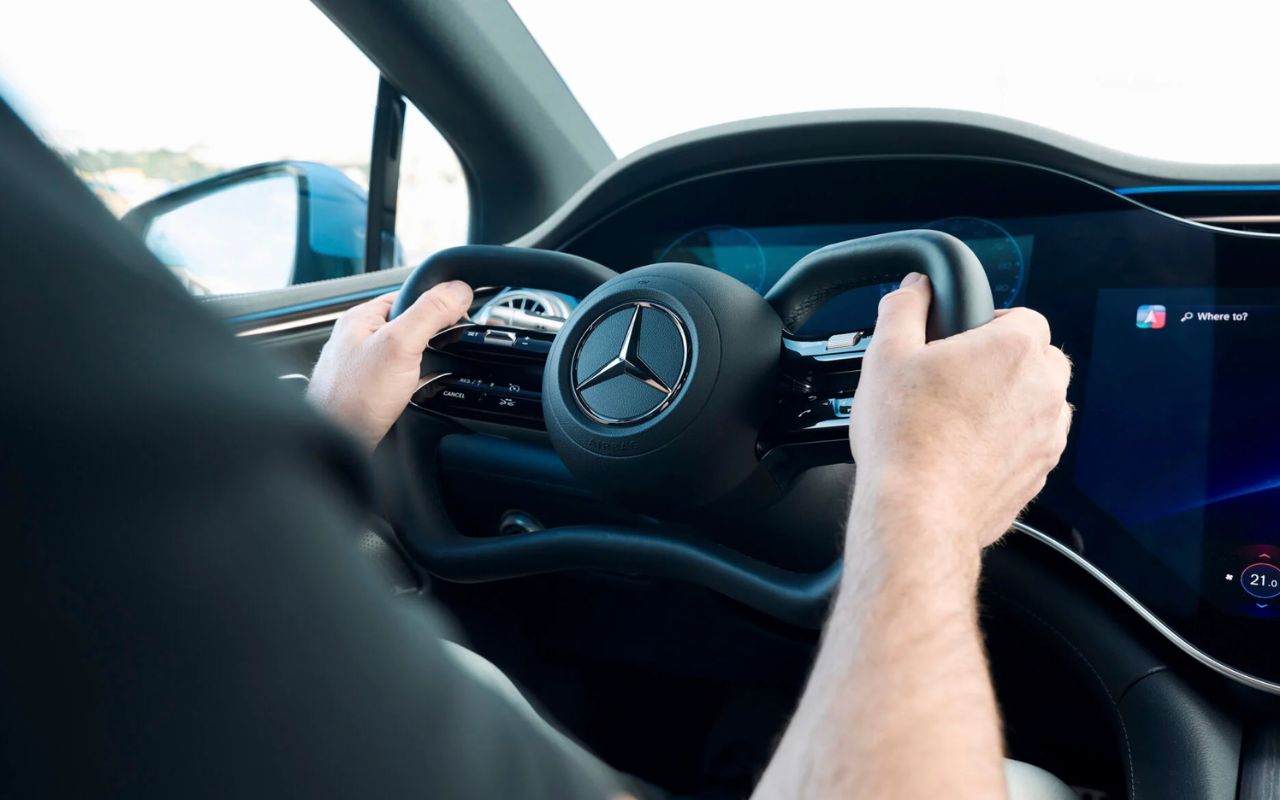
Mercedes bets on steer-by-wire technology to reinvent the steering wheel, eliminate mechanical connections, and bring more precision to steering.
The evolution of automotive steering has reached a new milestone with Mercedes-Benz’s investment in a fully connected steering wheel using electronic technology. The manufacturer revealed an innovative system that eliminates the physical link between the steering wheel and the wheels, replacing mechanical components with digital commands.
This innovation will be introduced in the electric sedan EQS, initially in the United States market, later this year. With this, the manufacturer aims to offer more precision, comfort, and safety while preparing its vehicles for an increasingly digital future.
Steering wheel with electronic technology eliminates mechanical connection
Unlike the traditional model, where the steering wheel is directly connected to the wheels via a steering column, the new proposal uses electronic sensors and actuators.
-
Uber Faces Shareholder Scrutiny as Board Accused of Ignoring Safety, Compliance, and Harassment Warnings Amid Over 3,500 U.S. Lawsuits

-
Ferrari’s First Electric Car Divides Fans, Priced at $630,000, Amid Concerns Over Limited Editions; Brand Clarifies It’s Not Just for Future Perks
-
BYD Dolphin Mini: The Electric Car That Defies Depreciation, Losing Only 3.58% in a Year and Becoming the Best-Selling Retail Model Under $22,000

-
Electric Car JAC E-JS4 Loses $19,000 in Value in One Year, Leading Record Depreciation of Used Cars in Brazil Due to Expensive Battery and New Models


These components interpret the driver’s movements and send digital signals to control the car.
This system, known as steer-by-wire, is already widely used in aviation. Now, Mercedes is adapting this technology for the automotive sector, bringing a new logic to driving.
Additionally, the system features two independent communication channels. Thus, if one fails, the other ensures the continuity of steering operation.
Safety is strengthened with redundant solutions
Even with the absence of a physical connection, safety remains a priority. Therefore, Mercedes has incorporated redundant systems that prevent total loss of control.
In more critical situations, when both electronic channels fail, the rear wheel steering is activated.
This feature allows for limited vehicle direction, but enough for a safe stop. Thus, the driver maintains basic control of the car, even in extreme scenarios.
New steering wheel design from Mercedes-Benz improves ergonomics
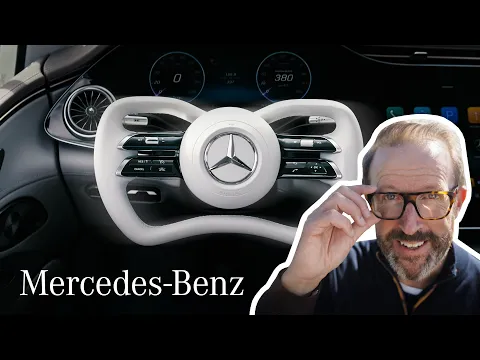
Another important highlight is the design of the steering wheel. Mercedes has abandoned the traditional round shape and adopted a model similar to a joystick.
This type of steering wheel removes the top and bottom parts, keeping only the sides. This makes hand positioning more natural, favoring driving in the ideal position.
Additionally, the steering range is reduced. The steering wheel needs to turn only 180 degrees from one extreme to the other, eliminating the need to cross arms in turns or maneuvers.

More precise steering facilitates everyday maneuvers
With the new technology, the driving experience changes significantly. At low speeds, the steering wheel responds more directly, making maneuvers like parking easier.
This happens because small movements are already enough to alter the vehicle’s trajectory. Therefore, the driver’s effort is reduced, especially in urban environments.
On the other hand, this greater sensitivity may require initial adjustment, especially for those used to the conventional system.
Mercedes-Benz prepares the ground for more technological cars
Although the system debuts in the EQS, the expectation is that the technology will be expanded to other models.
Without the need for a steering column, vehicles can gain new internal shapes, with more space and design possibilities.
This is especially relevant in the context of autonomous cars.
Moreover, the precision of the system can benefit sports models, where quick responses are essential.
With information from AutoPapo





Be the first to react!