Portuguese
  Spanish


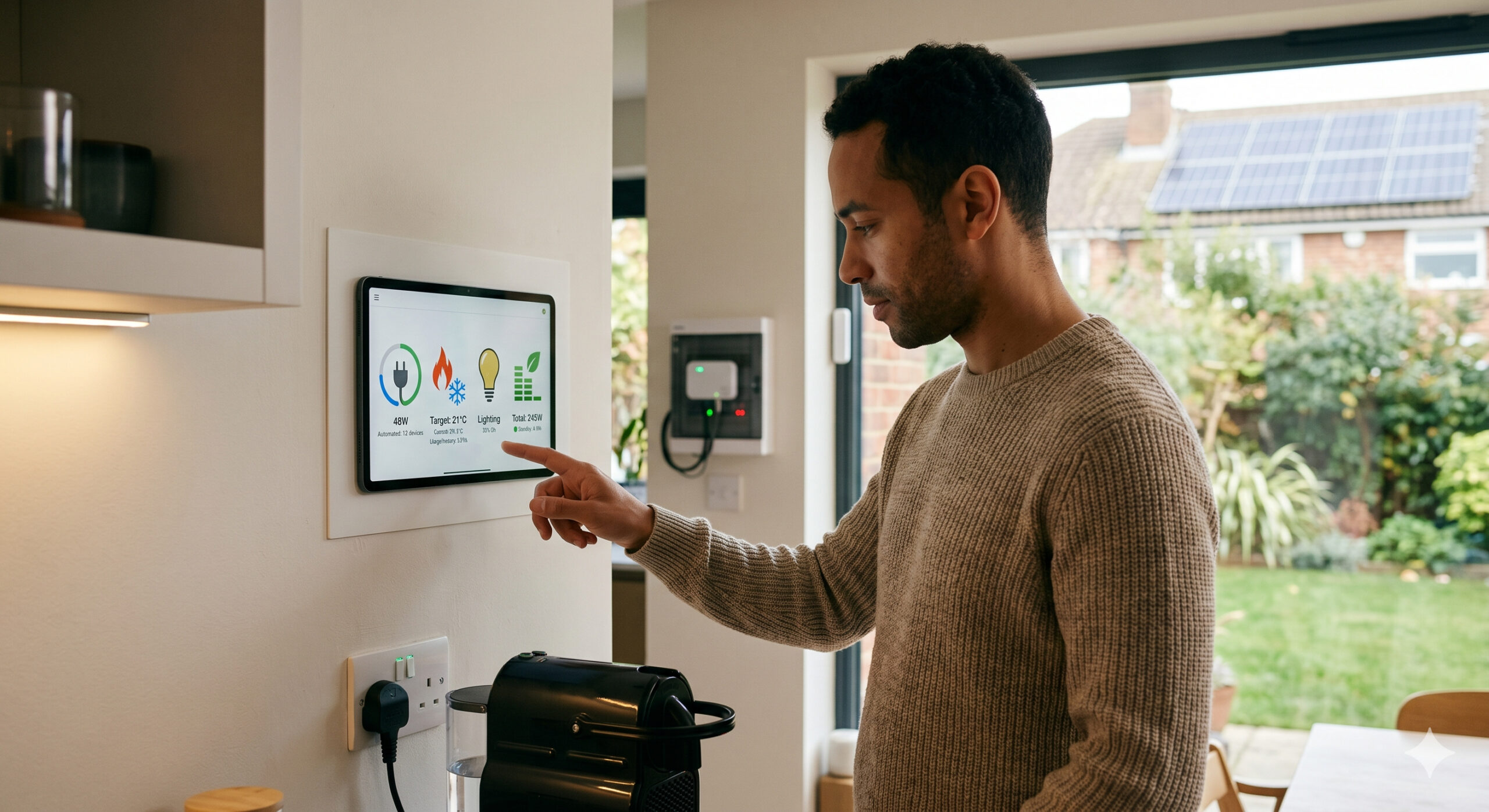

Smart systems integrate residential energy control, reduce standby to up to 0.5 W and show real-time consumption, cutting invisible waste.
In 2026, the so-called Smart Home Energy Management Systems (SHEMS) were officially recognized by ENERGY STAR as systems capable of simplifying, reducing, and managing energy consumption in homes through the integration of connected devices on a single platform. In the memorandum published on March 3, 2026, by the Department of Energy (DOE), it was defined that the DOE would become the leading federal agency of the program, in consultation with the Environmental Protection Agency (EPA), which updates the correct way to describe the governance of the label that year.
In practice, the model requires the presence of interconnected components, such as a certified smart thermostat, connected lighting, and features to monitor and control plugged loads, instead of devices operating in isolation. According to the official ENERGY STAR specification, whose base version came into effect on September 3, 2019, and was updated on February 22, 2021, these systems need to offer occupancy-based automation, data consumption display, and mechanisms to limit waste, transforming the home’s energy into a resource managed in real time, rather than passively consumed.
Standby consumption is no longer ignored and is treated as a critical variable
One of the greatest technical advances of these systems is the rigorous control of consumption in standby mode. This type of consumption occurs when devices remain connected to the power grid even when not in direct use, keeping circuits active for functions such as sensors, communication, or quick response.
-
She spent 73 years breathing inside an iron lung, survived the aftereffects of polio, and became the last woman in the United States dependent on the equipment before dying at 78 years old.

-
Brazilian students created a $1 filter using pine bark, cotton, and 3D-printed parts to clean cassava wastewater, reduce the toxicity of a hazardous waste, and transform contaminated water into biofertilizer.

-
Astronaut from Artemis II steps down after mission to the Moon and decision surprises after a record of 406,771 km, a historic 10-day journey, and an unprecedented achievement for Canada.

-
A fossil kept for years in a small museum in Montreal concealed 450-million-year-old soft tissue, a discovery that has only happened once before in history.


Over time, this continuous consumption represents a significant portion of residential energy expenditure, precisely because it occurs silently and uninterruptedly.
The main change introduced by ENERGY STAR certified systems is the technical limitation of this consumption. Devices such as smart switches operate at about 0.5 watts in standby, while smart plugs and load monitors are close to 1 watt, drastically reducing constant energy waste.
This reduction represents a structural change because it eliminates losses that occur 24 hours a day throughout the year, regardless of user behavior.
Integration between devices transforms the home into a coordinated energy system
Before the popularization of these systems, each household appliance operated independently, without communication with other devices. This meant that decisions about consumption were made in a fragmented manner, without any global optimization.
With the introduction of SHEMS, this logic is replaced by an integrated model. The thermostat can reduce heating or cooling consumption when the house is empty, lighting can automatically adjust based on presence and time, and devices connected to smart plugs can be turned off when not in use. All of this occurs within a single interface, which centralizes information and decisions.
The home begins to operate as a unified energy system, where each component contributes to a more efficient consumption strategy.
Real-time monitoring eliminates the invisibility of household consumption
Another essential element of these systems is the ability to provide real-time data on energy consumption. Traditionally, the user only had access to consolidated information on the electricity bill, without any details about which appliances were responsible for the highest expenses.

With smart systems, consumption is displayed continuously, allowing the identification of patterns, peaks, and specific behaviors. This completely transforms the perception of energy use within the home.
Consumption ceases to be a monthly abstraction and becomes a visible, measurable variable that can be adjusted immediately.
This change has a direct impact on how decisions are made, as the user begins to act based on concrete data, rather than estimates.
Automation reduces dependence on human behavior and creates continuous savings
One of the main differentiators of these systems is automation. Instead of relying on manual actions, such as turning off devices or adjusting settings, the system performs these tasks automatically based on predefined rules and real-time data collected.
This automation can consider variables such as the presence of people, usage times, weather conditions, and even historical consumption patterns. As a result, savings no longer depend on the user’s discipline and become incorporated into the normal functioning of the home.
This represents an important change, as it eliminates one of the main obstacles to energy efficiency: inconsistent human behavior.
Smart thermostats take center stage in reducing consumption
Within this ecosystem, smart thermostats play a strategic role, especially in regions where heating and cooling represent the majority of residential energy consumption.
These devices are capable of automatically adjusting the temperature based on the actual use of the house, avoiding unnecessary operation when the environment is empty. Additionally, they can learn patterns over time, continuously refining their operation.
According to ENERGY STAR, these systems are evaluated based on real usage data, ensuring that the observed savings are not just theoretical but effectively measurable under real conditions.
Climate control stops operating continuously and starts responding dynamically to the behavior of the household.
Connected lighting eliminates recurring waste without impacting comfort
Lighting also undergoes a significant transformation with integration into the system. Lights stop relying on constant manual activation and begin to operate based on presence, schedules, and light levels.
This type of control reduces common waste, such as rooms being lit unnecessarily, while maintaining user comfort. The system can, for example, automatically adjust the light intensity throughout the day, reducing consumption without compromising functionality.
The result is a continuous reduction in energy consumption associated with an increase in the operational efficiency of the home.
Smart plugs connect traditional equipment to the energy management system
One of the historical limitations of home automation has always been the difficulty of integrating conventional appliances into the system. Smart plugs solve this problem by allowing any device connected to the outlet to be monitored and controlled.
This includes everything from household appliances to various electronic devices. The system can automatically turn off devices in standby mode, schedule operating times, and identify which devices are consuming the most energy.
This integration significantly expands the system’s reach, bringing into energy management equipment that previously operated completely independently.
Systems begin to suggest adjustments based on real consumption patterns
In addition to controlling and automating, these systems also analyze historical data to identify savings opportunities. Based on the observed patterns, they can suggest adjustments that optimize consumption without affecting daily use.
These suggestions are based on real behavior, not on generic estimates, which increases their accuracy and relevance. The home begins to act not only as a control system but also as a tool for energy analysis and recommendation.
Integration with the electric grid expands impact beyond the home
In some cases, these systems can integrate with demand response programs, automatically adjusting consumption during peak moments on the electric grid. This allows the home to actively participate in the balance of the broader energy system.
This type of integration can reduce costs, improve grid stability, and increase the overall efficiency of the electrical system. The residence stops being just a consumer and starts to act as an active element within the energy infrastructure.
Although each individual adjustment may seem small, the cumulative effect over time is significant. The elimination of standby consumption, combined with automation and real-time monitoring, generates a continuous reduction in energy expenditure.
The differentiator of these systems lies precisely in the sum of multiple simultaneous optimizations, operating constantly and automatically.
Technology redefines the role of energy within modern homes
With the adoption of these systems, the relationship between the user and energy undergoes a profound transformation. The home stops being a passive environment and starts to operate as an intelligent system, capable of monitoring, analyzing, and adjusting its own consumption.
This change represents a structural evolution in the way energy is used, bringing the domestic environment closer to industrial models of efficiency and control.