Portuguese
  Spanish


System Converts Mechanical Energy from Raindrops into Electricity, with Potential to Power Sensors, Small Devices, and Even Larger Structures
Researchers in Singapore have developed a method that transforms simple raindrops into electricity. The proposal, described in a new study, uses a narrow plastic tube and a type of flow called “plug flow.” The system is as simple as it sounds: droplets fall sequentially into the tube, generating clean and renewable energy.
The Idea Behind the Project
According to scientists, the installation can transform rain into a practical source of electricity. With the new system, it was possible to light 12 small bulbs for 20 seconds using only four tubes. There is no need for dams, turbines, or powerful waterfalls.
“The water that falls through a vertical tube generates a substantial amount of electricity using a specific pattern of water flow: plug flow. This plug flow pattern could allow rain energy to be harnessed to generate clean and renewable electricity,” explained Siowling Soh from the National University of Singapore. Soh is the senior author of the study.
-
OnePlus N6 Smartphone to Launch in India with 8,000mAh Battery and 45W SuperVOOC Charging, Lasting Up to Three Days

-
Scientists Plan to Release Air Bubbles Underwater to Protect Antarctica’s “Doomsday Glacier” from Melting

-
Chinese R6000 Drone Combines Airplane and Helicopter Features, Carries Up to 12 People for Multiple Missions
-
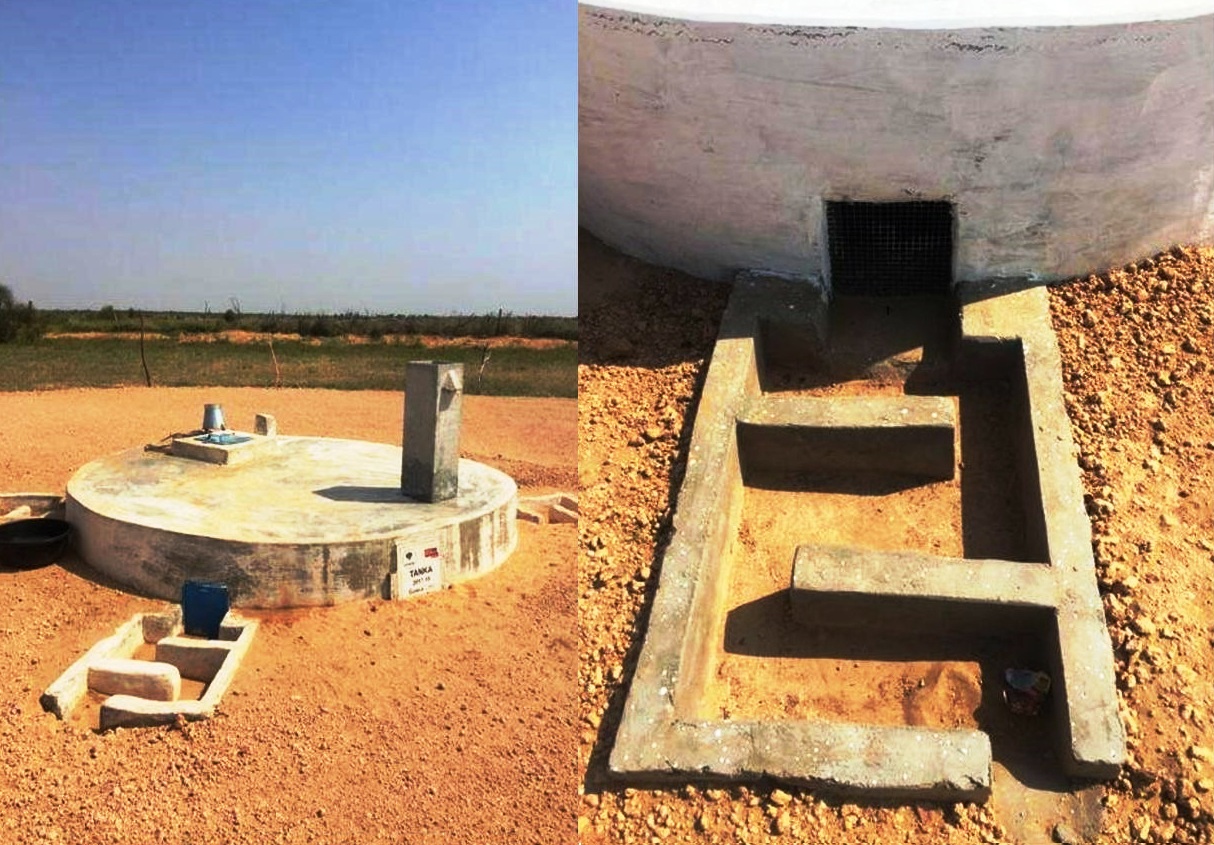
In the World’s Most Densely Populated Desert, Families Dig Funnel-Shaped Underground Cisterns to Capture Rare Rainfall and Store Drinking Water for Up to Eight Months




This specific pattern is formed by droplets entering the tube spaced apart, like columns of water separated by air. This structure is the key to the technique’s operation.
How Generation Works Through Raindrops
The method relies on a well-known phenomenon in physics: contact electrification. It’s the same principle that makes a balloon stick to hair after being rubbed. When water passes through certain materials, there is a transfer of electric charges.
In the experiment, the researchers used a tube that is 32 centimeters tall and only 2 millimeters wide. At the top of the tube, water droplets — simulating rain — were shot through a metal needle.
Inside the tube, these droplets formed columns separated by air. This motion, known as piston flow, was essential for generating electric charge.
Each water plug generated a separation of charges. The inner surface of the tube accumulated electricity. Wires placed at the ends collected this energy. The system was nicknamed “falling rain battery.”
Applications and Advantages of the System
In a larger test, with four tubes working simultaneously, the system was able to light 12 LEDs. The duration of the lighting was 20 seconds. The scientists’ idea is not to replace large power plants but to offer an alternative in places where other sources are unfeasible.
According to the study, this type of installation can be used on rooftops or in areas with constant rain. There is no need for a river or an expensive structure. Gravity does the essential work.
The researchers highlighted that this method could supplement energy supply in urban areas. The installation is simple, inexpensive, and efficient. For locations that cannot rely on large hydropower plants, this type of system could be a promising solution.
Breaking Old Limits
The idea of generating electricity with water is not new. But until now, the efficiency of these systems was very limited. This was due to a barrier known as “Debye length.”
It is the minimum distance at which there is a separation of charges between liquid and solid. This distance is so small that, in larger systems, the effect is lost.
The novelty of the Singapore project lies in circumventing this limit. By using thin tubes and separating the droplets with air, the researchers created a system that escapes the Debye limitation.
As a result, energy efficiency increased from 10%, with power densities nearing 100 watts per square meter.
This result is far superior to other attempts at energy generation using liquids. The difference can reach five orders of magnitude.
Electricity from Raindrops: A New Form of Energy
The new system does not fit neatly into known categories. It is not quite a hydropower plant, as it does not use turbines. It is also not like solar energy. It belongs to a new area of science called triboelectric nanogeneration.
This area studies how to generate energy from motion, friction, and even deformation of materials. Until now, solutions in this field suffered from practical challenges. But the model created by Soh’s team overcame these barriers with a simple solution: letting water fall spaced out.
Practical and Promising Results
The system was tested with various types of water: tap, saline, hot, and cold. All worked. Tests with multiple tubes showed that the increase in power is proportional. This indicates that the system can be easily scaled up.
Another relevant point was the finding that natural raindrops work even better than those used in the laboratory. This occurs because real droplets fall faster and with more energy. In other words, regular rain may be even more efficient at generating electricity.
The discovery also helps explain a phenomenon known as the Lenard effect. It is the term given to the electrification of air near waterfalls or ocean waves. According to the researchers, this may be related to the same type of charge separation that occurs in the tube.
Despite the good results, the system still needs to undergo real-world testing. It is necessary to verify how it performs with wind, dirt, temperature changes, and other external factors.
It is also necessary to study how to integrate it into existing electrical grids and how to produce these systems at scale.
But scientists are optimistic. “Rain is abundant and free,” said Soh. “We just need to find better ways to harness it.”
With this, the discovery paves the way for new ways to produce clean energy. All this with a simple idea: harvesting the electricity hidden in each raindrop.
With information from ZME Science.