






 Portuguese
  Spanish
  4 min of reading
  0 comments


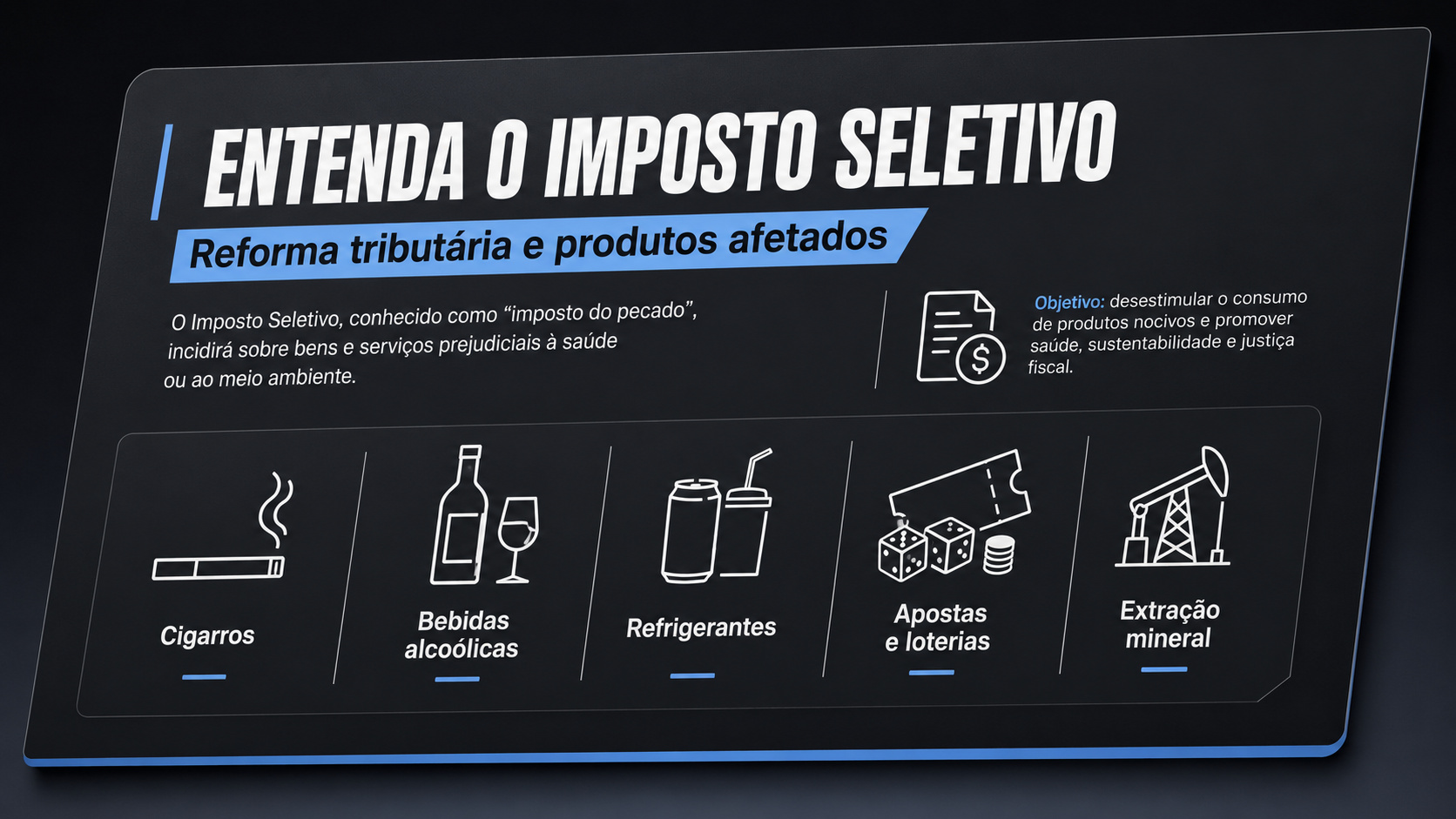
New Selective Tax will start in 2027, but the government intends to initially preserve the tax burden on alcoholic beverages and cigarettes during the transition
The so-called sin tax is expected to take effect in 2027, with no postponement planned by the federal government.
The information was presented this Friday, June 19, 2026, by the Minister of Finance, Dario Durigan, during an interview with the Jota portal.
The initial proposal foresees maintaining the tax burden currently charged by the Tax on Industrialized Products, the IPI, on alcoholic beverages and cigarettes.
-
Anvisa reveals flaws in supplements from IDNLABS and suspends 11 batches that include creatine, BCAA, beta-alanine, and multivitamins; the measure affects products with quality, composition, and labeling issues, while consumers are advised to check the printed codes on the packaging.

-
Ypê expands exchange and refund of products suspended by Anvisa, but consumers still need to check final batch 1, manufacturing date, and category before using laundry detergents, dishwashers, and disinfectants.
-
Son of a Chinese immigrant who sold tea in the countryside of São Paulo, Zhang Ye almost went bankrupt in 2021 and today, at 28 years old, claims to earn 1 million reais per day and has become the number 1 on TikTok Shop in Latin America.

-
Hidden in Shenzhen, a Chinese company claims to ship over 20,000 orders a day and promises to turn any dropshipping beginner into a respected brand for just 20 dollars.




This model should operate during a transition period, in which the government intends to broaden the dialogue with the sectors directly affected.
However, Dario Durigan did not specify how long this stage should last.
Government intends to avoid immediate tax increase
The strategy seeks to prevent a sudden change in the tax burden on alcoholic beverages and cigarettes.
The government intends to build an agreement with the affected sectors before deepening discussions on future rates.
The current IPI tax burden should be preserved during this first phase.
The rules may undergo a more detailed analysis after the transition ends.
The regulatory proposal still needs to be submitted to the National Congress in 2026.
Deputies and senators will also have to approve the text for the Selective Tax to effectively come into force in 2027.
Sin tax will affect beverages, cigarettes, and soft drinks
The Ministry of Finance informed the g1 portal, at the beginning of June 2026, that certain products may become more expensive in the future.
The charge aims to reduce the consumption of goods and activities related to health or environmental damage.
The list includes alcoholic beverages, cigarettes, and soft drinks.
Some vehicles will also be taxed according to the level of pollution generated by each model.
The extraction of mineral goods, lotteries, betting, and fantasy sports games will also be subject to the charge.
The participants of these games form virtual teams with real athletes and score points according to their performance in sports competitions.
Alcohol consumption cost Brazil R$ 18.8 billion
A study by the Oswaldo Cruz Foundation, cited by the Ministry of Health, calculated the economic impacts caused by alcohol consumption.
The costs reached R$ 18.8 billion in Brazil in 2019.
Of this total, R$ 1.1 billion corresponded to direct federal expenses with hospitalizations and outpatient procedures carried out by the Unified Health System.
Another R$ 17.7 billion was associated with productivity losses caused by alcohol consumption.
The calculation considered premature deaths, medical leaves, early retirements, and absences related to diseases.
The days of work lost due to hospitalizations and social security leaves were also accounted for.
Smoking generates an annual impact of R$ 153.5 billion
Diseases related to smoking also cause high expenses for the public sector.
Data from the Ministry of Health indicate that the indirect costs caused by cigarettes reach R$ 86.3 billion per year.
The total expenditure related to smoking reaches R$ 153.5 billion annually, an amount equivalent to 1.6% of the Gross Domestic Product.
The federal revenue obtained from the sale of cigarettes amounts to approximately R$ 8 billion per year.
The government considers that the numbers reveal a large imbalance between tax revenue and the expenses caused by diseases related to the product.
Soft drinks and isotonic drinks cost the SUS almost R$ 3 billion
Ultra-processed beverages, such as soft drinks, isotonic drinks, and refreshments, were also analyzed by the government.
The costs to the SUS for diseases associated with the consumption of these products are estimated at almost R$ 3 billion per year.
These data helped support the inclusion of beverages in the regulation of the Selective Tax.
The taxation should consider the impacts of these products on the public health system.
Producers fear price increases and the rise of the illegal market
Representatives of national producers state that alcoholic beverages already face a high tax burden in Brazil.
Taxation ranges from 40% to over 80% of the final price, according to the sector.
A potential tax increase could reduce profit margins and lead to price increases for consumers.
Producers also warn of possible layoffs and the growth of the illegal market for beverages and cigarettes.
The initial maintenance of the tax burden aims to reduce these impacts during the transition phase.
The regulation will define how the Selective Tax will be applied and what rates may be charged after this period.
What could change starting in 2027?
The implementation of the Selective Tax will depend on the approval of the rules by the National Congress.
The initial model should preserve the current taxation of alcoholic beverages and cigarettes.
Future changes could affect prices, companies, consumers, and activities related to health and the environment.
In your opinion, should the government maintain the current tax burden or increase taxes on products considered harmful to health?




Be the first to react!