






 Portuguese
  Spanish
  5 min of reading
  0 comments


Published in the journal Science, the study analyzed more than 16 thousand soil samples and revealed a network equivalent to almost one billion trips between Earth and the Sun. The underground fungi store carbon, support 70% of plants, and are threatened by agriculture.
Scientists have mapped for the first time the largest biological network on the planet, formed by underground fungi that extend about 110 quadrillion kilometers and transport about 4 billion tons of CO2 to the soil every year. Under forests, fields, deserts, and even cities, this invisible infrastructure connects plants, transports nutrients, and helps combat climate change.
The discovery came from a work that gathered data from around the world. According to the study, published in the journal Science released in June 2026, arbuscular mycorrhizal fungi, which live associated with plant roots, form a global network whose extent is equivalent to almost a billion times the distance between Earth and the Sun. To reach this number, researchers analyzed more than 16 thousand soil samples with the help of artificial intelligence and ecological models, discovering that these structures play a crucial role in carbon capture and storage. The values are estimates from the study, and the authors emphasize that there is still much to discover.
What are the underground fungi beneath our feet
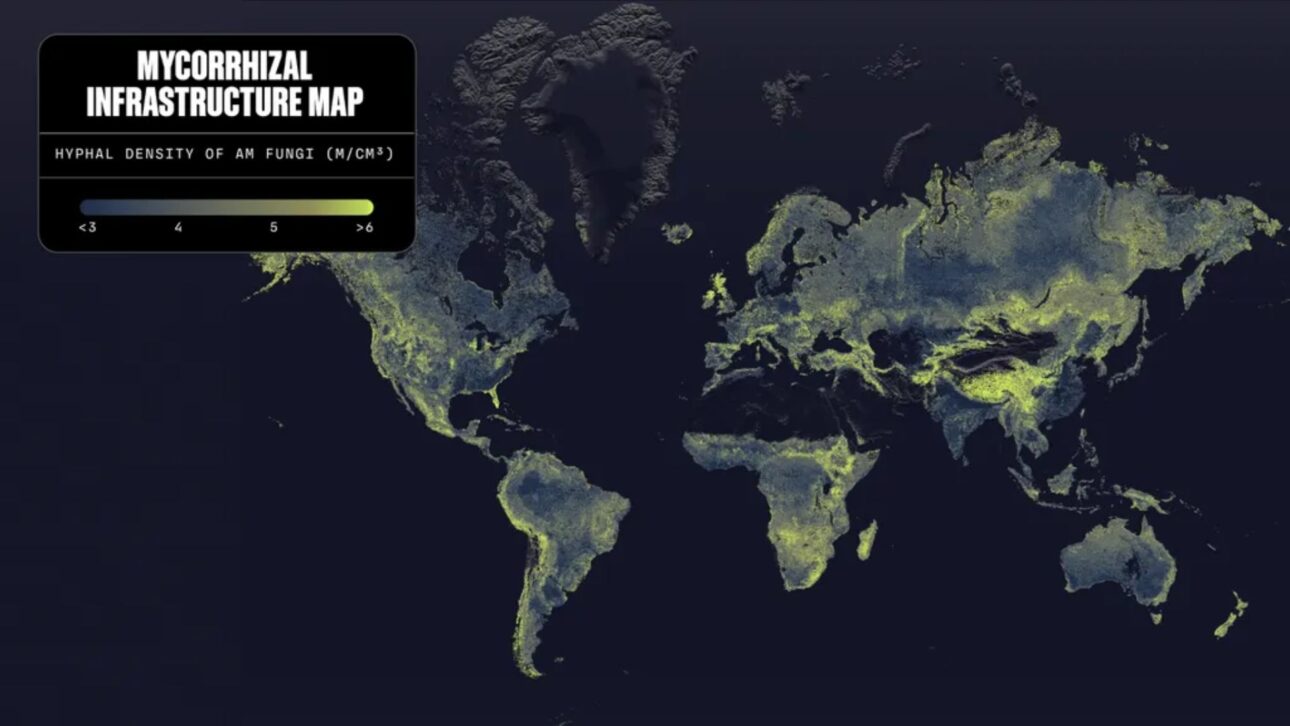
(Image credit: Society for the Protection of Underground Networks (SPUN) / Moritz Stefaner – Truth & Beauty / Justin Stewart – SPUN)
The protagonists of the discovery are arbuscular mycorrhizal fungi, known by the acronym AM. This type of underground fungi establishes a cooperative relationship with approximately 70% of the plant species existing on Earth, in a silent partnership that supports much of the planet’s vegetation.
-
Where does the light go when you turn off the lamp? The answer involves invisible particles called photons, which disappear in fractions of a second inside the room but can travel billions of years through space to reach our eyes.

-
Light particle that shouldn’t be split surprises physicists
-
New oral medication for hair loss surprises in tests with more than 500 participants, uses extended-release minoxidil, shows hair growth four times greater than the placebo, and now raises expectations about when it might reach the market.
-
Europa, Jupiter’s icy moon, intrigues scientists after radar indicates an unusual brightness in the ice and raises new suspicions about what might be hidden in the deep layers of this distant world.




In this exchange, each side offers what it has best. Plants provide fungi with sugars produced by photosynthesis and, in return, fungi enhance the roots’ ability to absorb water and essential nutrients, such as phosphorus and nitrogen. According to researchers, this partnership has existed for hundreds of millions of years and was crucial for the expansion of plant life in terrestrial environments.
The largest biological network ever mapped
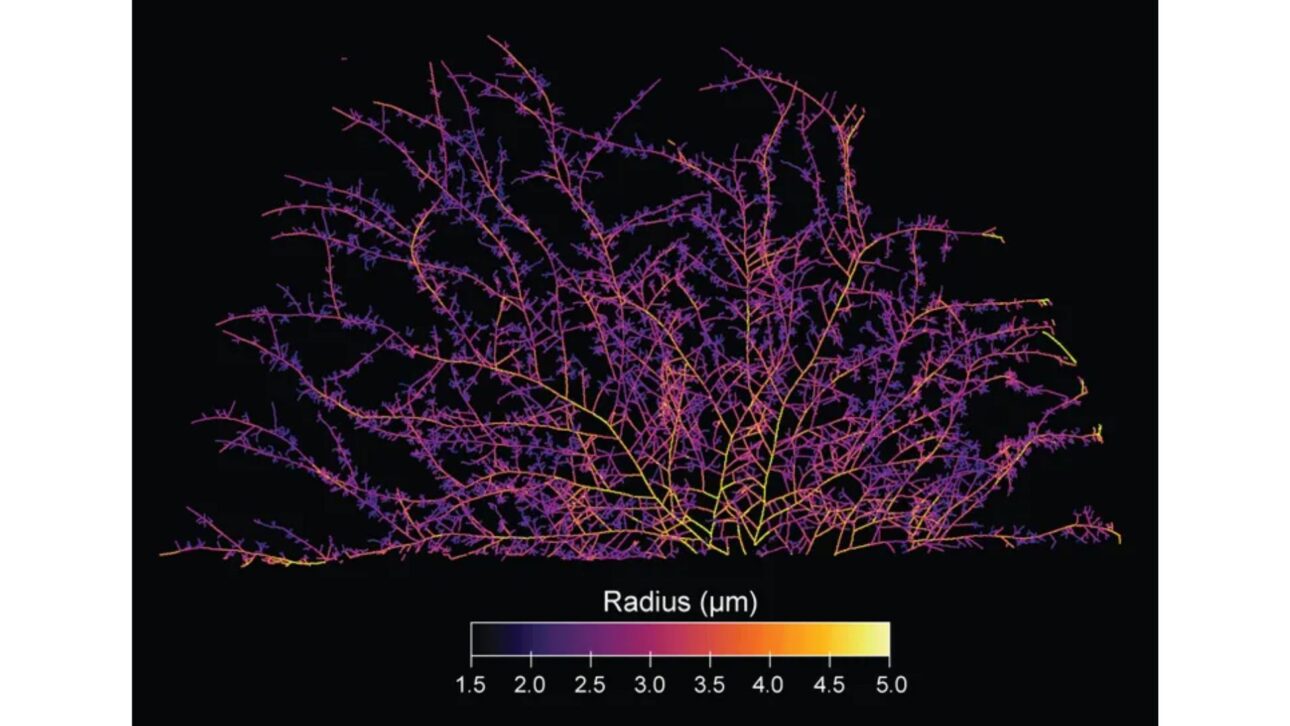
(Image credit: Corentin Bisot – VU Amsterdam, AMOLF Justin Stewart – SPUN)
Measuring a structure hidden underground required a combination of technologies. To estimate the dimension of this infrastructure, scientists analyzed more than 16,000 soil samples collected from different parts of the world and, with the help of artificial intelligence, robotic images, and ecological models, they were able to predict the density of these underground fungal networks even in regions without direct measurements.
The results are impressive in scale. There are about 110 quadrillion kilometers of hyphae, the fungal filaments spread across the planet, approximately 300 megatons of carbon stored in the biomass of these fungi, and an annual transport of about 4 billion tons of carbon dioxide to the soil. To give an idea of size, the authors point out that a single teaspoon of healthy soil can contain up to 10 meters of these microscopic structures.
The Earth’s hidden circulatory system
To explain what they discovered, the researchers use an image of the human body. They describe mycorrhizal networks as a kind of circulatory system of the planet: just as veins distribute nutrients throughout the body, these underground fungi transport water, carbon, and minerals between plants and soil.
The reach of this network is what surprises the most. In some cases, fungi can increase the exploration area of roots by up to 100 times, allowing plants to find resources even in nutrient-poor environments. For the study’s authors, the size of the finding is hard to overstate:
“What we are seeing is a living infrastructure on a planetary scale.”
The role of fungi in combating climate change
One of the most relevant discoveries involves the global carbon cycle. Scientists estimate that these networks of underground fungi move about 4 billion tons of CO2 equivalent into the soil every year, a value that corresponds to approximately 11% of the global carbon emissions generated by human activities.
By storing part of this carbon below the surface, fungi relieve the atmosphere. The process helps reduce the amount of greenhouse gases present in the air, and for this reason, experts advocate that these organisms should be considered in environmental conservation strategies and climate policies, alongside more visible measures such as emission cuts.
Agriculture threatens the underground infrastructure
The study also raised a warning signal. Agricultural areas have, on average, densities of underground fungi about 50% lower than natural ecosystems, such as fields and forests, indicating that the way land is cultivated directly interferes with this network.
The consequences of this loss go beyond impoverished soil. Researchers warn that the degradation of these communities can compromise soil fertility, reduce carbon storage capacity, and make ecosystems more vulnerable to droughts and extreme weather events. Grasslands, for example, concentrate approximately 40% of all the planet’s mycorrhizal fungi biomass, yet remain among the world’s least protected ecosystems.
Published in the journal Science, the study mapped the largest biological network on the planet, a hidden web of underground fungi that extends for about 110 quadrillion kilometers, stores carbon, and supports nearly 70% of plant species, bringing about 4 billion tons of CO2 into the soil each year, equivalent to approximately 11% of human emissions.
Described by researchers as Earth’s circulatory system, this infrastructure is threatened by agriculture, which reduces the networks by half, and the authors emphasize that knowledge about it is still just beginning, with much of the planet unsampled and a real scale possibly even larger.
Understanding this network, they argue, will be essential to face challenges such as food security, soil degradation, and climate change in the 21st century, as these fungi have shaped life on Earth and remain crucial for the planet’s functioning.
And you, what do you think of this hidden network beneath our feet? Did you imagine that fungi could store so much carbon and support so many plants? Share your opinion and exchange ideas with other readers about science and the environment.








Be the first to react!