






 Portuguese
  Spanish
 4 min of reading
  0 comments


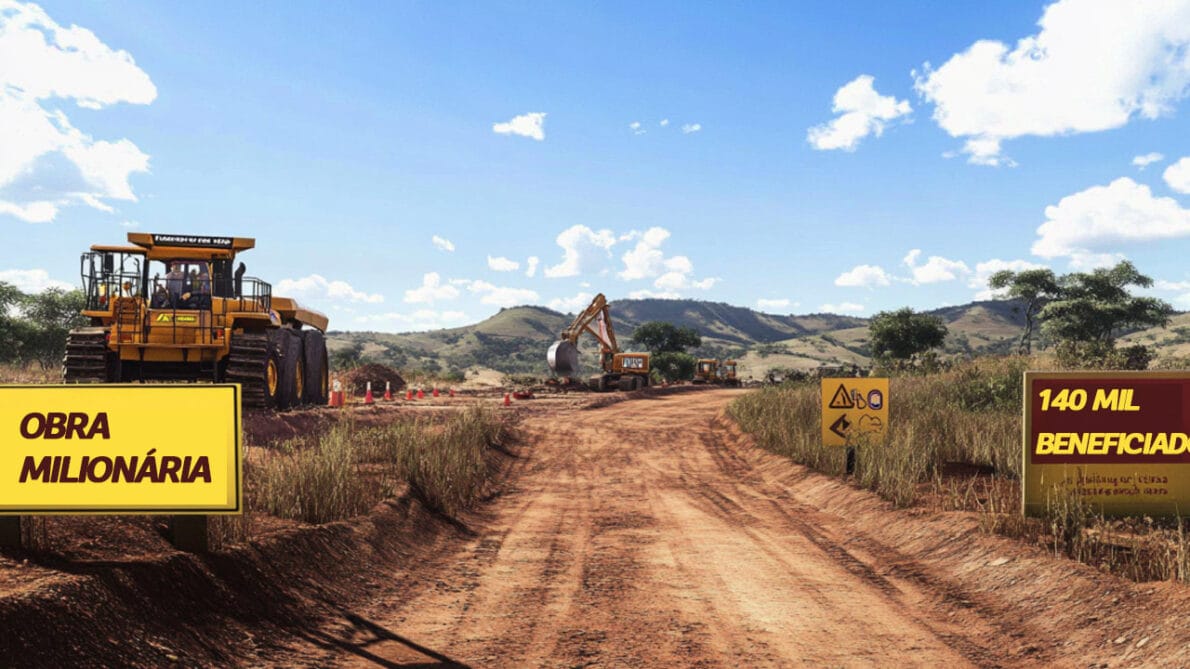
Government Is Investing Over R$ 65 Million in Highways in the Hinterland, Benefiting Over 140,000 People. Three Major Paving and Restoration Projects Are Underway, Focusing on Sousa and Cajazeiras.
Paraíba is about to experience a historic transformation, with promises of changes that could directly impact over 140,000 people in the state’s hinterland.
The local government announced million-dollar investments in highways that promise to ease vehicle traffic and promote the region’s development.
But will this investment bring all the benefits that are being advertised? The announcement made by the Department of Highways (DER-PB) highlights three major projects, but the details of this project still leave many questions unanswered. After all, what is at stake for the residents of these cities?
-
Land Rover to Halt Production in July, Putting 371 Jobs at Risk, as Chinese Automaker Negotiates to Convert Factory to 100,000 Vehicles Annually by 2027

-
Mexican Pest Threatens U.S. Cattle Herds at Historic Lows, Potentially Boosting Brazilian Beef Exports as Burger Prices Soar

-
Brazilian Freight Bill Progresses in Congress with $5,000 Minimum Wage, 70% Advance Payment, and Fines Up to $1 Million, as Agriculture and Industry Warn of Rising Costs and Legal Uncertainty

-
High Interest Rates and Record Defaults Lead to Surge in Vehicle Repossessions and Crowded Car Auctions in Brazil by 2026


An Investment of Over R$ 65 Million
The government of Paraíba, through the DER-PB, is allocating over R$ 65 million for road works in the hinterland, aiming to modernize traffic and promote integration between municipalities.
Two Paving Projects and One Restoration are part of the package, involving improvements in strategic areas, such as the region centered around the municipalities of Sousa and Cajazeiras.
These cities are located in the Alto Sertão and play a crucial role in the local economic and social development. According to government data, the project will directly benefit over 140,000 residents.
Sousa, known for being the main dairy hub of the western region of Paraíba and for housing one of the world’s most important archaeological sites, will be one of the biggest beneficiaries.
The city, with around 70,000 residents, will gain a new highway that promises to ease local traffic.
According to civil engineer Valter Ferreira, “the implementation of the Perimetral Oeste is already among the most important urban mobility works in the city, redirecting heavy traffic from the industrial hub and light traffic from tourists to BR-230, easing urban traffic.”
This project aims to ensure greater efficiency in the transport of agricultural and industrial products, as well as facilitate tourist access to the region.
Perimetral Oeste of Sousa: One of the Main Bets
One of the most awaited projects is the construction of the Perimetral Oeste of Sousa, which promises to directly connect BR-230 and PB-391, towards Cajazeiras and Uiraúna.
With a length of 4.3 km and an investment of over R$ 17.5 million, this highway is already in the earthwork phase and will feature drainage, new bridges, and the demolition of old structures.
According to Cheirliane Maia, manager and engineer at DER, this project is vital for the socioeconomic development of the city of Sousa and for the road safety of its users.
“It will redirect truck traffic, previously concentrated in the city center, to the highway, making traffic faster and safer,” claims the engineer.
PB-394: Strategic Paving for the Hinterland
Another relevant project is the implementation and paving of PB-394, which will connect BR-230 to the district of Engenheiros Avidos, also known as Boqueirão de Piranhas.
With a length of 13 km and an investment of nearly R$ 32 million, this highway is already under advanced construction.
The project includes earthwork, excavation, and construction of a solid base for traffic, as well as the installation of drainage systems.
According to Cheirliane Maia, “this paving will bring development to the littoral hinterland, directly benefiting 4,500 people and ensuring greater road safety.”
Local residents, like João Lucas, a student from the district of Engenheiros Avidos, are optimistic about the impacts of this project.
He believes that the paving will not only bring more safety but will also serve as a gateway to new investments in the region.
“We have natural beauties that are little explored, and this project could be the key to attracting tourists and fostering local development,” comments João, highlighting the mountains, rivers, and reservoirs that make up the landscape of Boqueirão de Piranhas.
PB-400: Essential Restoration for the Piancó Valley
The third and final highlighted project is the restoration of PB-400, which connects Cajazeiras to São José de Piranhas, with a length of 30.5 km.
The government invested over R$ 15.4 million in this restoration, which already includes the restoration of drainage systems and the installation of horizontal and vertical signage.
According to Lucas Arruda, manager at DER, this project has a special significance for the Piranhas River Valley.
“This highway was built in the 80s and has been deteriorating since then. The restoration will not only bring improvements in mobility and road safety but will also stimulate the economic development of the region,” explains the engineer.
The local population, especially residents who have depended on this road for years, are already noticing the difference. Fábio Hermano, who has been using the highway since 1996, states that “he has never seen the highway in such good condition.”
He emphasizes that the project will improve the lives of people who need to travel to Cajazeiras frequently, offering more safety and speed on their trips.
A Promising Future, But Still Facing Challenges
Although the investments are significant and the projects promise to boost the development of the hinterland of Paraíba, there are still questions about the real impact of these improvements in the long term.
Will the projects be sufficient to meet the population’s demands and support the expected economic growth? And more importantly: how to ensure that these resources are applied efficiently and transparently?
And you, do you believe that the investments in the highways of the Paraíba hinterland will bring the expected results? Or do you think there is still much to be done to improve the region’s infrastructure? Leave your opinion in the comments!





Be the first to react!