






 Portuguese
  Spanish
  6 min of reading
  0 comments


With the US herd at its lowest level since 1952, the advance of the screwworm fly could favor Brazilian beef, say analysts cited by Exame, while expensive hamburgers, drought, and restricted supply make Americans seek imported protein and open debate on Brazilian exports in the second half of 2026 with pressured slaughterhouses and ranchers
Brazilian beef may gain more space in the US in the second half of 2026, according to analysts interviewed by Exame, after the advance of the screwworm fly in American territory. The outbreak occurs amid a US herd at its lowest level since 1952.
The movement involves American ranchers, Brazilian exporters, and US consumers, who are already facing record prices for ground beef. The combination of plague, drought, reduced animal supply, and high hamburger prices may increase the American search for imported protein, including from Brazil.
Plague arrives at a delicate moment for the American herd
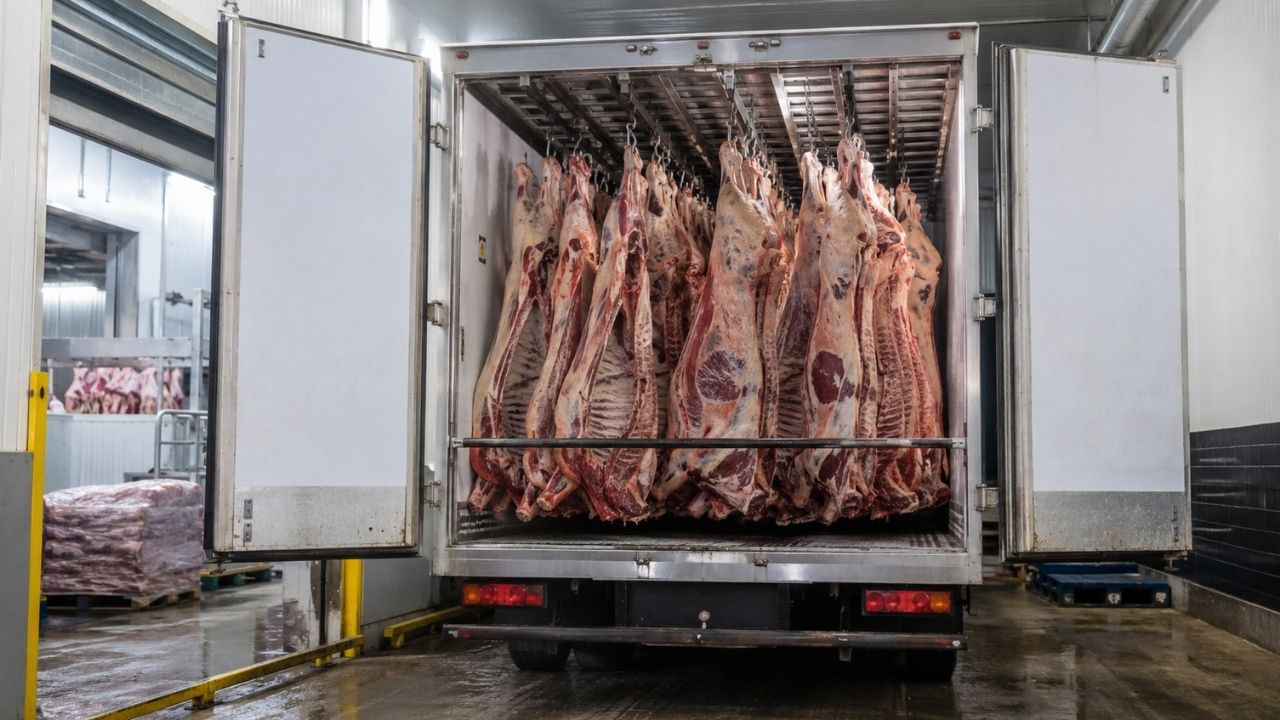
The screwworm fly has also come to be seen as a risk factor for an already pressured livestock system, because any further advance could make herd replenishment even more difficult.
-
Avocado Boom for European and U.S. Markets Fuels Water Crisis in Drought-Stricken Chilean Region

-
Brazilian Freight Bill Progresses in Congress with $5,000 Minimum Wage, 70% Advance Payment, and Fines Up to $1 Million, as Agriculture and Industry Warn of Rising Costs and Legal Uncertainty

-
High Interest Rates and Record Defaults Lead to Surge in Vehicle Repossessions and Crowded Car Auctions in Brazil by 2026
-
São Paulo Offers Over 13,000 Job Openings: Opportunities in Industry, Logistics, and More Across the State


According to Exame, the United States Department of Agriculture confirmed new cases in Texas, raising the number of records in the country to 15. Concern is growing because the sanitary problem appears precisely when American livestock is already facing a strong supply restriction.
Since 2019, the number of beef cattle has dropped by 13%, reaching 27.9 million. The total US cattle herd has reached its lowest level since 1952, according to USDA data cited by Exame.
This shrinkage did not happen in isolation. The prolonged drought in the American west increased feed costs, reduced grazing areas, and led producers to liquidate part of their herds to preserve cash, which made it difficult for supply to recover.
Brazilian Beef Enters the U.S. Radar
In this scenario, Brazilian beef emerges as an alternative to supply part of the American demand. Analysts interviewed by Exame assess that the United States may increase purchases of Brazilian protein by about 200 thousand additional tons.
The estimate, attributed to the sector, could bring total American purchases to approximately 500 thousand tons. The data reinforces how a sanitary and production crisis in the U.S. can open commercial space for Brazilian meatpackers and exporters.
In 2025, even with the tariff imposed by President Donald Trump on Brazilian beef, the United States was the second main destination for the product’s exports. There were 272 thousand tons shipped, an 18% increase compared to 2024, according to Abiec data cited by Exame.
From January to May 2026, the U.S. has already purchased 178 thousand tons of meat from Brazil, a 15% growth over the same period in 2025. The advance shows that American demand was strong even before the pest gained more attention.
More Expensive Burger Shows Pressure on Consumers
The impact of lower supply is already showing in the pockets of American consumers. Ground beef, the main raw material for burgers, reached $6.90 per pound in April, the highest value in the historical series of the Bureau of Labor Statistics.
According to Exame, the price is almost double that recorded ten years ago and represents an increase of approximately 20% compared to the same period last year. Since 2020, beef prices in the United States have accumulated a 75% appreciation, based on data from the Federal Reserve of St. Louis.
The expensive burger helps turn a field problem into a topic of table, supermarket, and economic policy. When ground beef rises, the impact is felt by consumers, restaurants, fast-food chains, and industries that depend on the protein.
The increase also expanded the debate about the structure of the American livestock chain. Regulators, industry, and consumer protection entities began to discuss the factors that pressure costs, while the U.S. Department of Justice opened an antitrust investigation involving large meat processors.
Brazil Has Already Exported Over 1 Million Tons in 2026
Brazil reached 2026 with strong beef shipments. In the accumulated period between January and April, the country exported 1.091 million tons, an increase of 14.6% over the same period in 2025, according to data cited by Exame.
Brazilian production gained even more visibility after the USA lost to Brazil the global leadership in protein production. In 2025, American beef production fell by 4%, to 11.8 million tons.
This shift increases Brazil’s strategic importance in the international market. When American supply shrinks, global buyers begin to pay more attention to Brazil’s ability to provide volume, regularity, and competitive pricing.
Even so, the scenario is not simple. Exporting more to the USA can help offset obstacles in other destinations, but it also requires attention to tariffs, quotas, domestic demand, and price balance in the Brazilian market.
China and the European Union also weigh in the Brazilian calculation
The expectation of greater sales to the United States comes at a time of uncertainty in other relevant markets. According to Exame, the sector is monitoring the effects of quotas imposed by China and the temporary blockade by the European Union on Brazilian beef purchases in June.
This context makes the American market even more important. If China slows down or imposes limits, and the European Union creates temporary barriers, the United States may gain weight as a destination capable of absorbing part of the Brazilian supply.
The challenge is to balance exports and the domestic market. Analysts cited by Exame point out that domestic demand remains strong, but July usually brings a slowdown in consumption due to school holidays and seasonal factors.
Therefore, the third quarter will be closely watched. Brazil’s ability to sustain prices, redirect shipments, and serve different markets may define the real size of the opportunity opened by the American crisis.
Plague may worsen an existing restriction
The advance of the New World screwworm fly did not alone create the American shortage. The supply was already tight due to the livestock cycle, drought, and herd reduction. However, the outbreak adds an additional risk factor.
Fernando Iglesias, a livestock analyst at Safras & Mercados cited by Exame, assesses that the situation was already delicate and that herd recovery will be slow. Therefore, even if the disease evolves in a controlled manner, the trend would be for continued purchases of Brazilian beef by the USA.
This point is crucial to understanding the agenda: the plague is not just an isolated sanitary event, but part of a larger picture of restricted supply, high cost, and competition for protein in the international market.
For Brazil, the commercial opportunity exists, but it comes with responsibility. The expansion of shipments needs to consider production capacity, sanitary rules, global competition, domestic consumption, and effects on prices for Brazilian consumers.
American crisis can turn into opportunity, but with caution
The advance of the plague in the USA occurs at the worst possible moment for American livestock: herd at the lowest level since 1952, prolonged drought, lower production, and ground beef at a record price. This combination may increase the demand for Brazilian beef and open up space for up to 200 thousand additional tons, according to analysts cited by Exame.
Even so, the opportunity does not eliminate risks. The Brazilian market also needs to deal with China’s quotas, temporary restrictions from the European Union, and internal absorption capacity. Do you think Brazil should make the most of the US demand for beef or prioritize price balance in the domestic market? Leave your opinion in the comments.


Be the first to react!