






 Portuguese
  Spanish


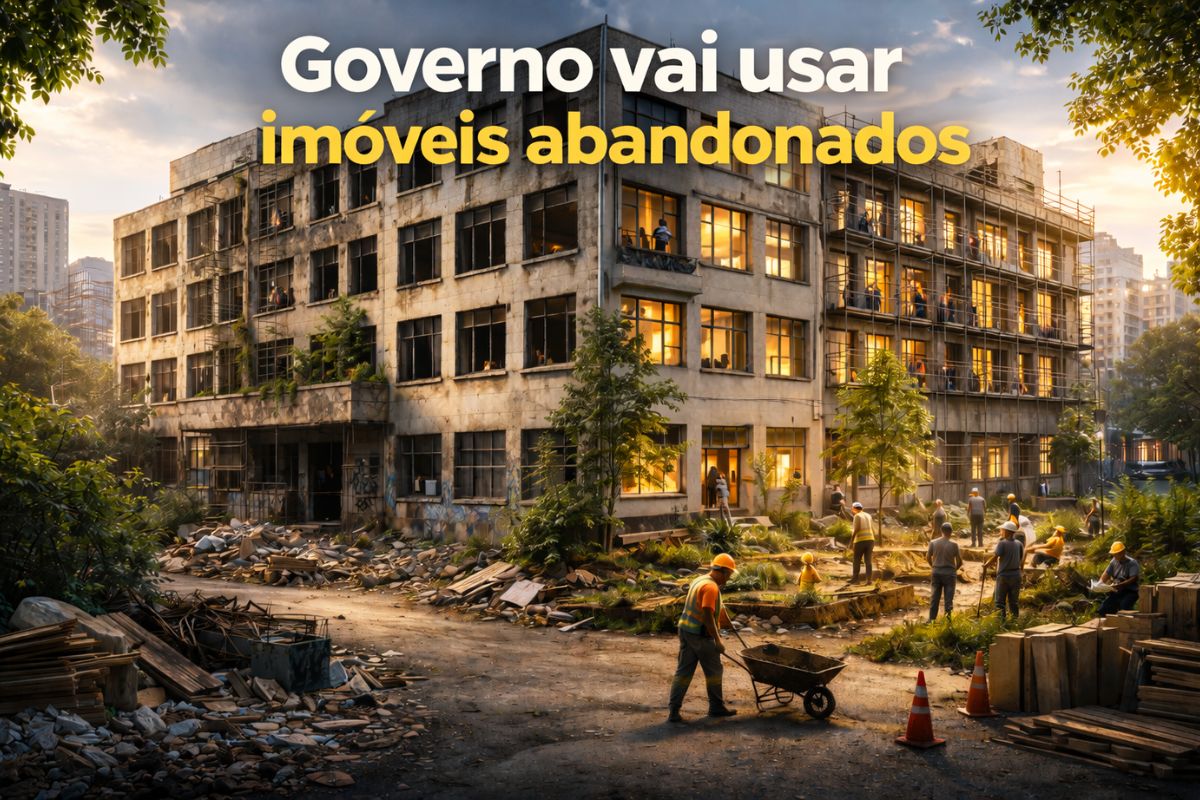


Abandoned Properties Are at the Center of a Restructuring Policy in Rio de Janeiro with the CEP da Cultura Program, Which Provides Idle Public Buildings for Social, Cultural, and Educational Projects. Meanwhile, Around 500 Federal Properties Change Purpose for Affordable Housing and Social Services
The advancement over abandoned properties has ceased to be merely a matter of property maintenance and has turned into an urban policy decision, with a direct impact on the layout of neighborhoods, services, and the circulation of people. When an idle public building changes function, the effect tends to spread beyond the address, especially in sensitive urban areas.
In Rio de Janeiro, this repositioning has gained a name and a method, and has already begun to yield concrete results in specific neighborhoods. At the same time, the movement occurs in parallel to a national front that targets hundreds of federal properties, suggesting a change of scale in how the State deals with idleness and social use.
CEP da Cultura: The Chosen Mechanism to Reorganize Abandoned Properties
The Government of the State of Rio de Janeiro has implemented a restructuring policy for idle public properties through the “CEP da Cultura” program.
-
Company Offering “Stones to Diamonds” Scheme Sells Ruined Italian Homes to Brazilians for 1 Euro, Disappears with Promised Renovations, Leaving Buyers in Debt to Italian Tax Authorities Until 2028 Without Property

-
Plastic Packaging Drives Santa Catarina Industry to 230% Growth, Aiming for R$ 500 Million by 2030 Amid Sector Crisis, with New Gearless Line Expanding in Southern Brazil to Compete in South America

-
Flamengo Star Invests in Brazilian Coastal Luxury Real Estate as Itapema Surpasses Balneário Camboriú in High-End Market Growth
-
Brazil to Issue “Panda Bonds” in China, Aiming to Raise Up to 5 Billion Yuan at Lower Interest Rates Than Dollar Debt


The guideline is simple on paper and complex in practice: to identify abandoned properties under public management and lease them for social, cultural, and educational projects, focusing on increasing access and promoting social inclusion.
The mechanics depend on transparency and simplification of the leasing process, a step that tends to stall programs of this type due to excessive requirements, administrative disputes, and legal insecurity for the manager.
When the leasing process becomes more predictable, organizations can plan usage, renovation, and operation, transforming the abandoned property into urban equipment.
The program also requires social counterweights as a prerequisite, which places a filter of public purpose on the occupation.
This does not solve everything, but it creates an objective criterion to differentiate social use from mere opportunistic occupation, especially in areas where each square meter is contested.
Bonsucesso as a Test Case and What Changes When a Building Reopens
In Bonsucesso, in the North Zone of Rio, the new headquarters of the “On the Stage of Life” project was inaugurated, located in a repurposed public property.
The space offers cultural and educational activities and is already operating with artistic performances, serving as evidence that the program has moved from paper to reality.
This type of delivery has a direct technical effect: it creates a hub of recurring use in a previously degraded area, altering the flow, occupation times of the surroundings, and demand for local services.
An abandoned property, when reactivated, tends to reduce the feeling of urban emptiness, but requires constant maintenance to avoid falling back into the cycle of abandonment.
The experience in Bonsucesso also helps to practically answer who benefits and how results are measured.
In restructuring programs, the most immediate indicator is not the aesthetic of the building, but the frequency of use, the regularity of activities, and the capacity to sustain operations over time.
Partnerships, Counterweights, and the Invisible Risk of “Use Without Continuity”
The government bets on partnerships with engaged organizations to transform abandoned properties into hubs for courses, workshops, and cultural events.
The logic is to use the existing structure as a tool to improve quality of life and combat urban degradation, instead of keeping closed buildings that only consume budget with minimal security.
The technical challenge lies in continuity. Even when there is good project selection, operation depends on team, programming, and maintenance resources.
If the property reopens without a sustainability plan, the city ends up with a short cycle of occupation and returns to square one, now with political and community wear.
Therefore, the counterweights stage should also function as a governance mechanism: what will be delivered, how often, for how many people, and with what rules for the use of the space.
In sensitive urban areas, the lack of clarity about management tends to generate conflicts between neighbors, users, and the public authority.
The National Scale and the Significance of 500 Federal Properties on the Same Agenda
At the national level, around 500 federal properties are undergoing transformations for affordable housing and social services.
This fact indicates that the debate about abandoned properties is not limited to a state program, but rather a trend of restructuring idle public assets as a tool of social policy.
The difference in purpose matters. While the CEP da Cultura focuses on social, cultural, and educational projects, the national front includes affordable housing and social services, which alters the urban impact and the pressure on infrastructure.
When use turns into housing, the effect is permanent and more sensitive, requiring rules for coexistence, maintenance, and integration with existing services.
This parallel also suggests a point of attention: coordination between levels of government.
If states and the federal government operate in neighboring territories, the absence of alignment can duplicate efforts or create gaps in priority regions, especially in areas where abandoned properties have been concentrated for years.
What to Observe by 2026: Choice Criteria, Transparency, and Measurable Results
The Government of Rio’s plan foresees expansion to more regions by 2026, reinforcing the objective of urban requalification and connection with civil society.
In this outlook, what defines success is not only how many properties were leased, but what criteria guided the selection and how the results will be monitored.
In projects of this type, the city tends to ask three points: where abandoned properties are being prioritized, why these addresses were selected, and what the monitoring model is.
Without clear metrics, the discussion turns into a narrative dispute, and sensitive urban areas tend to be the first to feel the cost of this ambiguity.
The repositioning of idle properties can also influence other states, as it creates a precedent for replicable public policy. If successful, it becomes a model. If it fails, it becomes an argument to keep abandoned properties closed under the justification of risk and conflict.
Abandoned properties are gaining a new function in Rio de Janeiro with the CEP da Cultura, which restructures idle public buildings for social, cultural, and educational projects, with counterweights and a promise of transparency.
Meanwhile, the reorientation of around 500 federal properties for affordable housing and social services shows that the agenda has already entered the national scale and can reshape sensitive urban areas.
In your neighborhood, would you prefer to see abandoned properties becoming cultural spaces, courses, and workshops, or affordable housing and social services? Which destination do you think effectively reduces abandonment and increases safety in the surrounding area, in practice?






Penso que prioritariamente tais imóveis deveriam ser destinados para moradias , especialmente para a classe mais carente.