Portuguese
  Spanish


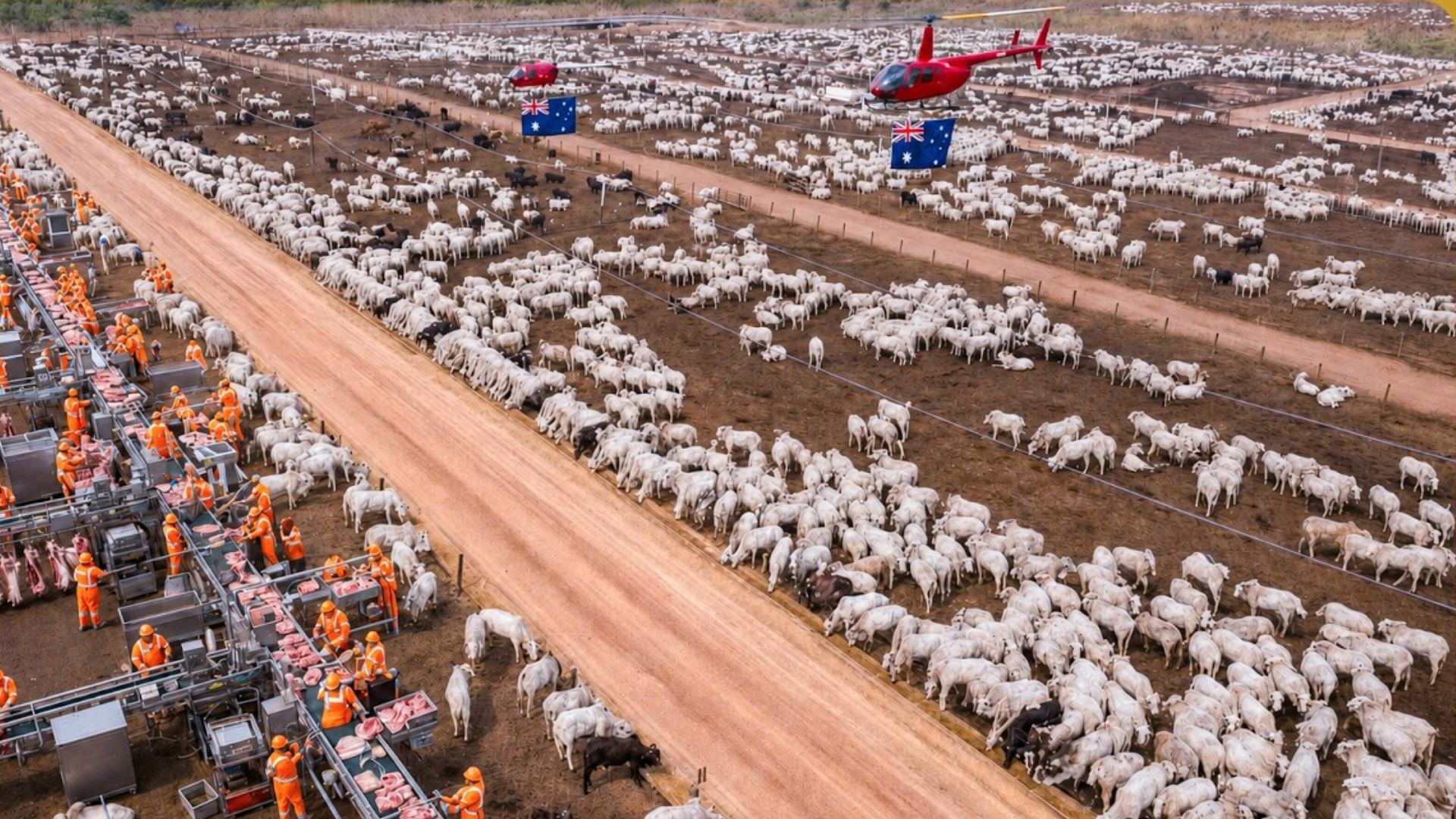


Australia transformed a dry continent into a global agricultural powerhouse by investing in drones, milking robots, greenhouses powered by desalinated seawater, and GPS-equipped harvesters. Exports total more than 71 billion Australian dollars per year, according to the government, even with 70% of the country in arid or semi-arid regions with extreme heat.
On February 23, 2026, Monday, the Department of Agriculture, Fisheries and Forestry (DAFF) of the Australian government released the latest edition of the Snapshot of Australian Agriculture, an annual report prepared by the Australian Bureau of Agricultural and Resource Economics and Sciences (ABARES), which confirmed a fact considered paradoxical by the agency itself: even with more than 70% of the territory classified as arid or semi-arid and frequent temperatures above 45°C in different parts of the country, Australia remains one of the largest agricultural powers on the planet. The value of the sector’s exports reached 71.6 billion Australian dollars in the 2023-24 fiscal year, equivalent to approximately 46 billion US dollars, and about 11% of the total exported by the country in goods and services.
The reason, according to ABARES itself, lies in a combination of large-scale mechanization, intense reliance on agricultural science, and accelerated adoption of technologies such as drones, sensors, milking robots, solar-powered greenhouses, and GPS-guided autopilot harvesters. The country also applies its model to more than 350 million hectares dedicated to agriculture and livestock, with a resident population of only 27 million inhabitants. Australia’s operation demonstrates, on a continental scale, how technology, automation, and data can transform a dry environment into a food production engine for the world.
How Australia became an agricultural powerhouse despite the extreme climate

A large part of the soils has been heavily worn down over millions of years, with nutrient levels much lower than those of the main agricultural regions of Europe, the United States, and Brazil. Climate change has intensified droughts, wildfires, and heatwaves, creating constant pressure on water resources and productive ecosystems. Even so, the country has built a production model on an extremely large scale, with a strong focus on efficiency per hectare.
-
Brazilian Producer Adopts Hydroponic Strawberry Farming in Western Paraná, Achieving Year-Round Harvests and Becoming a Model for Continuous Production

-
Vertical Farming Company Backed by SoftBank and Jeff Bezos Files for Bankruptcy, Valuation Plummets from $1.9 Billion to Under $15 Million

-
Indian Inventor Develops Solar-Powered Machine Enabling Blind Farmers to Independently Manage Crops with Sensors and Audio Alerts

-
Brazilian Honey Supplying U.S. Supermarkets Faces Price Hike and Job Threats Amid New Tariff Round
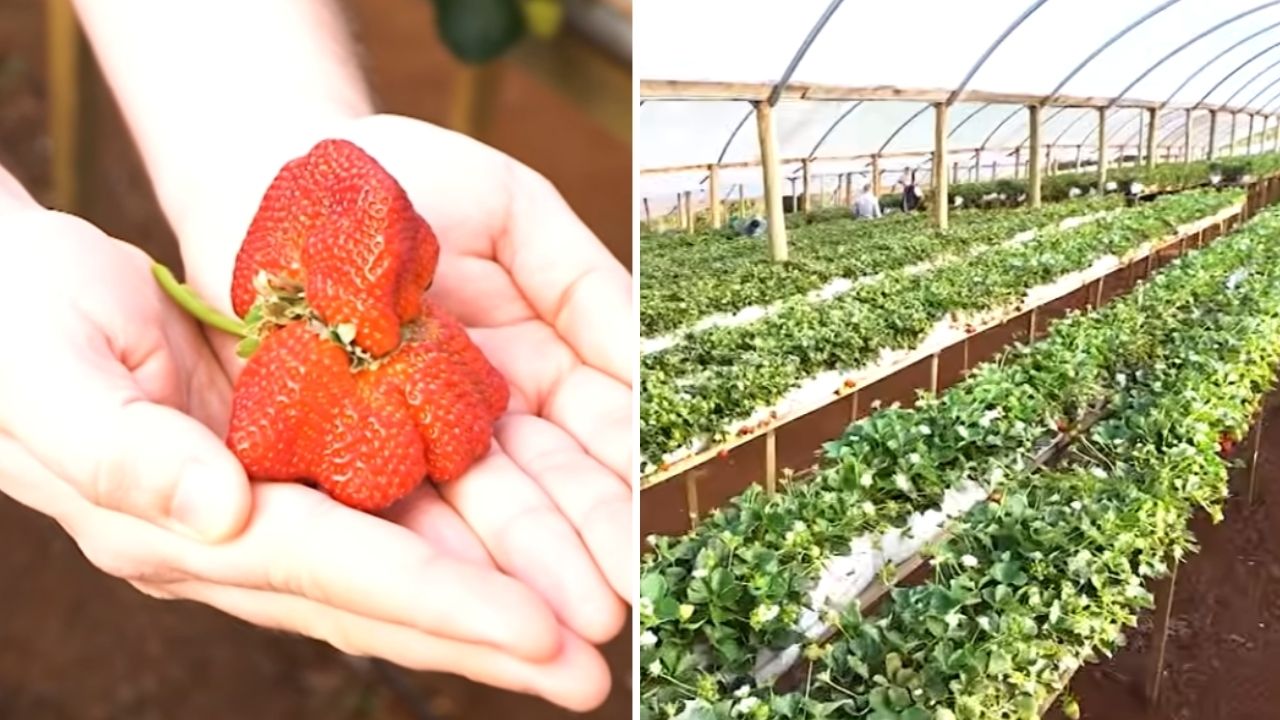


The strategy is based on three pillars: large-scale agriculture, almost total mechanization, and continuous investment in research. Australia exports 71% of all its agricultural production by volume, according to ABARES, with highlights in wheat, beef, wool, fruits, wine, and dairy products. This export profile pushes farms to an incessant search for productivity, water efficiency, and reduction of operational costs, which is why Australia has become a global reference in the adoption of technology in the field.
Mechanized shearing and the merino wool industry in Australia

To handle herds that reach thousands of animals per farm, the country abandoned manual shearing with scissors decades ago and adopted high-speed electric machines that function like industrial clippers. The process follows a strict standard, starting from the belly, moving through hind legs, hips, back, shoulders, and neck, in long, uniform movements close to the skin, without causing cuts.
An experienced shearer can process between 100 and 300 sheep per day, according to industry data. Between 2020 and 2024, the average annual wool production in Australia was around 279.4 million kilos, enough to supply fashion brands on several continents. In parallel, the wool goes through sorting tables where dirty parts and impurities are discarded before being classified by fineness, length, and color. The scale of the operation is only possible because Australia invested heavily in mechanizing an activity that remains labor-intensive with specialized labor.
Drones, sensors, and robots in cattle herd management


The Australian cattle herd totaled 29.7 million heads in the fiscal year 2024-25, including about 27.6 million animals aimed at beef production, according to official data from ABARES. The total value of cattle sales reached approximately 20.5 billion Australian dollars in the same period. In many remote regions, a single farm can extend over hundreds of thousands of hectares, making management on horseback or by pickup truck unfeasible from a logistical and economic standpoint.
To solve the problem, ranchers have adopted drones, sensors, thermal cameras, and artificial intelligence systems. The drones fly over areas that would take hours to be covered by land vehicles, checking water points, detecting damaged fences, and identifying animals separated from the herd. The University of Sydney itself developed the Swagbot robot, capable of monitoring cattle health, assessing pasture quality, and directing herds to the best grazing areas. Companies in the sector report annual savings of tens of thousands of dollars with the technology of agricultural drones applied to extensive livestock farming.
Greenhouses powered by desalinated seawater at Sundrop Farms
One of the most emblematic cases of Australian technological agriculture is Sundrop Farms, located near Port Augusta, in the state of South Australia. The project, with an investment of about 145 million Australian dollars, combines hydroponic greenhouses, concentrated solar power, and seawater desalination to produce over 15,000 tons of tomatoes per year in a hot and arid coastal region, where traditional agriculture would be practically unfeasible.
Inside the greenhouse, the tomatoes do not grow in natural soil. The roots are in cultivation substrates while nutrient solutions are provided by drip irrigation systems with flow controlled by sensors. Computers monitor temperature, humidity, light intensity, and water absorption by the plants, automatically adjusting fans, shading screens, and irrigation pumps. Advanced technological greenhouses in Australia achieve yields of over 400 tons of tomatoes per hectare, far above the results obtained in open fields, transforming the concept of sustainable agriculture into an engineering equation.
Milking robots and the transformation of the dairy industry

In the traditional model, cows were led at fixed times to milking parlors, in a repetitive process that required a large workforce. With the decline of rural labor, this model became unfeasible. Today, cows voluntarily enter the milking stations whenever they need, at any time of the day or night.
Sensors and identification chips individually recognize each animal. A robotic arm automatically cleans the teats, precisely locates, and attaches the milking cups using lasers and sensor-guided cameras. During the process, the system continuously measures the flow and quality of the milk and monitors signs of inflammation or production drop. Australian farms that adopt the system usually operate with 3 to 4 robots for herds of 150 to 240 cows. Each robot collects about 1,200 kilograms of milk per day, with an average production of 19.3 to 26.3 kilograms per cow, according to industry data. The agricultural technology here transforms each cow into a real-time data source.
Wheat Harvest Guided by GPS and Productivity Maps
Wheat is one of the most important pillars of Australian agriculture. In the fiscal year 2024-25, the country exported about 34.8 million tons of wheat, with an estimated value of 7.3 billion Australian dollars. At such volumes, the harvest cannot rely on manual labor or simple machines. Farms use modern combined harvesters that cut the crop, separate the grains, and clean them at the same time, transferring the product to trucks that accompany the work directly in the field.
The major difference lies in the onboard GPS systems. They allow the machines to follow perfectly straight paths, reducing overlap between passes, saving fuel, and ensuring no area is left unharvested. In many farms, productivity data is recorded for each specific zone, allowing the identification of areas with poor soil, more productive regions, and fields that need changes in the next season. This intensive use of data is what makes Australian agriculture so competitive in global trade, even facing high rural labor costs.
Night Harvesting of Grapes for Wine and Precision Technology
The Australian wine industry produced about 1.43 million tons of grapes for wine in 2024, with an increase of 9% over the previous year. In hot regions like Riverland, Barossa Valley, and parts of Western Australia, producers adopt night harvesting as a technical strategy. As temperatures drop before dawn, the grapes better preserve their freshness, reducing the risk of oxidation and delaying premature fermentation before reaching the winery.
Modern harvesters move between the vineyard rows using vibration systems to separate ripe grapes from the clusters, while integrated blowers remove leaves and branches in a single pass. In old vineyards or for premium varieties, manual harvesting is still preserved, creating a two-tier model where machines ensure scale and speed, and human labor takes care of high-standard segments. It is this combination that maintains the competitiveness of Australia’s wine in markets like China, the United States, and the United Kingdom, even in a country with a challenging climate for viticulture.
The Australian case offers a practical lesson for any agricultural country: technology does not replace the producer, but expands the possibilities of what they can do in hostile environments. In a dry land, with poor soil and extreme climate, machines, data, and automation have become tools of survival as much as competitiveness. For Brazil, which faces its own challenges of productivity, climate, and cost, closely observing the Australian experience can be strategic in defining the next cycle of modernization for the national agribusiness.
Do you believe that the Australia model, based on high technology and data, can be replicated in medium and large Brazilian farms? Do you think the cost of technology is still an obstacle in Brazil, or are we already on the right path? Leave your comment, tell us if you know examples of the use of drones, GPS, or milking robots on Brazilian farms, and share the article with producers, technicians, and agribusiness students.