






 Portuguese
  Spanish


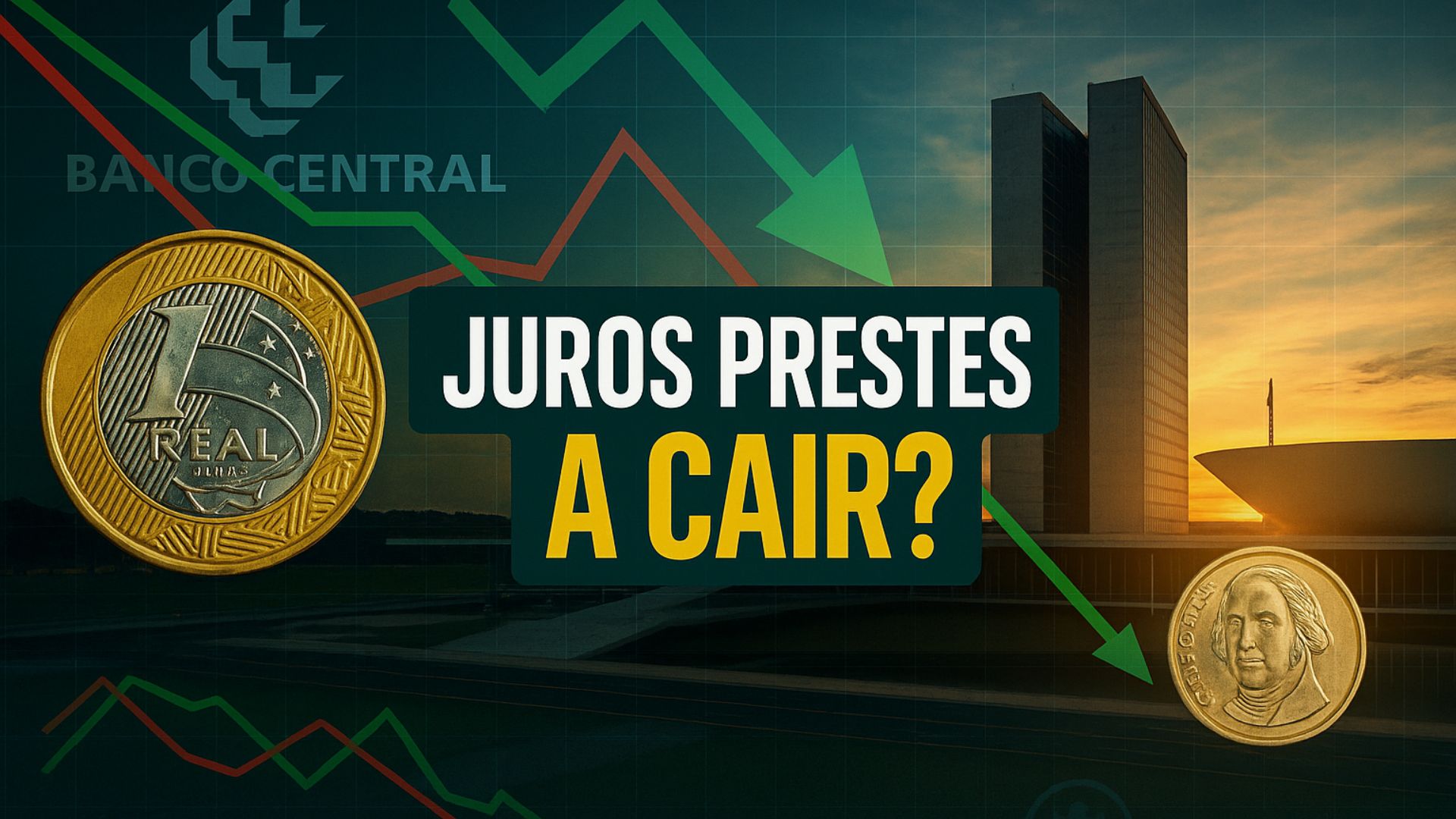
Minister of Finance Bets on Interest Rate Decrease and Controlled Inflation while Dollar Stability and Fiscal Targets Reinforce Government Optimism about Economic Recovery and Public Account Balance.
Days before the new decision from the Monetary Policy Committee (Copom), the Minister of Finance, Fernando Haddad, stated that the government sees room for interest rate reduction in the coming months.
During a videoconference at the Jafra Investment Conference, the minister expressed his belief that the country could end the current presidential term with the lowest accumulated inflation since the Real Plan, launched in 1994.
Prospect of Lower Interest Rates
According to Haddad, the combination of the fiscal framework, tax reform, and more controlled inflation has created conditions for a gradual decrease in borrowing costs.
-
Major Brazilian Supermarkets, Including Carrefour and Assaí, May Close Earlier to Prevent Price Increases

-
Coca-Cola Shuts Down 100-Year-Old Factory in the U.S., Impacting 85 Workers and Shaking Local Community with Historic Consequences
-
Bianca Andrade Invests $30 Million of Her Own Money in Boca Rosa, Launches Over 100 Products in a Year, Aiming for $400 Million by 2026
-
Belo Horizonte Becomes First Brazilian City to Fund Housing, Utilities for 100 Homeless Families with $900,000 Initiative


He reiterated the government’s commitment to fiscal targets: zero deficit by 2025 and primary surplus of 0.25% of GDP in 2026, as outlined in the new framework.
The minister also highlighted that the dollar exchange rate close to R$ 5.30 has helped stabilize domestic prices and assist the Central Bank in curbing inflation.
“I believe that there will be room for interest rate reduction. I am not from the Central Bank, but everything leads me to believe that the cycle of interest rate cuts will begin at some point in the coming months,” he stated.
Haddad also mentioned that the government is optimistic about the economic trajectory, citing advances in reforms and new sectors that should drive growth, such as green economy, insurance, credit, and artificial intelligence.
Expectation Around the Copom
The Copom began another meeting this Tuesday (approximate date), expecting to define the new Selic rate, currently at 15% per year — the highest level since 2006.
In the last decision, at the end of July, the Central Bank had halted the rate hike cycle, after raising interest rates by 4.5 percentage points in the previous nine months.


Market analysts expect the rate to be maintained, which would represent the third consecutive meeting without changes.
This decision should take into account the indicators of inflation and employment, as well as the fiscal projections presented by the government.
Inflation and Growth Under Control
Haddad assessed that the country may be entering a sustainable cycle of interest rate reduction, supported by structural reforms and economic stability.
According to him, “Having surpassed the phase of highest inflation in the first semester, there are conditions for the country to enter a trajectory of lower interest rates with sustainability.”
The minister expressed his belief that by the end of President Luiz Inácio Lula da Silva’s term, Brazil will have the lowest accumulated inflation in four years since 1994, remaining below 20%.
He also mentioned expectations of an average growth of 3% per year and historically low unemployment levels.
Labor Market in Recovery
On the same day as the event, the IBGE released new data on the labor market, showing a decrease in the unemployment rate.
In the quarter ending in July, the rate was at 5.6%, which corresponds to 6.1 million unemployed people — the lowest number in the historical series of the Continuous Pnad, started in 2012.
Compared to the same period last year, there was a 18% decrease in the total number of unemployed and a reduction of 1.2 percentage points in the unemployment rate, which was close to 7% in 2024.
In comparison with the previous quarter, the decrease was 0.2 percentage points.
This data reinforces the positive moment of the labor market and supports the government’s narrative that the economy is recovering.
Analysts Point Out Central Bank Caution
Despite the government’s optimism, specialists believe that the Central Bank should remain cautious before initiating significant cuts in interest rates.
Political and economic analyst Vinícius Torres Freire noted that the historically low unemployment rate could pressure costs, especially in the services sector, even though overall inflation is decelerating.
He stated that the warm labor market is one of the factors that may delay a reduction in the Selic, as service inflation remains high and expectations for 2027 are still above the 3% target.
“There is distrust about the control of public accounts, and this keeps inflation expectations high.
The Central Bank should only adjust the interest rate when it is certain that these expectations are anchored to the target,” he explained.
The analyst stated that, even with the positive scenario, the Central Bank should wait for clearer signs of deceleration to initiate substantial cuts, which could occur between December and March 2026.
Optimism Versus Caution
The Lula government bets on a scenario of fiscal balance and controlled inflation to allow for interest rate reductions and boost growth.
In contrast, the Central Bank maintains a more conservative discourse, prioritizing the control of inflation expectations before easing monetary policy.
Meanwhile, the dollar remains stable, and the fiscal surplus helps reinforce confidence in the country.
With the economy showing signs of recovery and employment on the rise, Brazil may be close to a new cycle of sustainable growth.
But the question still dominating the halls of Brasília is: when, in fact, will the Copom start cutting interest rates?






-

1 person reacted to this.