






 Portuguese
  Spanish


The trajectory of Moishe Mana helps to understand how urban land and logistics can change entire neighborhoods, attract investors, and increase the value of previously less contested areas in Miami
He started with a moving van in New York, entered the Miami real estate market, and began gathering land in areas that later gained strength with art, tourism, commerce, and construction. The case of Moishe Mana is interesting because it shows the connection between urban logistics, warehouses, old properties, and real estate appreciation.
The information was published by The Real Deal, a journalistic outlet specializing in real estate, on September 21, 2017. The material identifies Moishe Mana as a businessman born in Israel, resident of Miami, and founder of Moishe’s Moving in New York in the early 1980s, starting with a borrowed van.
The most relevant point for construction and urban economy is not just the origin of the business. The turning point is in the path that linked moving, storage, warehouses, and the purchase of properties in strategic regions of Miami.
-
Californian gives up on buying a house, purchases a roughly 1-hectare island for $31,000 in Finland, learns construction from scratch, and begins building a refuge without running water or electricity.

-
A 3-year-old deaf student received the first white belt in Jiu-Jitsu and understood the achievement because the teacher learned Libras to communicate with him, in a video that surpassed 7 million views and moved social media by showing inclusion happening on the mat.

-
Miguel Krigsner opened a small compounding pharmacy in Curitiba in 1977, turned Brazilian fragrances into a national success, and created O Boticário, now one of the largest beauty networks in the world.

-
Meet the charming parrot grandpa, who became known for hugging free birds and revealed how he gained their trust over the years.



The moving van opened the door to a logistics business in New York
Mana’s first business step appeared in the moving sector. In a city like New York, this service depends on transportation, organization, timing, and trust. The van was simple but served as the beginning of an operation aimed at moving furniture, objects, and clients’ goods.
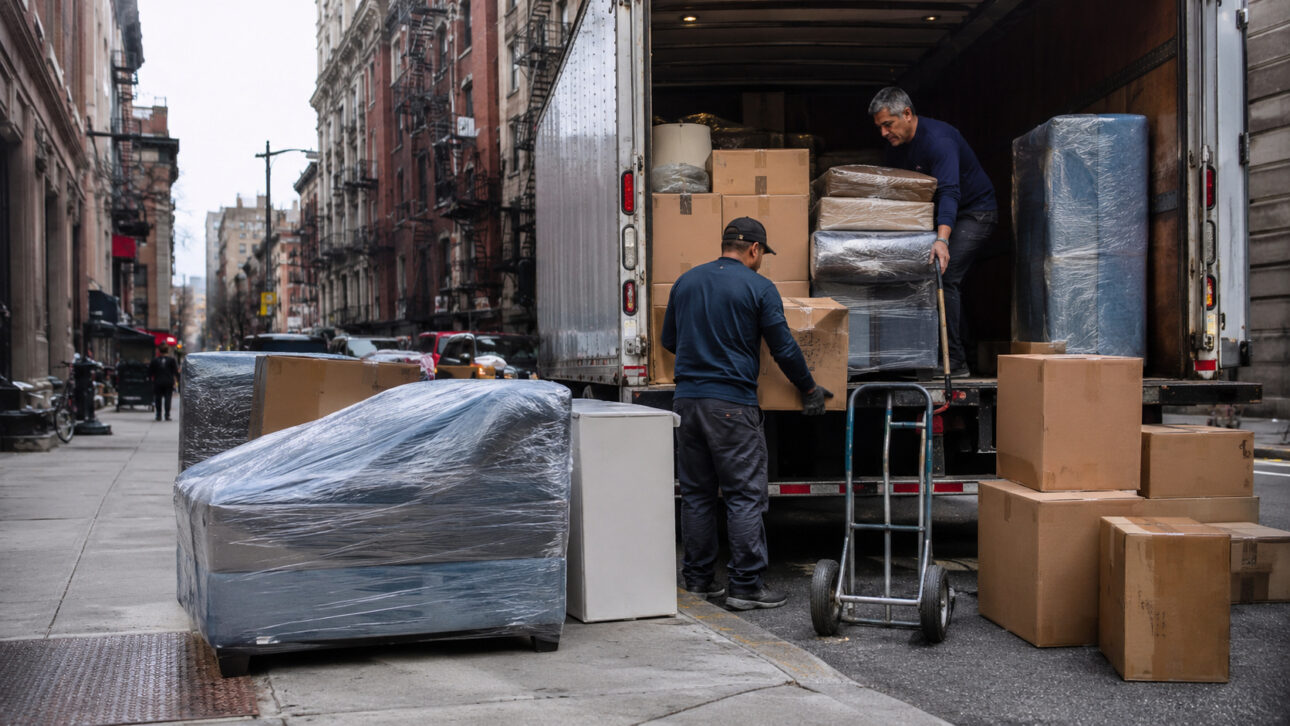
Logistics is the set of activities that allows something to be taken from one place to another. In the case of a moving company, this involves vehicle, team, route, storage, and service. Therefore, a work van could become the foundation of a larger business.
With the advancement of this type of operation, storage becomes important. Those who move house, office, or city may need to store objects for a period. This detail brings transportation closer to the market of warehouses, storage facilities, and urban properties.
Warehouses and storage facilities brought Mana closer to the real estate market
The connection between change and real estate becomes clearer when a company starts dealing with physical space. A warehouse needs area, vehicle access, and a useful location. This turns warehouses and land into central pieces for the operation.
Mana is also linked to GRM Information Management, a corporate document storage company. The business had warehouse areas in the United States, South America, China, and Tanzania. This data shows how storage has ceased to be just support and has become an important part of the business structure.
In simple terms, a warehouse is more than just a large building. It can be used to store documents, furniture, artworks, goods, and equipment. When located in an urban area with potential for appreciation, it can also become an important real estate asset.
Wynwood became one of the central points of the bet on urban land in Miami
Wynwood is a neighborhood in Miami known for the presence of warehouses, urban art, visitors, commerce, and new uses for old properties. This type of transformation changes the image of an area and can attract businesses, tourists, restaurants, events, and construction companies.
The Real Deal, a journalistic outlet specializing in the real estate market, reported that Mana owned a large area in Wynwood and also development rights in the neighborhood. The same material stated that the declared goal was to create a cultural center for Miami.
Development rights are the possibility of building within the city’s rules. This does not mean a completed project. It means that the land or property has the potential to receive new projects, if there is approval, investment, and execution.
Downtown Miami entered the strategy with more than 45 properties in the Flagler Street area
In addition to Wynwood, Mana also gathered more than 45 properties in the Flagler Street area, in downtown Miami. This region is important because it is in a central part of the city, with the flow of people, commerce, services, and real estate interest.
When an investor gathers several nearby properties, they can consider changes in use, renovations, and broader projects. This does not happen overnight. However, the concentration of properties can influence the future of an urban area.
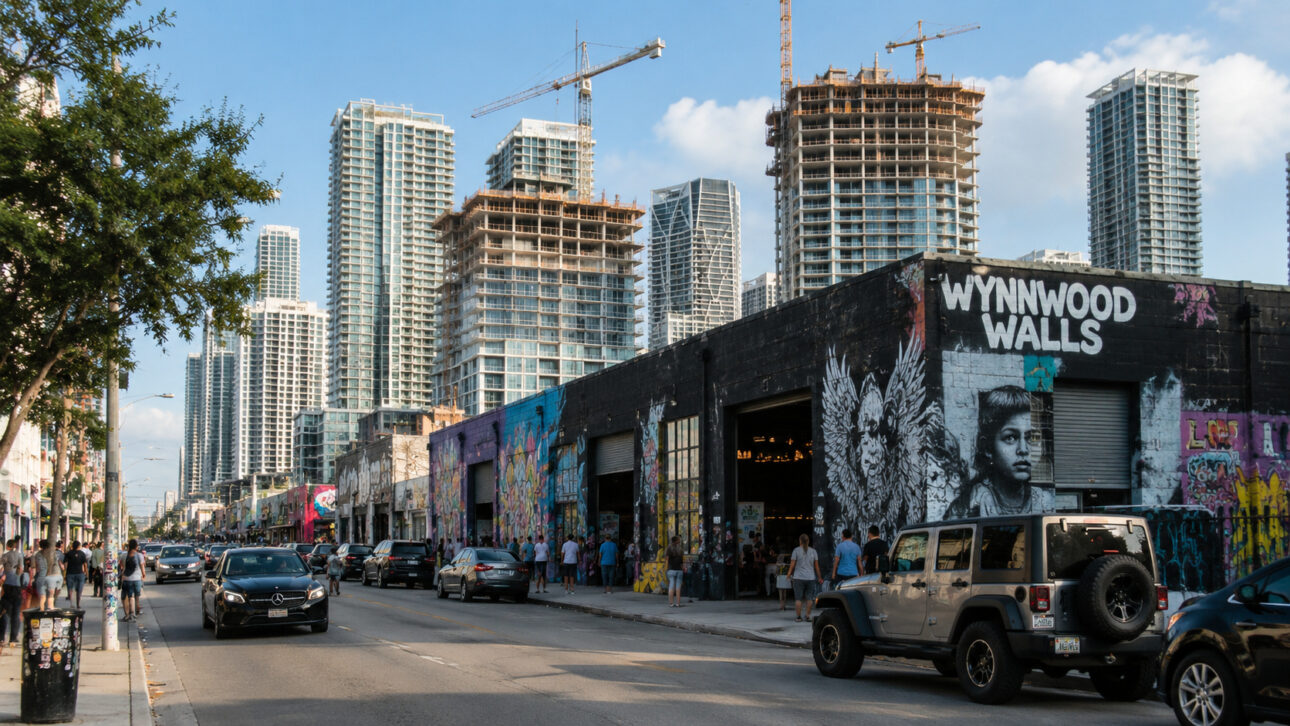
In the case of Miami, the city center has economic weight because it connects businesses, tourism, and services. Therefore, properties in central areas can gain value when there is an expectation of new developments, more movement, and better-planned occupation.
Real estate appreciation occurs when the neighborhood’s use changes
Real estate appreciation is when a plot of land, warehouse, house, or building becomes more valuable. This can happen due to location, the arrival of businesses, improved neighborhood image, new visitors, construction, services, and company interest.
In Wynwood, the mix of urban art, warehouses, tourism, and commerce helped change the perception of the area. Areas that once seemed purely industrial or old began to be seen as spaces with potential for business and construction.
The perspective for Brazil involves old warehouses, urban centers, and underutilized land
Many Brazilian cities also have areas with old warehouses, vacant land, and poorly utilized properties. In some cases, these spaces are near avenues, commercial centers, port regions, transport lines, or industrial zones.
The example of Miami helps to understand a simple logic. First, the property serves a basic function, such as storage or logistics operations. Then, the surroundings change, new uses arrive, and the land becomes sought after for commerce, culture, tourism, or construction.
This does not mean that every old area will appreciate. The change depends on location, demand, urban rules, investment, and market interest. Even so, Mana’s trajectory shows how logistics and real estate market can intersect within a city.
Moishe Mana started in the moving sector in New York and began working in urban real estate in Miami, with a presence in Wynwood and downtown. The story becomes relevant because it shows how transport, storage, warehouses, and land can be part of the same economic strategy.
The big question is how cities choose to repurpose their old areas. Should neighborhoods with empty warehouses become new hubs of commerce and construction, or should they preserve part of their original function? Leave your opinion in the comments and share this discussion.


