Portuguese
  Spanish



Why the logs returned to the rivers: ecological architecture
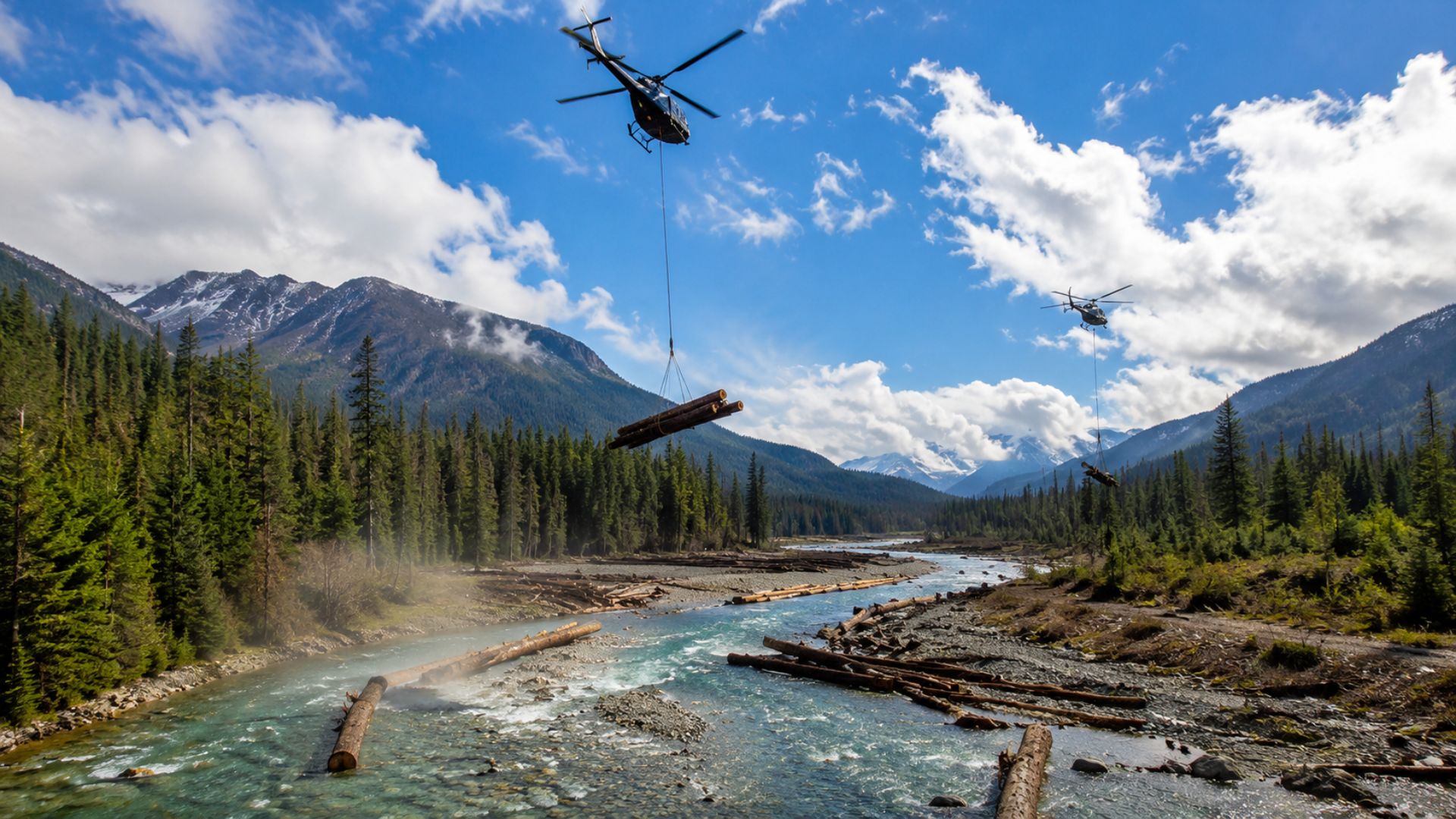
Helicopters are dropping more than 6,000 logs along 38 kilometers of remote rivers and streams in the state of Washington, United States, to reverse decades in which biologists removed wood from the water believing they were doing the right thing. The report is from the public broadcaster OPB, which followed the largest river restoration project ever undertaken in the region in the center of the state.
The operation reverses a logic that lasted almost four decades. Nearly 40 years ago, biologist Scott Nicolai began stream restoration by doing the opposite of what he does now, that is, removing logs from the water. Today, wood is once again treated as a central piece of rivers, and the project replaces the logs to reopen pools, retain gravel, reconnect floodplains, and restore conditions for salmon and trout to swim and spawn again.
When wood in rivers was seen as an enemy
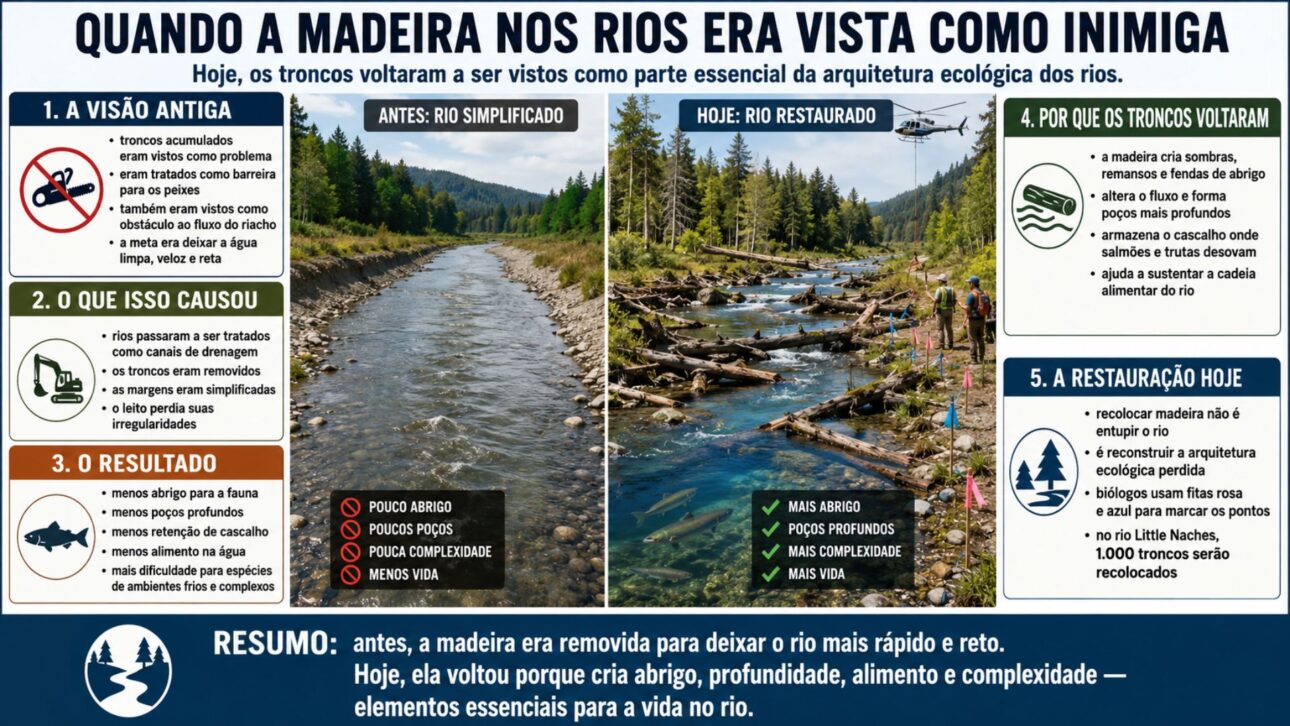
For a long time, a large pile of logs was seen as a problem. The dominant mindset, practical and now seen as an ecological mistake, interpreted accumulated wood as a barrier for fish and an obstacle to the good flow of the stream. The goal was to let the water pass clean and fast, as if the best river was the fastest and straightest possible.
-
Few people know, but China photographed for the first time Earth’s “quasi-moon,” a small asteroid that accompanies our planet around the Sun and may be a fragment torn from the Moon millions of years ago.

-
China delivers a giant crane ship capable of lifting 2,200 tons at once, transporting structures of up to 10,000 tons, and operating in semi-submersible mode for offshore projects.
-
One of the most devastating El Niños in modern history did not only bring heat: amidst droughts, destroyed crops, and lack of supplies, 50 million people died across three continents, and scientists see in this past a brutal warning for a hotter planet.

-
EcoFlow’s Portable Fridge Offers 43 Hours Off-Grid, Reaches -25°C, App-Controlled, Solar-Powered for Camping and RV Adventures



This vision treated rivers as drainage infrastructure, not as living systems. Logs were removed, banks were simplified, and the bed lost its irregularities. Over time, the result became evident, with less shelter, fewer deep pools, less gravel retention, less food in the water, and more difficulty for species that depend on cold and complex environments.
Why the Logs Returned to the Rivers: Ecological Architecture
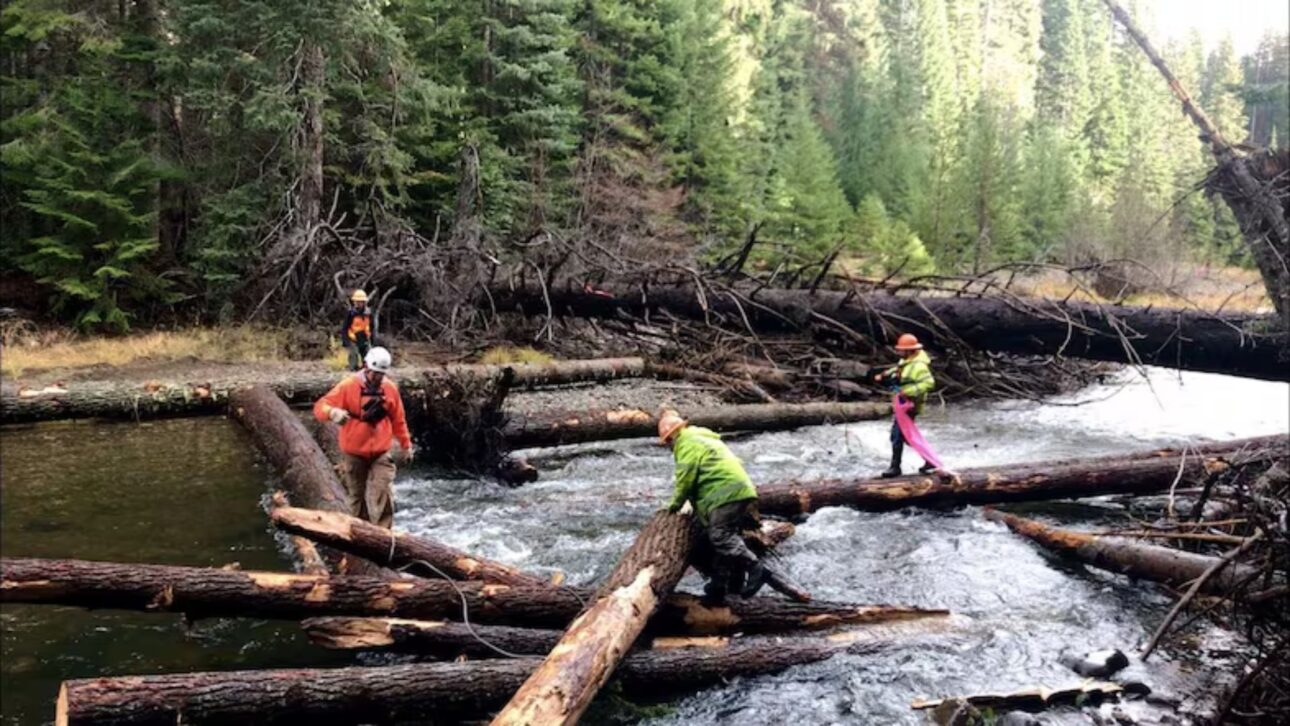
image: Courtney Flatt
Today, Scott Nicolai, now a habitat biologist for the Yakama Nation, is at the center of a logic shift. Wood is once again considered a fundamental part of river ecosystems because it fulfills several functions simultaneously. It adds complexity to the environment, creating shadows, backwaters, and crevices that serve as shelter, forms pools by altering the flow and causing the water to carve deeper areas, and stores gravel that functions as the bed where salmon and trout spawn.
Wood also supports the river’s food base. Aquatic insects crawl over the logs and feed on the algae growing there, and these insects become food in the river’s chain. Therefore, replacing the wood does not mean clogging the water, but rather rebuilding the ecological architecture of rivers that has been dismantled over decades.
The Largest Restoration Project in the Northwest by Numbers
The intervention has an unusual scale. The project operates on more than 38 kilometers of rivers and streams in the Yakama Reservation and ceded lands, involving private landowners, the United States Forest Service, and Washington’s departments of fish and wildlife and natural resources. It is funded by eight different agencies, including the Bonneville Power Administration, and involves six partner organizations, such as The Nature Conservancy and the Mid Columbia Fisheries Enhancement Group.
The focus is to recover sections degraded by a set of historical actions. Among the cited causes are overgrazing, which alters vegetation and bank stability, the construction of railroads and dams for timber extraction, which changed the course of rivers, and the very cleaning of streams by biologists, which removed logs and simplified the habitat. Phil Rigdon, director of the Department of Natural Resources for the Yakama Nation, summarizes the shift as learning from past mistakes and seeking a better way to care for the rivers.
Why Helicopters Entered the Operation
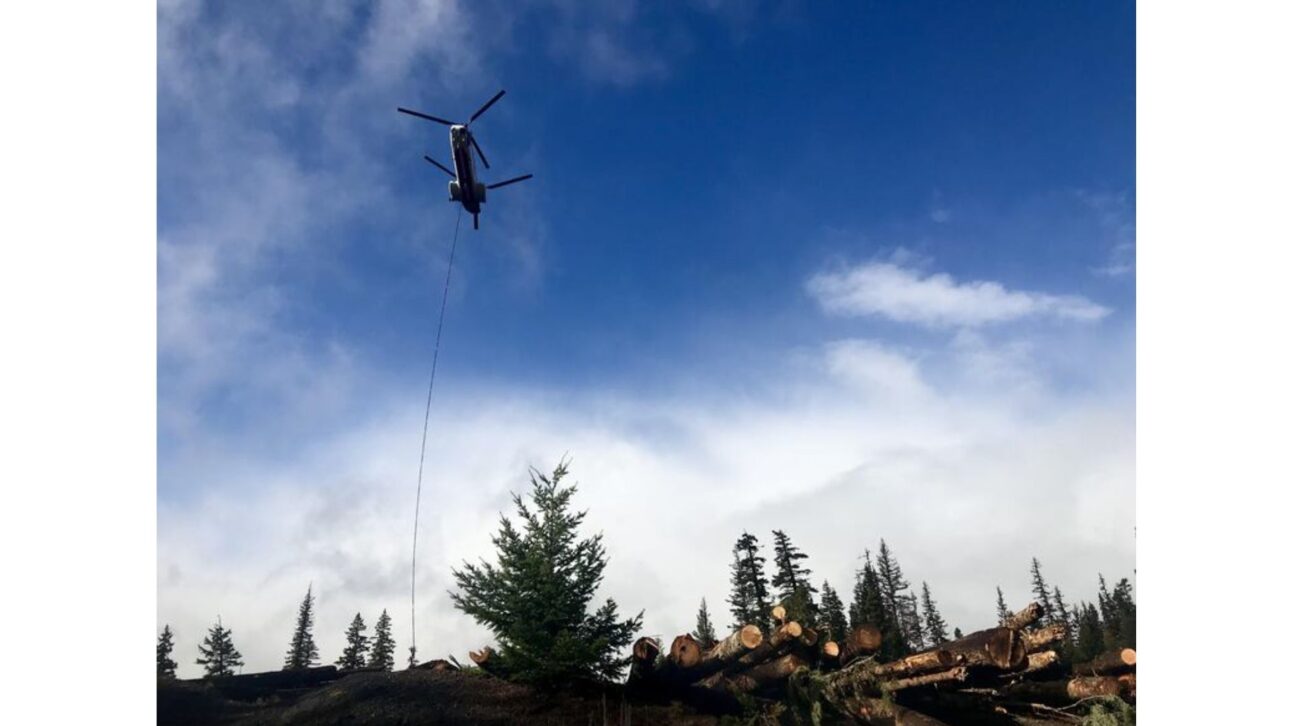
image: Courtney Flatt
The logistics explain the presence of the aircraft. Large-scale restoration requires material volume and access, but many sections of the chosen rivers are no longer reachable by road, as some roads have ceased to exist and others never had viable access. Traditional restoration, with trucks and machines, would be limited precisely where the need is greatest, and this is where the helicopter replaces the role of the road, fetching logs from a storage area and dropping them directly at isolated points.
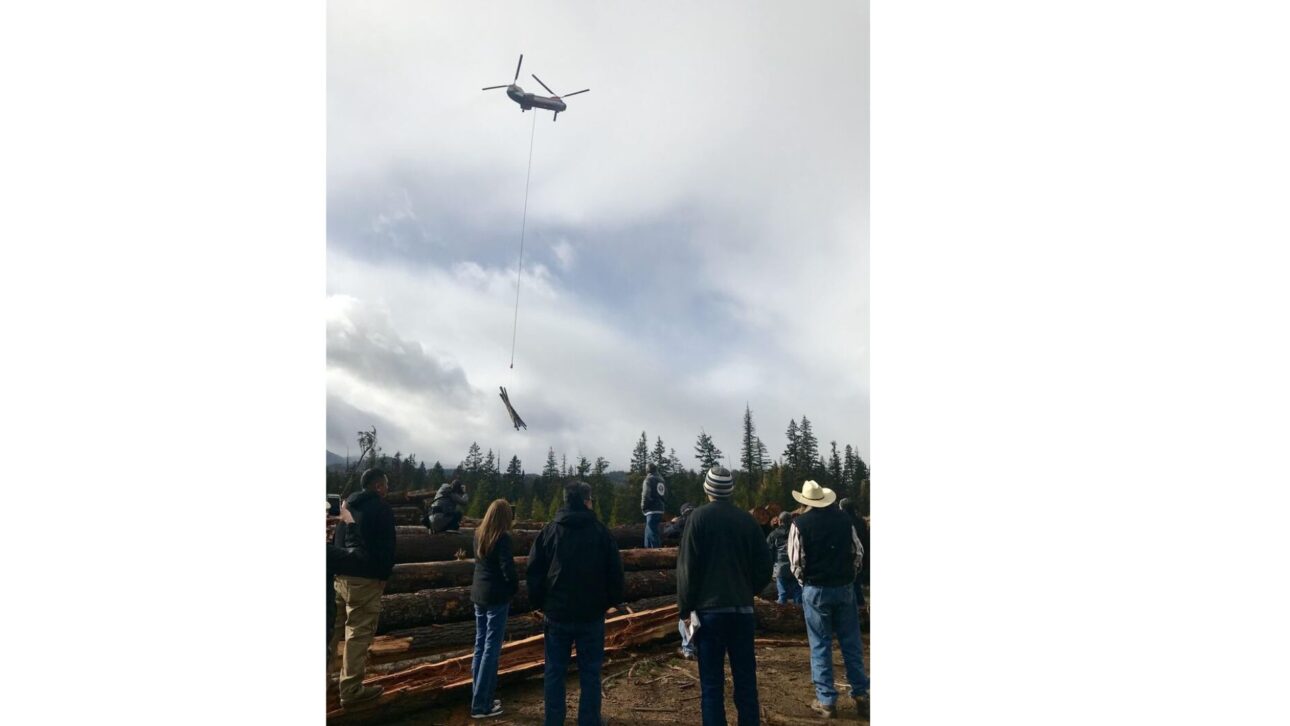
image: Courtney Flatt
The transport follows a precise choreography. A long cable hangs under the aircraft, the pilot carefully attaches four normal-sized logs, lifts the load, and flies to the target section, in one case about 2.4 kilometers from a section of the Little Naches River where roads no longer reach. On the ground, biologists use pink and blue marking tapes to indicate where the wood should be placed, and the noise of the rotors serves as a warning for everyone to get out of the way, in a stage that plans for a thousand logs just in this river.
Where the wood comes from and how it holds the water
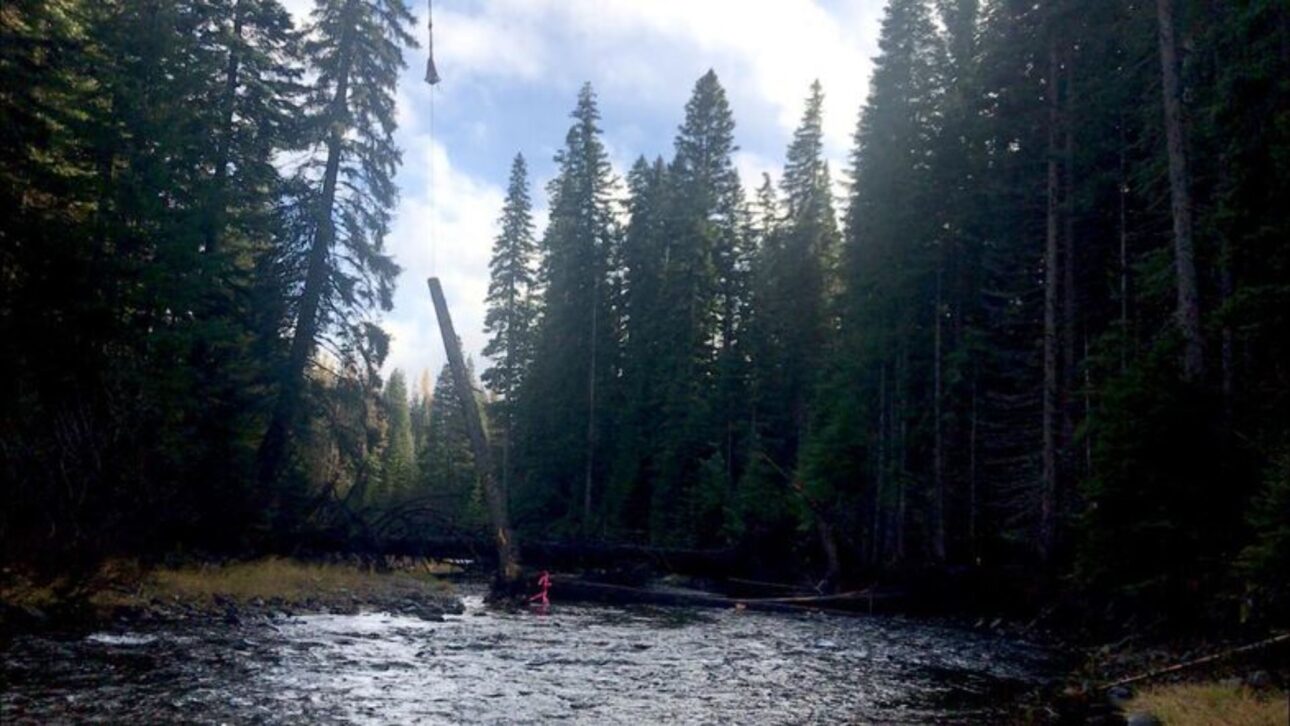
image: Courtney Flatt
The logs are not chosen at random. The mix includes Douglas fir, grand fir, and cedar, and the wood comes from a harvest used by The Nature Conservancy to thin forests in higher areas. Reese Lolley, director of forest restoration and fires for the organization in Washington, describes the idea as restoring the entire landscape, aquatic and terrestrial, and notes that the same helicopter that delivers wood to the rivers also removes logs from areas where building roads would be unfeasible, turning what would become surplus into ecological structure.
The hydrological effect is the heart of the project. Placed in rivers, the logs slow down the current, allow water to accumulate in certain spots, and increase infiltration into the groundwater. Nicolai compares these areas to sponges that spread the water across the floodplains and slowly release it back into the stream, creating extra storage and helping to cool the water that has been warming, the opposite of what happened when tractors cleared the bed and disconnected the floodplain from the river.
Climate, fish, and the symbolic dimension of restoration
The project is not just about fish. It is described as vital as the climate warms because storing water in the river system becomes crucial during periods of heat and drought. Fast and simplified rivers lose water and heat up easily, with few cold pools, while rivers with wood, pools, and connection to the floodplain retain water, release it gradually, and maintain cool and deep areas, returning to the behavior of a river, not a channel.
The challenge appears on the ground itself. On the way to Little Naches, the group crosses a dry bed, but Nicolai sees in the gravel under wet leaves a sign that salmon once lived there and, with luck, they will return. The initiative also carries a human and symbolic weight, and by the riverbank, while helicopters worked, tribal leaders prayed for the project’s success and for the land to return to what it was, with former tribal president Jerry Meninick summarizing the idea as giving back to that land what was rightfully its own.
And you, what do you think about reversing decades of river management by returning the wood that was once removed? Do you believe that placing logs with helicopters can truly resurrect entire ecosystems, or is the challenge too great? Share your opinion and exchange ideas with other readers on the topic, respecting different views.