Portuguese
  Spanish


The EcoFlow Glacier Classic portable fridge targets those who travel, fish, camp, or use a motorhome and want to avoid melted ice, wet food, and nearby outlets. According to The Verge and EcoFlow specs, the model has a 298Wh plug-in battery, app control, 35L, 45L, and 55L versions, and solar charging.
The EcoFlow Glacier Classic portable fridge appears as an alternative to ice coolers for trips, camping, fishing, boats, and motorhomes. The proposal is to keep food and drinks cool without an outlet, with an optional battery, app control, and the possibility of solar energy recharge.
On April 18, 2025, The Verge reported that EcoFlow announced updated versions of the Glacier and Wave lines, two off-grid battery-powered and solar-rechargeable devices. The official EcoFlow page states an autonomy of up to 43 hours for the 35L model, tested at 25°C, keeping items at 4°C with a plug-in battery.
Portable fridge replaces melted ice with plug-in battery
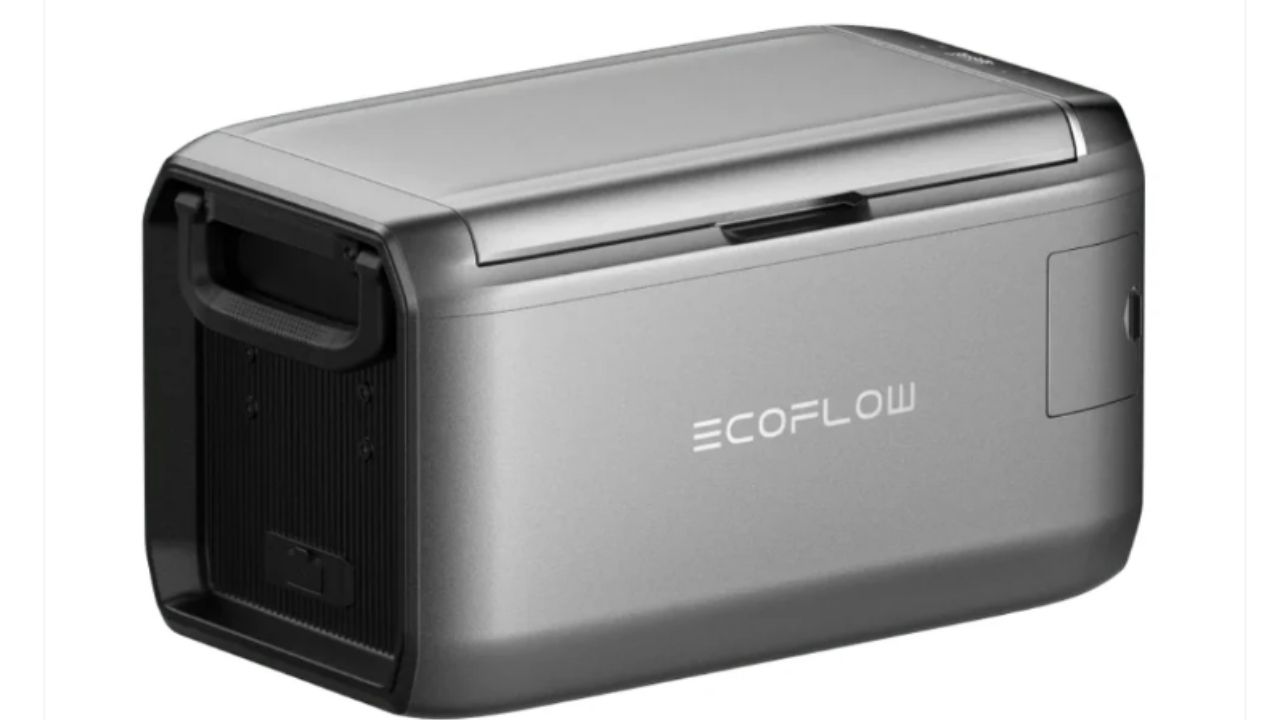
The main promise of the Glacier Classic is to replace the traditional cooler in situations where ice, accumulated water, and lack of an outlet hinder food preservation. The plug-in battery has 298Wh and, according to EcoFlow, can keep the 35L model cool for up to 43 hours in Eco mode.
-
Vietnamese Inventor Overcomes Debt and Develops Agricultural Robot Sold in 15 Countries

-
3,000 Sheep Maintain 900 MW Solar Farm Transforming Texas Fields into Energy for Data Centers

-
Distant Galaxy Shaped Like a Giant Jellyfish Sheds Gas, Forming New Stars as It Moves Through Hot Cosmic Gas

-
Nearly 40% of Treated Water in Brazil is Lost Before Reaching Homes; Companies Use Satellites, AI, Helium, and Innovative Tech to Improve Access in Remote Areas



For the 45L and 55L models, the autonomy reported by EcoFlow is up to 39 hours under the same test conditions. This does not mean infinite operation off the outlet, but it creates a larger window for short trips, camping, fishing, motorhome travel, and planned outdoor use.
Solar energy comes in as reinforcement for off-grid use
The Glacier Classic can be charged via a regular outlet, 12V/24V vehicle input, or solar energy. According to the official specifications, EcoFlow states support for solar charging up to 110W, provided the plug-in battery is connected.
This detail is important because solar use depends on sunlight, a compatible panel, and real charging conditions. For those traveling to places without an electrical grid, the portable refrigerator does not eliminate energy planning but expands options beyond the wall outlet and car.
App control allows monitoring of temperature and battery
EcoFlow also highlights app control, with remote monitoring, temperature adjustments, battery status, and usage modes. The official sheet mentions control via the EcoFlow app, as well as features like temperature history and alerts when internal variation exceeds a certain limit.
In practice, this transforms the portable refrigerator into equipment closer to a smart appliance than a thermal box. For those transporting meat, dairy, beverages, or sensitive foods, monitoring the temperature via mobile can be as important as autonomy.
Models of 35L, 45L, and 55L cater to different uses
The Glacier Classic is sold in versions of 35L, 45L, and 55L. According to EcoFlow, the 35L model holds up to 58 cans of 330 ml, the 45L reaches 72 cans, and the 55L holds 90 cans, always considering the reference used by the manufacturer.
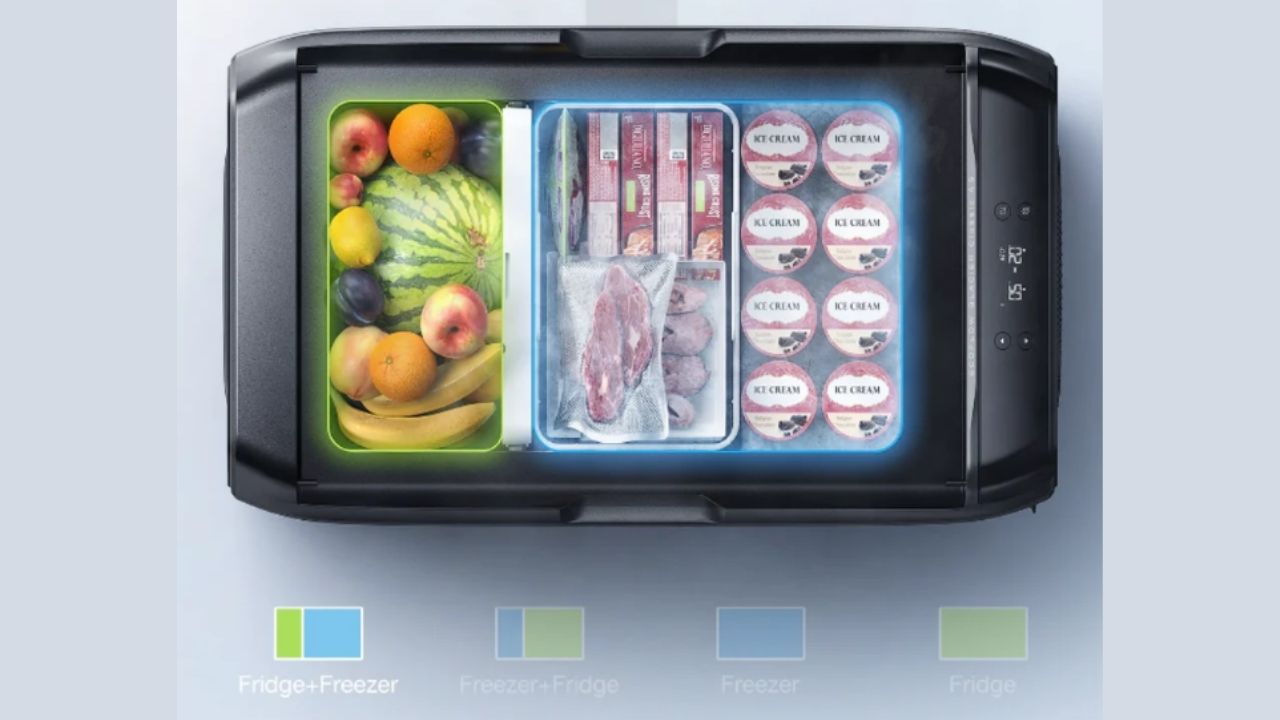
The difference between the models is not just capacity. The 45L and 55L versions have a dual zone, allowing for separate refrigeration and freezing areas. Meanwhile, the 35L model functions as a single zone, alternating between use as a refrigerator or freezer, depending on the chosen configuration.
Temperature differs between Brazilian and international sheets
The Brazilian sheet provided states a temperature range from 10°C to -25°C for the EcoFlow Glacier Classic Portable Refrigerator. Meanwhile, EcoFlow’s international pages list a range from -20°C to 20°C for the Glacier Classic line.
This difference needs to be observed by the consumer before purchase, especially for those intending to use the equipment as a portable freezer. The safe point is that the line was designed for refrigeration and freezing, but the exact range may vary according to version, market, and technical specifications consulted.
The Verge highlights change in the design of the new generation
In the initial analysis by The Verge, Thomas Ricker noted that the Glacier Classic abandoned the ice maker of the previous version to prioritize internal volume. According to him, the change makes sense in 12V equipment designed for places where water and electricity may be scarce.
The report also points out that the Glacier Classic now offers 45 liters of dual-zone capacity in a footprint similar to the original 38-liter version. Additionally, EcoFlow claims to have used a more reliable temperature sensor to maintain stable performance.
It’s not a cheap cooler, it’s equipment for another type of use
Despite the appeal of “goodbye melted ice,” the EcoFlow portable fridge does not exactly compete with a simple supermarket cooler. It targets users who need temperature control, autonomy, flexible recharging, and frequent use during travel.
The Brazilian page lists a price of R$ 6,823.95, with a discount on Pix to R$ 6,141.56, while The Verge cited prices in the United States of US$ 799, US$ 899, and US$ 1,199 for the 35L, 45L, and 55L versions at launch. These values indicate a premium category, not a basic solution.
Camping, fishing, and motorhome gain another type of fridge
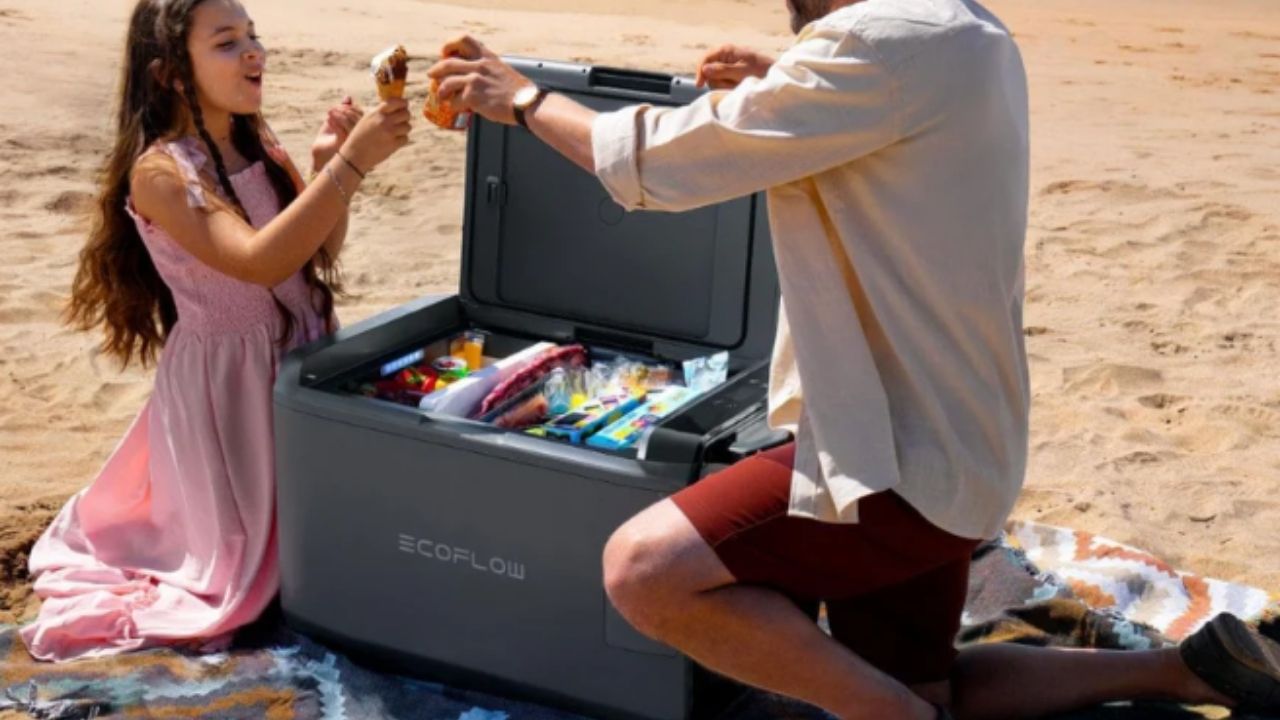
The Glacier Classic tries to solve a known pain for those who spend hours or days away from home: preserving food without relying on ice that melts, wets packages, and takes up useful space. In motorhomes, boats, and campsites, this type of solution can reduce improvisations.
Still, the purchase makes more sense for those who really use portable energy, solar panels, power stations, or vehicle sockets frequently. For occasional trips, the cost may be significant. For off-grid routine, the portable fridge can change the logistics of food and drinks.
The end of the traditional cooler or just an expensive alternative?
The EcoFlow Glacier Classic shows how off-grid equipment is becoming more intelligent, connected, and specific. The idea of taking a portable fridge with a battery, app, and solar charging for camping, fishing, or motorhome no longer seems so distant, but it still involves a high price and energy planning.
The question is where each user sets the limit between convenience and cost. Would you trade a cooler with ice for a portable fridge of this type on trips, fishing, or motorhome, or do you think the price still keeps this technology out of reach for most people? Leave your opinion in the comments.