Portuguese
  Spanish


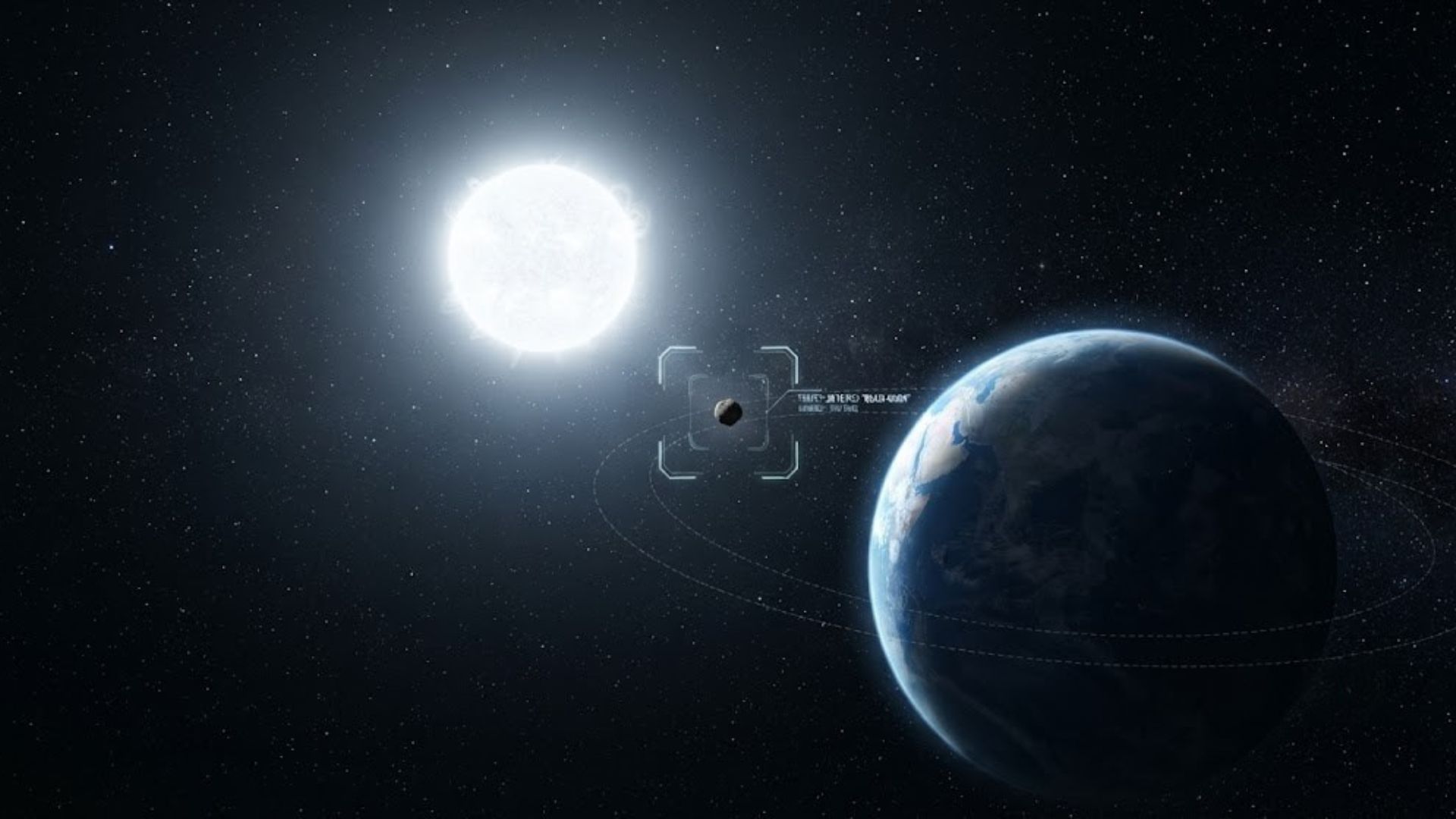

Tianwen-2, Kamoʻoalewa, Earth’s quasi-satellite and possible fragment of the Moon come into focus of the Chinese mission that may bring samples in 2027.
The Chinese mission Tianwen-2 recorded on July 2, 2026 the first close-up images of Kamoʻoalewa, also cataloged as 469219 (2016 HO3), one of the most unusual objects ever identified in Earth’s orbital neighborhood. According to Space.com, the probe reached about 20 kilometers from the target after traveling approximately 1 billion kilometers since launch, marking the first close observation of this body by a spacecraft.
The scientific interest in Kamoʻoalewa goes far beyond the unprecedented image. According to NASA JPL, it is an Earth quasi-satellite, meaning an object that orbits the Sun but maintains a rare orbital relationship with Earth for long periods. Studies published in the journal Communications Earth & Environment, from the Nature group, suggest that it may have originated from material ejected from the Moon after a major impact.
What is Kamoʻoalewa
Despite being called a “quasi-moon”, Kamoʻoalewa does not orbit Earth like the Moon. According to NASA JPL, the object revolves around the Sun, but its orbit is so similar to Earth’s that it remains a stable orbital companion of the planet for centuries, in a behavior classified as a quasi-satellite.
-
China delivers a giant crane ship capable of lifting 2,200 tons at once, transporting structures of up to 10,000 tons, and operating in semi-submersible mode for offshore projects.

-
One of the most devastating El Niños in modern history did not only bring heat: amidst droughts, destroyed crops, and lack of supplies, 50 million people died across three continents, and scientists see in this past a brutal warning for a hotter planet.

-
EcoFlow’s Portable Fridge Offers 43 Hours Off-Grid, Reaches -25°C, App-Controlled, Solar-Powered for Camping and RV Adventures
-
Vietnamese Inventor Overcomes Debt and Develops Agricultural Robot Sold in 15 Countries


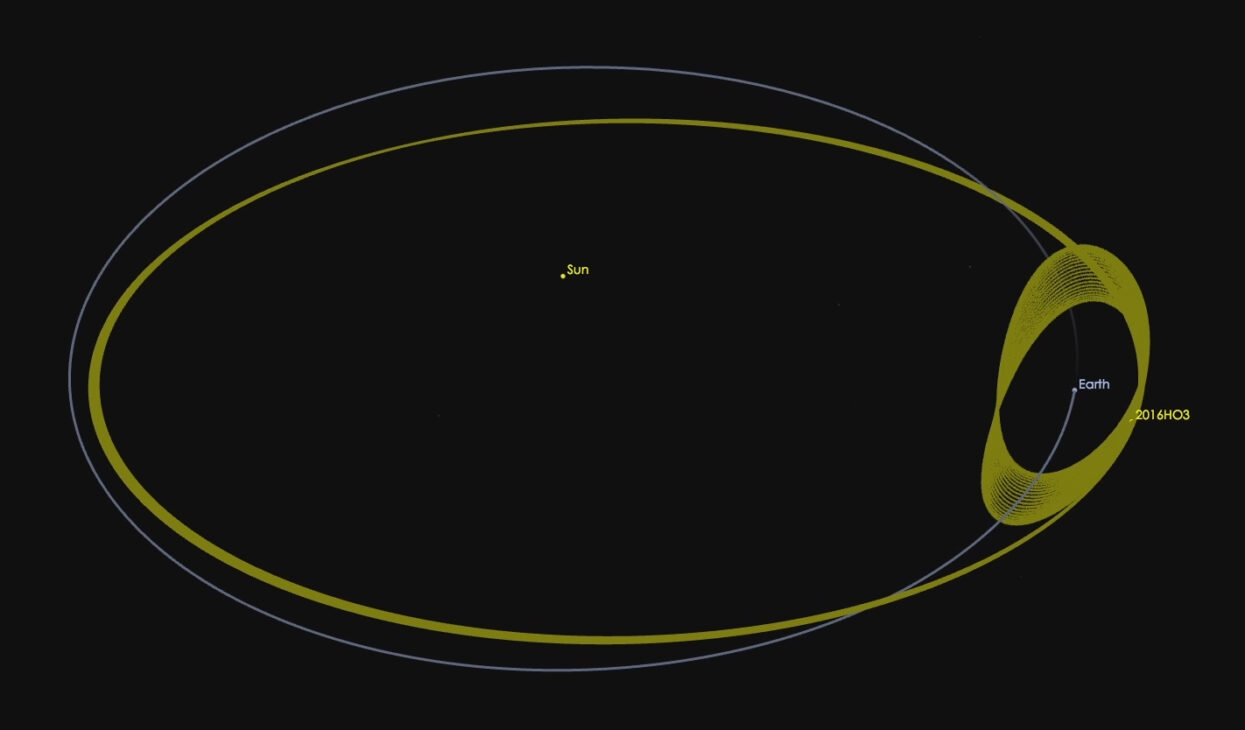
The same page from NASA JPL states that 2016 HO3 was the most stable example of this type of Earth companion identified so far. This orbital pattern makes the body appear to perform a kind of gravitational dance with the planet, without ever becoming a true natural satellite.
Tianwen-2 made the first real approach to one of the rarest objects in the Solar System
According to Space.com, Tianwen-2 was launched on May 28, 2025 and is the first Chinese asteroid sample return mission. The probe traveled about 620 million miles, equivalent to approximately 1 billion kilometers, to reach a safe position to closely observe Kamoʻoalewa.


Space.com reported that the released photograph was taken on July 2, 2026 and revealed an irregular, rocky, and asymmetrical body.
The publication also reported that the object appears to measure about 16 to 20 meters in diameter, making it much smaller than the Moon, but still extremely valuable for planetary science.
Scientific study reinforced the hypothesis that the object may have come from the Moon
The main reason Kamoʻoalewa arouses so much interest is its possible lunar origin. In 2021, a study published in Communications Earth & Environment concluded that the object shows a spectral signature compatible with lunar-like silicate material, something uncommon among near-Earth asteroids.
In 2023, another study in the same journal advanced the hypothesis and showed that the origin as an ejected fragment from the Moon is compatible with rare orbital paths capable of bringing this material to Earth’s co-orbital space.
According to the authors, the scenario is consistent with the idea that the object was launched into space after a meteoric impact on the lunar surface.

Chinese mission could bring samples in 2027 and deepen the history of the Moon
According to Space.com, Tianwen-2 is expected to spend nearly one year studying Kamoʻoalewa with 11 scientific instruments before attempting to collect material from its surface. The mission plan foresees the return of the samples to Earth in 2027, if the approach, collection, and return stages occur as expected.
After the return phase, the mission will continue towards comet 311P/PANSTARRS, with arrival expected in 2035, also according to Space.com. If the samples confirm the lunar origin of Kamoʻoalewa, scientists will have access to Moon material obtained through a completely different path from traditional lunar collection missions.
Discovery enhances the scientific weight of Tianwen-2 in the Chinese space program
The approach of Kamoʻoalewa placed Tianwen-2 among the most relevant missions in the recent exploration of small bodies in the Solar System.
According to Space.com, this is China’s second planetary mission after Tianwen-1, which reached Mars, and an important step in the expansion of China’s deep space program.
If the mission manages to return samples in 2027, the Earth’s quasi-satellite may cease to be just an orbital curiosity and become a key piece in understanding how lunar impacts launch fragments into space and how some of them manage to survive for millions of years in stable trajectories close to our planet.