Portuguese
  Spanish


The halt in Land Rover production in Itatiaia has placed the former premium plant at the center of negotiations involving workers, local government, and the arrival of Omoda & Jaecoo, a brand linked to Chery that seeks to expand its industrial presence in Brazil.
The line stopped.
Inside the Itatiaia factory in Rio de Janeiro, silence has taken over the space once filled by the assembly of Land Rover’s premium SUVs. The unit, which was born as a symbol of national luxury car production, has stopped manufacturing models like the Discovery Sport and Range Rover Evoque, while 371 direct workers await an answer about their own future.
The strongest number is in sales. Between January and May 2026, the two models totaled only 264 registrations in Brazil. For a factory created to assemble high-value vehicles, the volume was far from what was needed to sustain the operation.
-
He was born in Rio, arrived in Rio Grande at the age of 3, started in the naval industry, and today leads the company that is doubling in size for the second consecutive year, building steel warehouses for “agro giants,” with a new factory four times larger and a goal of R$ 600 million.

-
He went bankrupt with the first app, started over with $40,000 and 2 employees, bought 50 “forgotten” internet brands like Evernote and AOL, and debuted on the stock market valued at R$ 130 billion, with shares rising 40% in one day.

-
Almost 4 in 10 Brazilians have already experienced fraud or attempted fraud, and the company that “sells trust” for 30 years uses biometrics and 3D proof of life to expose deepfakes, aiming for R$ 350 million in 2026.

-
Brazil’s North-South Railway to Auction Two Grain Terminals in Central Tocantins


Now, what was once a Jaguar Land Rover line could become part of a larger dispute: the attempt by the Chinese Chery, owner of the Omoda and Jaecoo brands, to expand its industrial presence in the country.
A factory created to put luxury on wheels in Brazil
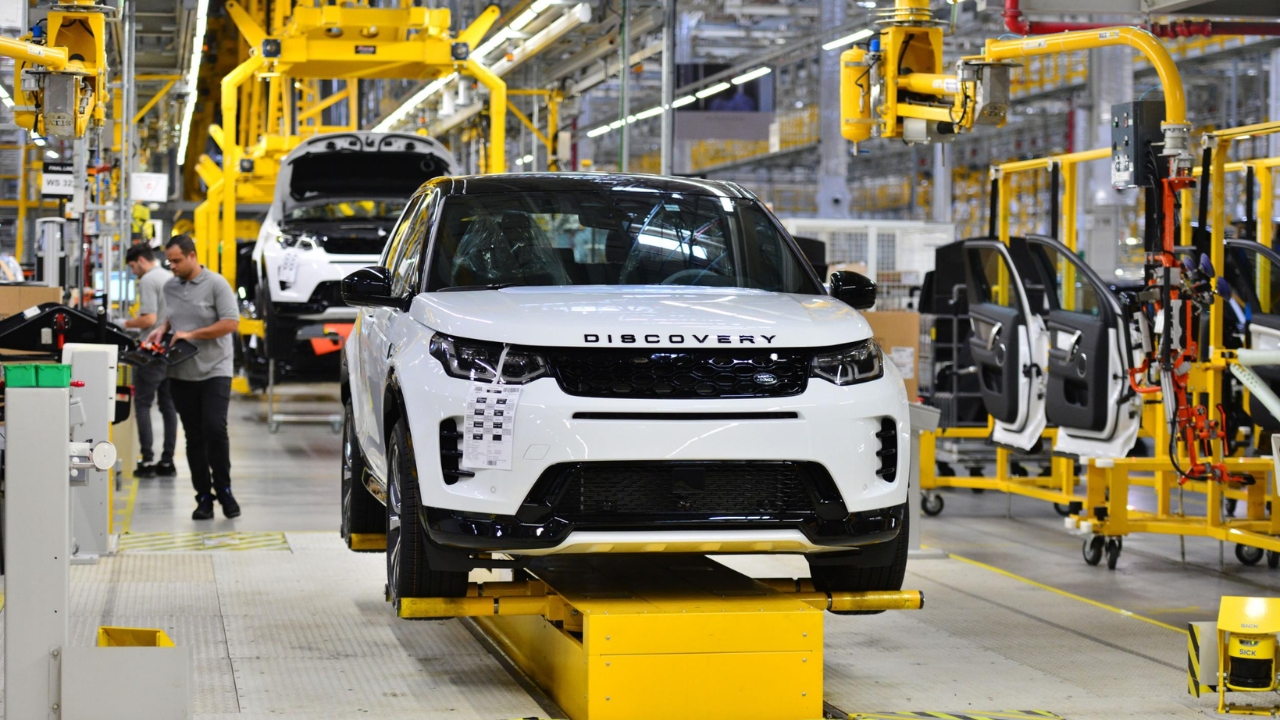
The Jaguar Land Rover factory in Itatiaia was inaugurated on June 14, 2016, marking Land Rover’s first local production line in Latin America. According to Land Rover Brazil, the project received an investment of R$ 750 million and started with the mission to produce the Discovery Sport nationally.
At the time, the arrival of the unit was considered an important step for the Brazilian automotive sector. The initial expectation was a capacity for 24,000 vehicles per year and about 400 direct jobs.
But the reality of the premium market took its toll. The factory operated with low volumes, aimed at a restricted audience and dependent on expensive models, in a segment where any drop in demand quickly impacts the operation.
The assembly model that limited the operation
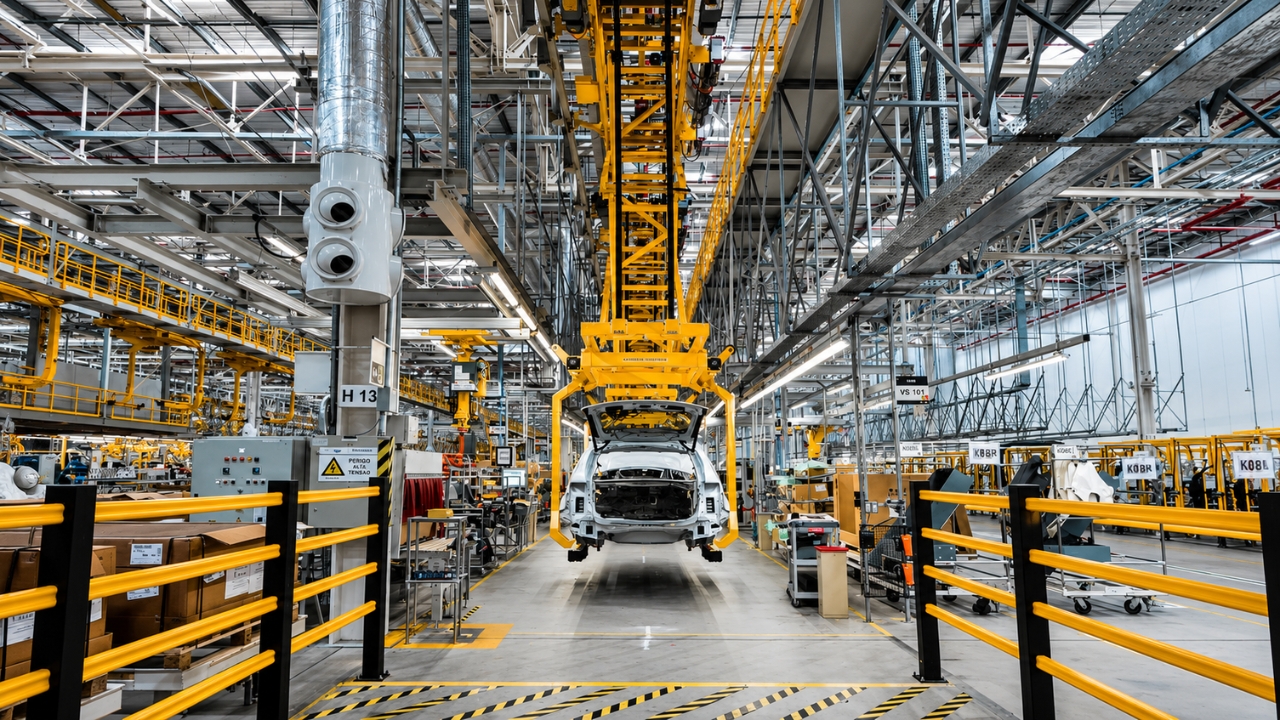
Besides weak sales, there was another sensitive point: the way vehicles were assembled. According to Quatro Rodas, the unit operated under the SKD regime, a system where car parts arrive from abroad almost ready and the final assembly takes place in the country.
In practice, this kept the factory very dependent on imported components and with less nationalization. The Brazilian operation existed but did not have the same industrial weight as a plant with deeper production and a broader local supply chain.
Over time, the structure lost space within the automaker’s global strategy. Jaguar Land Rover began to focus efforts on more profitable products and a leaner operation.
Workers live in a wait without guarantee
For those who depend on the factory, the decision is not just corporate. Sindireal, the union representing metalworkers of Itatiaia and Porto Real, reported that the unit comprises 371 direct workers.
The entity monitors negotiations and demands guarantees to preserve jobs. The company maintains a current collective agreement and fulfills labor obligations, but the production halt created a void difficult to ignore.
For now, employees continue in specialization courses. The measure may help in a possible transition, but it still does not ensure that the entire staff will be retained if another automaker takes over the unit.
Chinese Chery enters the center of the negotiation
The possible solution to prevent the factory from becoming idle involves Chery. The Chinese group, controller of the Omoda and Jaecoo brands, is negotiating to take over the Itatiaia structure to start a new production phase in Brazil.
According to CNN Brazil, the talks involve the Itatiaia City Hall, the Government of Rio de Janeiro, and Chinese executives, with discussions about contracts, industrial transition, and tax incentives.
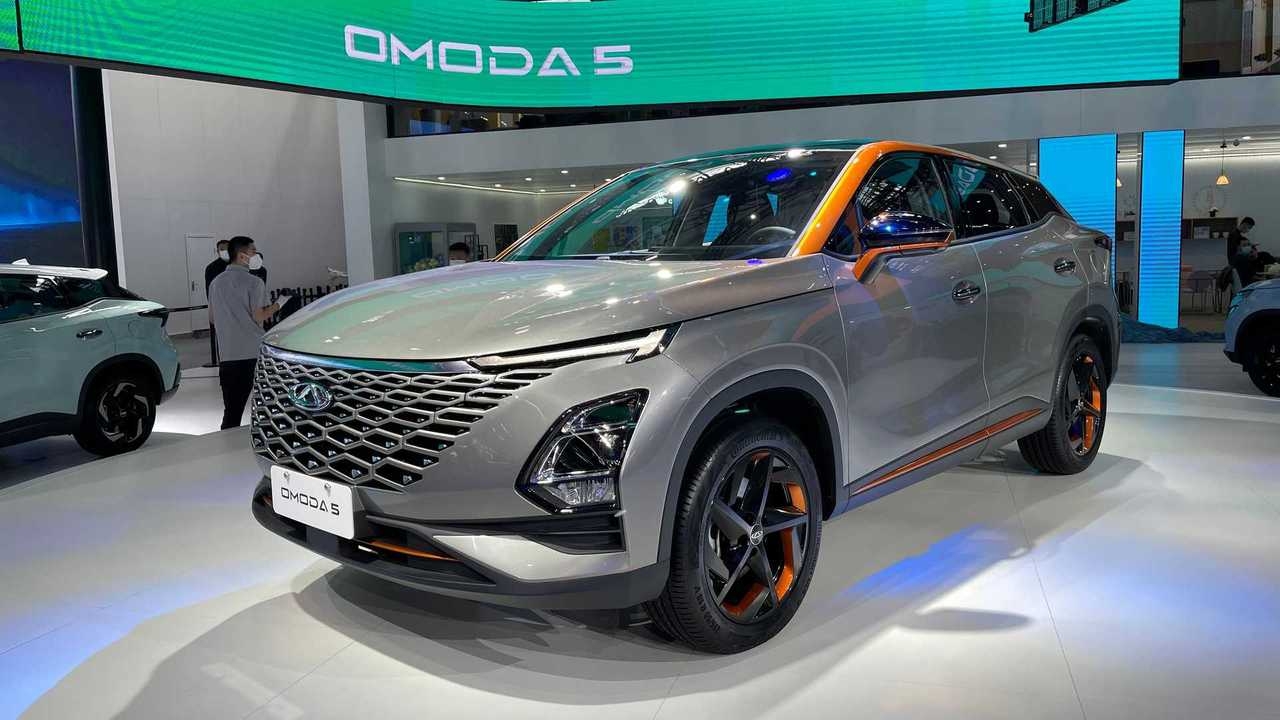
The brand has already indicated plans to produce in Brazil starting in 2027. Among the models studied for national operation are the Omoda 5 and Jaecoo 5, higher volume vehicles that could completely change the pace of the former Land Rover plant.
From 24 thousand to up to 100 thousand vehicles per year
The projected transformation is significant. The factory that was born with a capacity close to 24 thousand units per year can be adapted for a much larger scale. According to Quatro Rodas, there are plans that place the operation near 100 thousand vehicles annually starting from the second half of 2027.
This leap would change the role of the unit within the national industry. Instead of a plant focused on low-volume premium SUVs, Itatiaia could become a production base for expanding Chinese brands in Brazil and Latin America.
There are still obstacles. Tax issues, fiscal incentives, and labor guarantees remain at the center of negotiations. None of this erases the uncertainty of the workers who saw production stop before any new phase began.
The end of Jaguar Land Rover production in Brazil is not just the departure of a luxury automaker. It is the portrait of a factory that was born with a billion-dollar promise, lost strength in the face of low sales, and now may be reborn in the hands of another group, while hundreds of families wait to know if the next stage will be one of recovery or cuts.