






 Portuguese
  Spanish


Honda’s electric compact bets on rare features in the urban segment, combining Boost mode, simulated transmission, active sound, and low weight to create a more engaging driving experience without abandoning efficiency, range, and focus on daily city use.
Honda has opened pre-orders for the Super-ONE 2026 in Japan, betting on an uncommon proposal among compact electrics by combining urban efficiency, low weight, and features designed to make driving more engaging and less predictable in daily use.
Equipped with up to 70 kW in Boost mode, a simulated seven-speed transmission, active cabin sound, a declared range of 274 km in the WLTC cycle, and a weight of just 1,090 kg, the model aims to occupy a different space within urban electrification.
Even developed as a segment A electric compact aimed at everyday city use, the Super-ONE was designed to distance itself from the traditional image of small electrics.
-
Sales of Brazil’s Cheapest Electric Car Halted Before First Deliveries: E-Motors Suspends Emova Easy Due to Import Tax Increase and Rising Freight Costs

-
Nissan Discontinues Qashqai SUV Amid Cost-Cutting, Chinese Competition, and Product Line Review

-
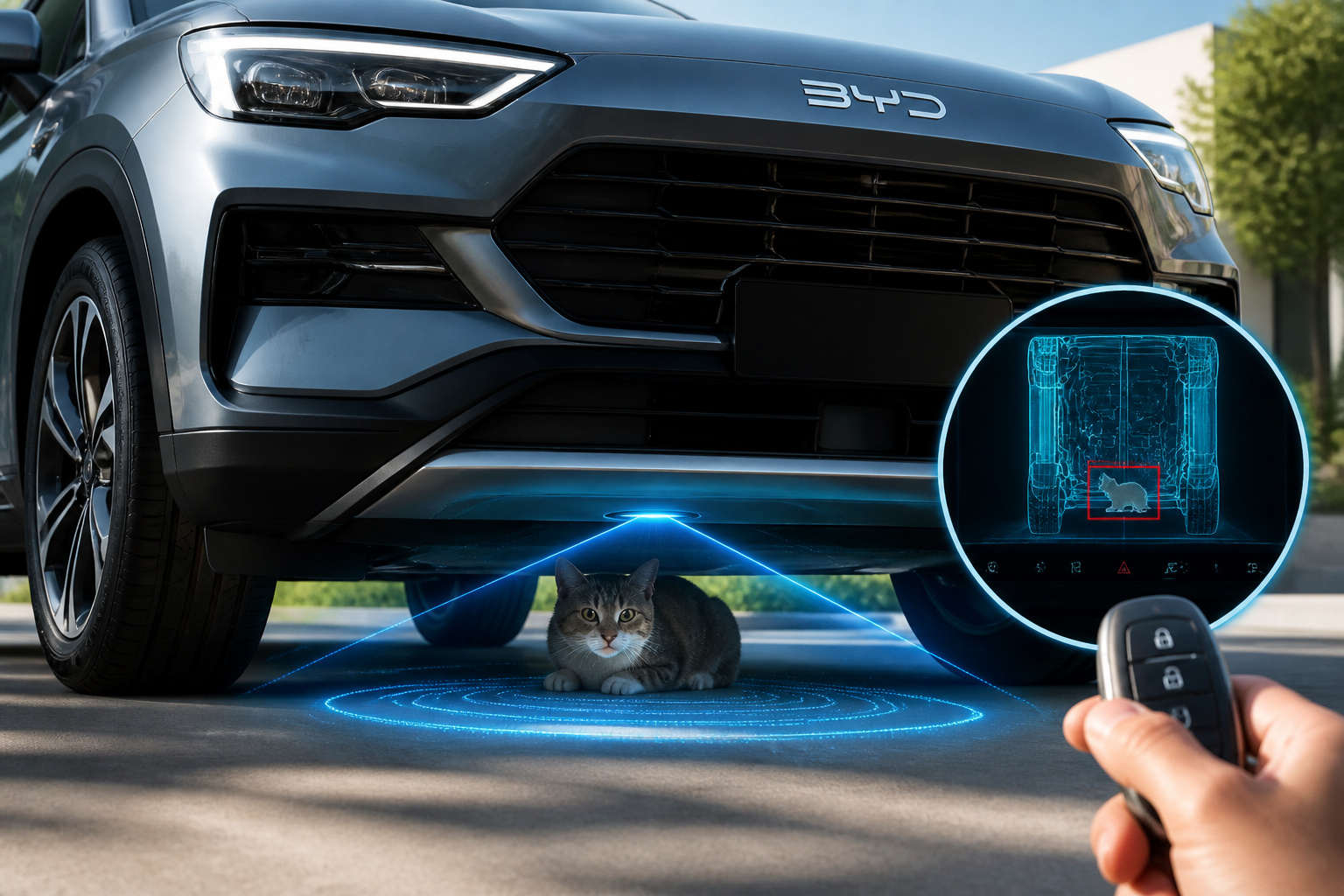
BYD Patents Revolutionary System Using Computer Vision to Detect Animals Under Cars Before Starting, Preventing Tragedies

-
Study Reveals Why Cars Are More Expensive to Produce and Buy in Brazil Compared to Mexico, Highlighting Taxes, Logistics, and Industrial Costs as Key Factors.


Traditionally associated only with silence, economy, and practicality, urban electrics here gain a proposal more focused on interaction and the driving sensation.
Boost mode transforms the compact electric experience
The main differentiator is the Boost mode, developed exclusively for the model.

When activated, the system increases the maximum power from 47 kW, used in normal modes, to 70 kW, allowing stronger throttle responses.
Besides the temporary power gain, the feature alters the cabin experience.
The simulated seven-speed transmission works in conjunction with Active Sound Control, which reproduces a virtual engine sound according to the driver’s actions on the throttle and brake.
In the Super-ONE, Honda did not just try to imitate a combustion car.
The manufacturer combined digital features to create a more participative driving experience, including paddle shifts on the steering wheel for the driver to interact with the simulated gears.
When Boost mode is activated, the digital dashboard displays three gauges.
The set includes battery temperature, power indicator, and a pseudo-tachometer, which simulates engine revolutions in a fully electric vehicle.
The interior lighting also changes according to the driving mode.
In normal modes, the panel uses blue light; with Boost activated, the ambiance shifts to purple, reinforcing the visual difference between everyday use and the more sporty configuration.
The logic of the virtual gearbox is one of the most unusual solutions of the project.
Instead of just exploring the typical linear delivery of electric motors, Honda created a sensation of successive shifts, synchronized with the artificial sound emitted in the cabin.
Light platform helps reduce weight and increase agility

The Super-ONE uses a lightweight platform derived and improved from the N family models.
The architecture received a widened track and a wider body compared to these vehicles, which contributes to a visually lower and more stable stance.
The thin battery was positioned under the central part of the floor, concentrating heavy components in a low area of the structure.
This solution reduces the center of gravity and helps the car respond more quickly to the driver’s commands.
With 1,090 kg, the Super-ONE appears among the lightest passenger electric vehicles in its category in the Japanese market, according to Honda.
The combination of reduced mass, compact dimensions, and low center of gravity supports the agility proposal.
The declared range of 274 km in the WLTC cycle meets the model’s main function: daily commuting in urban environments and short to medium trips.
The WLTC standard considers different driving conditions, including urban, suburban, and highway use.
Sporty interior bets on premium sound and digital panel

The cabin follows the sensory proposal of the mechanical set.
The sports seats were developed exclusively for the Super-ONE and aim to keep the driver in a stable position during acceleration, curves, and changes in pace.
The dashboard adopts a horizontal orientation, a solution designed to expand the field of vision.
Details in blue material and asymmetrical design help differentiate the interior from a conventional urban electric vehicle, without turning the car into just a conceptual project.
Another standout feature is the Bose Premium system with eight speakers, offered as standard equipment.
Honda claims that the system was developed in partnership with Bose Corporation and optimized for the Super-ONE’s cabin.
The application also marks the first time a compact Honda sold in Japan receives a Bose system.
The feature reinforces the brand’s attempt to make sound a relevant part of the driving experience, not just a comfort equipment.
Design of the Honda Super-ONE reinforces sporty proposal


On the outside, the Super-ONE adopts widened fenders surrounding wider tires, as well as a body with a more robust appearance.
Honda also included front and rear air ducts, integrating aerodynamic function into the compact’s design.
The model will be offered in five colors.
Among them is the Boost Violet Pearl, a purple shade created exclusively for the vehicle and inspired by the so-called blue jets, a luminous phenomenon that occurs in the upper layers of the atmosphere.
The choice of name also follows the logic of the project.
According to Honda, Super-ONE represents the intention to create a vehicle that surpasses traditional standards of electric and mini vehicles, offering a unique experience within the brand’s lineup.
Pre-sales have been scheduled for Honda Cars dealerships in Japan.
Before that, the car had a planned exhibition at the Automobile Council, at Makuhari Messe, reinforcing its presentation as a production product, and not just as a showroom study.
The Super-ONE enters a segment increasingly marked by efficient, silent, and rational electric compacts.
The difference lies in Honda’s attempt to recover, through software, sound, and steering wheel interaction, part of the mechanical sensation that many drivers associate with combustion cars.


