






 Portuguese
  Spanish


Pioneering project in São Roque reuses discarded banknotes to equip a public school focused on technology, environmental education, and innovation
A public school located in the district of Maylasky, in São Roque (SP), is attracting attention for combining technological innovation, sustainability, and education in a single project. Inaugurated in 2025, the first School of the Future in the State of São Paulo received an investment of R$ 18 million and was developed to offer a teaching experience different from conventional models.
Capable of accommodating more than 900 students, the unit occupies approximately 8 thousand square meters. Robotics laboratories, maker environments, bilingual education, and activities focused on climate emergency are part of the pedagogical proposal implemented by the municipal administration.
The most curious element of the project, however, is present in practically all the school’s environments. A large part of the furniture used was produced from the recycling of banknote paper discarded by the Brazilian Mint, transforming industrial waste into permanent educational resources.
-
World’s Largest Particle Accelerator Begins Four-Year Hiatus for Magnet Overhaul, Aiming to Hunt Dark Matter by 2030

-
“Sahara Dust Turns Rain Red, Startling Residents Across Europe”
-
Stanford Scientists Develop 20-Cent Paper Centrifuge Inspired by Ancient Toy, Spins at 125,000 RPM Without Electricity, Separates Plasma in 1.5 Minutes, Aiding Diagnostics in Remote Areas

-
World’s Largest Vaccine Manufacturer, Immunizing Two-Thirds of Global Infants, Originated in a Pune Horse Farm




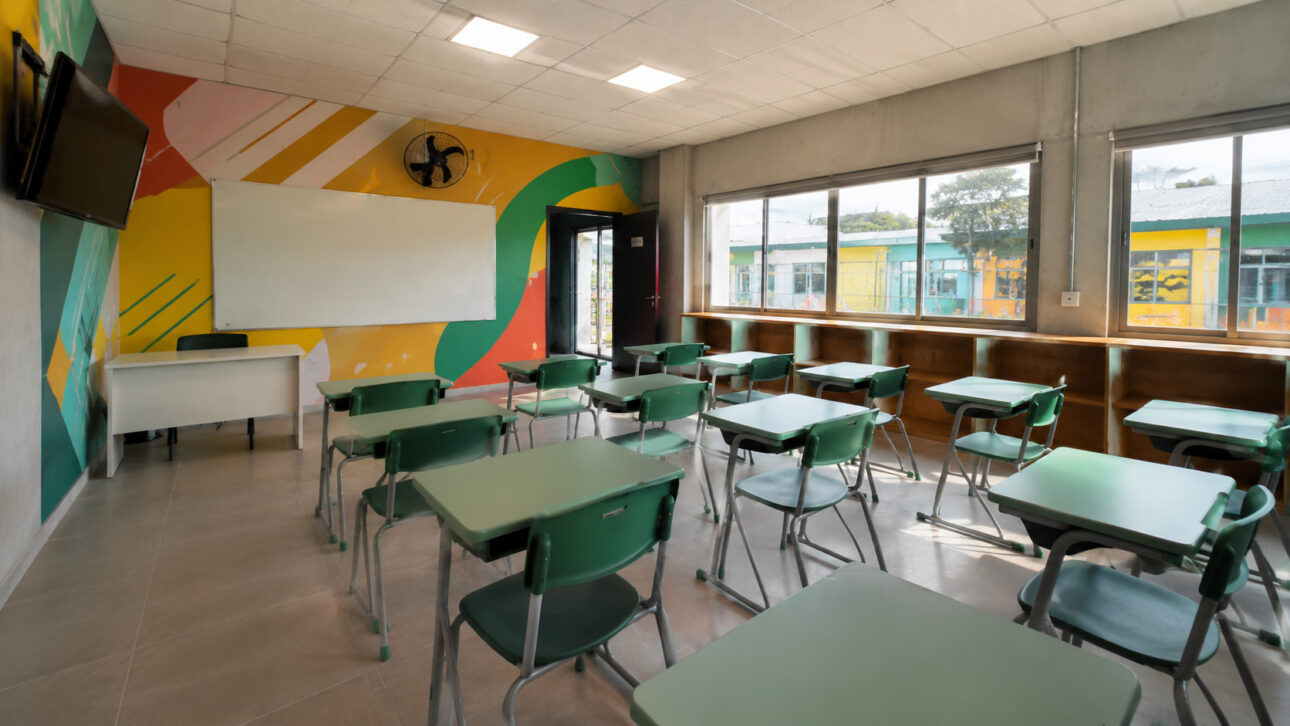
Rejected banknotes by the Mint gain a new function
Printing errors, cutting issues, and color defects prevent certain banknotes from entering circulation. For decades, this material represented an industrial liability. Currently, a partnership between the Tran$forma Institute and the Brazilian Mint has created a sustainable alternative for this disposal.
Data released to the portal Um Só Planeta indicate that approximately 200 tons of banknote paper waste are generated annually. In 2025 alone, about 50 tons are being allocated to the educational sector through an operation that also involves Genchi and Equipa Group.
School desks, lockers, reading tables, auditorium seats, decorative objects, and even a ping-pong table were born from this same industrial reuse process.
Patricio Malvezzi, CEO of Instituto Tran$forma, highlighted to Um Só Planeta that the initiative demonstrates how innovation and environmental responsibility can go hand in hand in building solutions aimed at the future of public education.
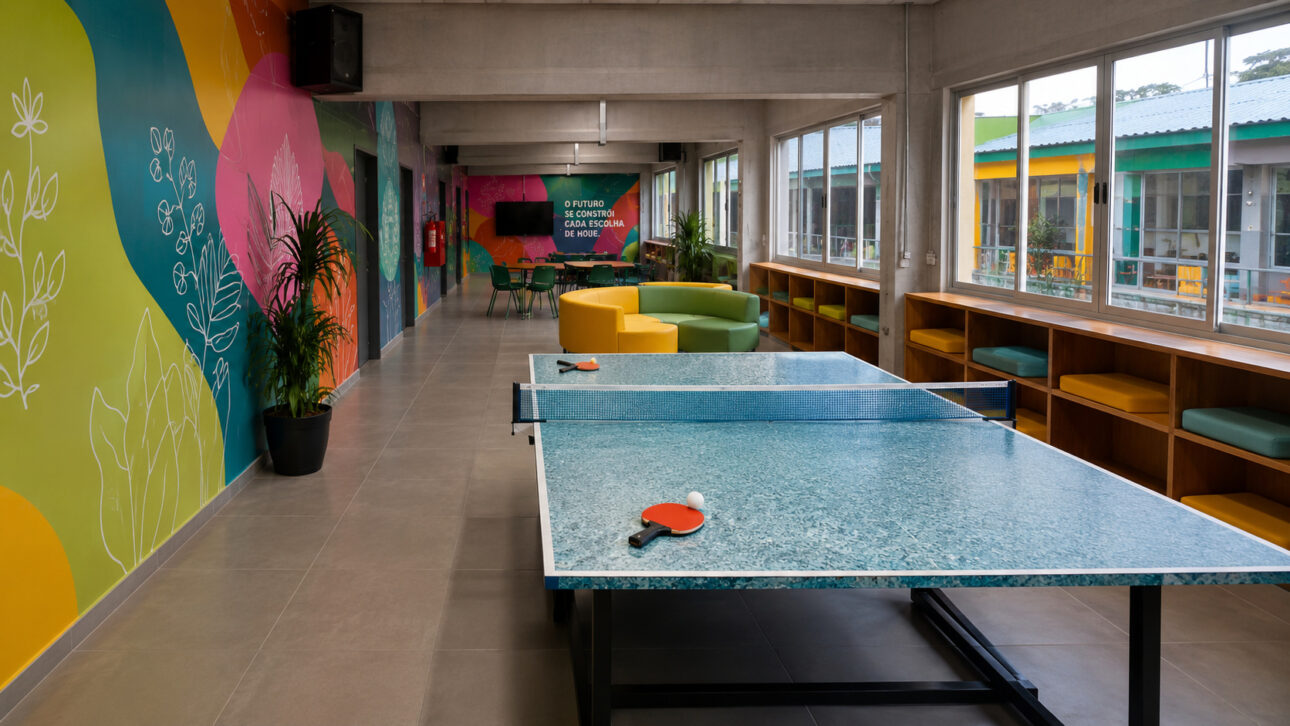
Engineering transforms banknotes into high-strength material
Brazilian money is produced with a different composition from conventional papers. Cotton fibers, special inks, and security elements make the material more resistant and also more complex to recycle.
Specific industrial processes allow the material to be reused. Shredded fragments go through new grinding stages to adjust density and thickness.
Mixtures with special glues and synthetic resins, such as polyester, acrylic, polypropylene, and epoxy, create a new raw material. Molding under pressure and high temperatures gives rise to the final products.
Solid panels, molded components, and filaments for 3D printers can be produced from this compound. Fibers present in the banknotes act as internal structural reinforcement, increasing the resistance of the pieces to impact and continuous use.

Environmental education stops being theory and becomes part of the routine
Sustainability is not only present in the furniture. The pedagogical proposal was built to bring students closer to the concepts of environmental preservation and circular economy.
Content related to the climate emergency has been incorporated into the curriculum. School gardens and composting systems are also part of the unit’s planning.
Guto Issa, mayor of São Roque, informed that teams from the Education and Environment areas are working on the development of permanent activities aimed at environmental awareness.
Practical experiences will allow students to follow the cultivation of food and the reuse of organic waste produced by the school itself. Concepts of chemistry and biology start to be observed directly in the students’ daily lives.
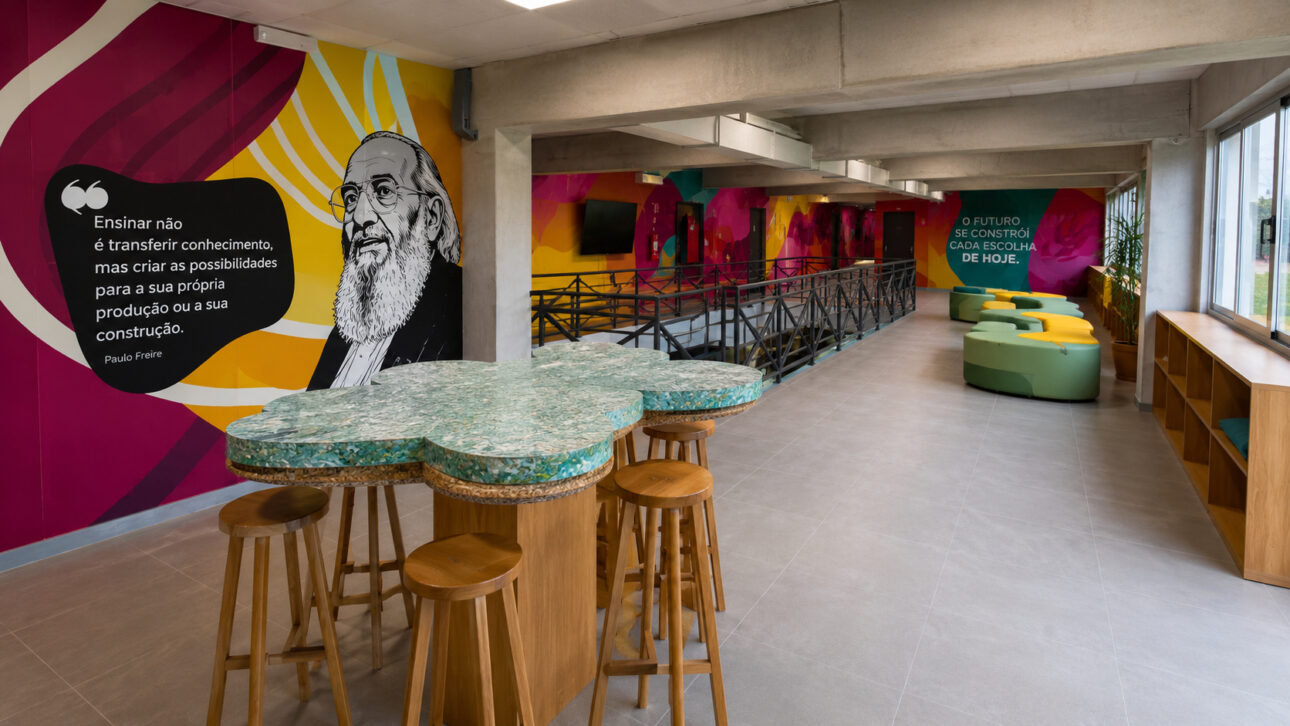
Model could serve as a reference for other cities in São Paulo
Planting of native seedlings and partnerships aimed at protecting the regional fauna are also part of the activities planned for the coming years.
Evaluations on the durability of recycled materials and on the students’ adaptation to the new educational model will be carried out throughout the project.
Results obtained in São Roque could guide future similar initiatives in other cities in the State of São Paulo.
Technology, industrial recycling, and public education are brought together in the same environment. The project shows that waste that never reached the hands of the population can gain a second life and directly contribute to the education of future generations.
After all, how many other materials currently discarded could be transformed into solutions capable of changing the future of Brazilian schools?


