






 Portuguese
  Spanish
  5 min of reading
  0 comments


Study published in Nature Communications shows that human emissions associated with the burning of fossil fuels, coal, and metallurgical processes already account for almost all zinc found on the surface of the South Pacific, altering the chemistry of a remote region and raising questions about impacts on marine life.
Human-derived zinc already dominates the surface layer of the South Pacific, even in one of the planet’s most isolated oceanic regions. A study published in the journal Nature Communications reveals that industrial emissions account for almost all the zinc found on the surface of this remote ocean.
The discovery shows that air pollution is not restricted to the places where it is generated. Microscopic particles released by human activities can travel for thousands of kilometers before being deposited in the sea, carrying metals to areas previously considered almost untouched.
The central finding of the study is that natural zinc, expected as part of the oceanic cycle, has become practically undetectable in the analyzed surface layer. In its place, a chemical signature associated with human emissions appears, mainly linked to the burning of fossil fuels, coal combustion, and metallurgical processes.
-
Wikipedia Blocks AI-Generated Edits, Citing Distrust in Automated Systems and Outlining Plans to Use Technology Without Losing Article Control

-
NASA Tests Rover with Lizard-Like Suspension and Independent Wheel Traction, Aiming for Speed Ten Times Faster than Perseverance on Mars

-
Scientists Warn: Gulf Stream Shift Warms Canadian Waters by Up to 5°C, Revealing Rapid AMOC Response

-
Apple and Tesla on Alert After Cyberattack on Indian Supplier Exposes Over 200,000 Confidential Files, Industrial Projects, Employee Data, and Potential Trade Secrets on the Dark Web


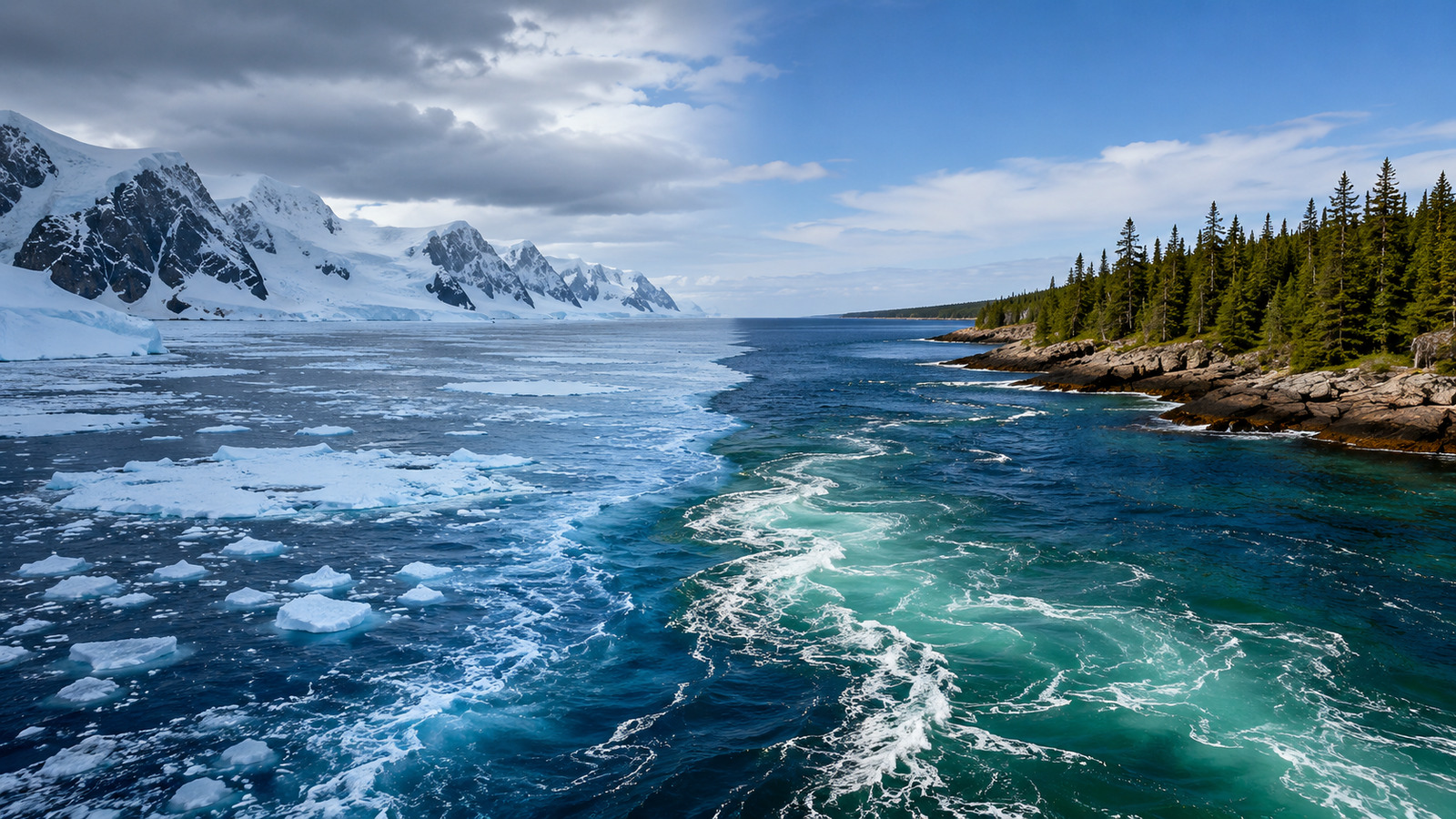

Human-derived zinc reaches remote ocean areas
The South Pacific is often considered one of the planet’s great natural refuges, due to its distance from urban, industrial, and population centers. Nevertheless, research conducted by scientists from ETH Zurich and the GEOMAR center indicates that this distance has not prevented the arrival of contaminants.
Zinc released by industrial activities enters the atmosphere trapped in aerosols, particles small enough to circulate over long distances. After this transport, these materials are eventually deposited in the ocean and become part of marine chemical processes.
This displacement shows how emissions made in one region can affect very distant ecosystems. The same logic had already been observed with other global pollutants, such as mercury and microplastics, reinforcing the idea that environmental systems are connected on a planetary scale.
In the case of the South Pacific, the main conclusion is direct: most of the zinc present on the surface is of human origin. The natural cycle of this metal, at least in the studied surface layer, has been practically replaced by an input of industrial origin.
Element is essential for phytoplankton, but depends on balance
Zinc plays an important role in marine life because it is a micronutrient used by phytoplankton in essential processes, such as photosynthesis. These microorganisms are at the base of the ocean food chain and influence processes related to the global climate.
Phytoplankton absorb large amounts of CO₂, produce a significant portion of the planet’s oxygen, and participate in the regulation of climatic processes. Therefore, changes in the nutrients available to these organisms can affect the functioning of the entire marine environment.
The problem is not just the presence of zinc, but the possible imbalance caused by its excess. In natural systems, the ocean surface is usually poor in micronutrients because phytoplankton rapidly consume these elements.
This scarcity helps limit biological growth and maintain carbon flows in balance. When additional metals are introduced by human activities, this natural control can be altered.
In addition to zinc, metals such as iron, copper, and cadmium also show signs of accumulation associated with human activity. The combination of these elements can change the chemical proportions available in the environment and interfere with the cellular processes of marine organisms.
Isotopic signature revealed the origin of contamination
To identify the origin of zinc, scientists used isotope analysis. The technique allows differentiating natural and human sources based on a kind of chemical signature present in the metal.
Naturally occurring zinc in the ocean has a higher proportion of heavy isotopes, such as Zn-66. In contrast, zinc linked to human emissions tends to contain more Zn-64, a lighter isotope.
This difference allowed tracking the contamination and separating what came from natural processes from what was related to recent emissions. The result indicated a predominance of human-derived zinc in the surface layer of the South Pacific.
The analysis was not restricted to zinc dissolved in water. Researchers also evaluated marine particles, atmospheric aerosols, and lead, used as a classic pollution marker.
The combination of these data strengthened the conclusion that industrial emissions already affect the chemistry of a remote ocean region. The study shows that even areas distant from direct human activity can receive materials released in other parts of the planet.
Changes can affect the food chain and climate
The effects of this accumulation are not immediate or visible to the naked eye, but they can affect the base of marine ecosystems. The change in the availability of micronutrients can favor some phytoplankton species over others.
If the composition of phytoplankton changes, the food chain can also be reorganized. Zooplankton, fish, and predators depend on these microorganisms directly or indirectly, which makes any alteration at the base of the system potentially relevant.
There is still no certainty about how phytoplankton will react to the increase in metals like zinc. Among the cited scenarios are greater biological productivity in some areas, changes in species composition, and disturbances in the marine food chain.
There is also the possibility of impacts on the oceans’ capacity to absorb carbon. As phytoplankton participates in this process, any alteration in its behavior can influence carbon fluxes in the marine environment.
Another point involves compounds released by phytoplankton into the atmosphere. Changes in these organisms can influence the formation of marine clouds, connecting chemical alterations in the ocean to possible changes in climatic patterns.
Researchers want to extend analysis to other oceans
The South Pacific represents only one part of the problem investigated. Researchers are already planning to extend analyses to other regions, in order to understand how trace metals behave on a global scale.
The comparison between different marine systems can show whether the pattern observed in the South Pacific also occurs in other oceans. This expansion is important to understand how organisms respond to changes caused by metals associated with human activity.
The study also reflects a shift in environmental sciences. The investigation is not limited to measuring concentrations but seeks to understand processes, interactions, and consequences within complex systems.
The dominant presence of human-derived zinc in the South Pacific reveals that industrial pollution can reach remote areas and interfere with essential processes of marine life. The final impact still depends on the organisms’ response, but the discovery shows that ocean chemistry already carries clear signs of human activity.




Be the first to react!