






 Portuguese
  Spanish
  5 min of reading
  0 comments


Delivered to the Belgian operator DEME, the ship Norse Wind went into operation carrying a 3,200-ton crane, a monstrous piece made to lift and plant wind turbines with blades larger than a football field and bases that weigh as much as a small building into the seabed.
There is a category of ship that almost no one sees, but without which offshore wind energy simply wouldn’t exist. They are installation vessels, floating machines designed for a single absurdly difficult task, planting giant turbines in the middle of the ocean. And the newest giant of this family is the Norse Wind, which has just entered service by DEME.
The number that defines the ship is that of its steel arm. The main crane lifts 3,200 tons, a capacity that allows handling turbines with rotors exceeding 300 meters in diameter and fixing them on monopile foundations that reach 3,000 tons each. To give you an idea, it’s like taking a structure weighing hundreds of cars and fitting it with millimetric precision into a hole in the seabed, with the ship rocking.
How to plant a turbine in the middle of the ocean
The process is one of the most impressive engineering feats that exist today, and almost no one pays attention to it. The ship arrives at the point, lowers giant legs to the bottom, and literally lifts itself out of the water, becoming a stable platform. From there, the crane goes into action, planting the base, assembling the tower, and fitting the blades one by one, all at dozens of meters high, with the wind and tide working against it.
-
Space technology used to search for water on Mars is now hunting for invisible leaks under the streets of São Paulo, using satellites, AI, and chlorine signals to help Sabesp recover up to 6.7 billion liters of water.

-
Japan sends ship to extract mud rich in rare earths at nearly 6,000 meters deep in the Pacific, attempts to lift 350 tons per day from the seabed, and transforms sediments near Minamitori Island into a strategic weapon to reduce dependence on China.
-
Venus Aerospace promises a rotating detonation hypersonic engine that takes the Stargazer to Mach 9 and crosses oceans in 1 hour, but the flight that made history barely surpassed the speed of sound.

-
Brazilian student creates a cheap formula that makes plants grow up to 90% faster and wins an award in a global scientific competition.


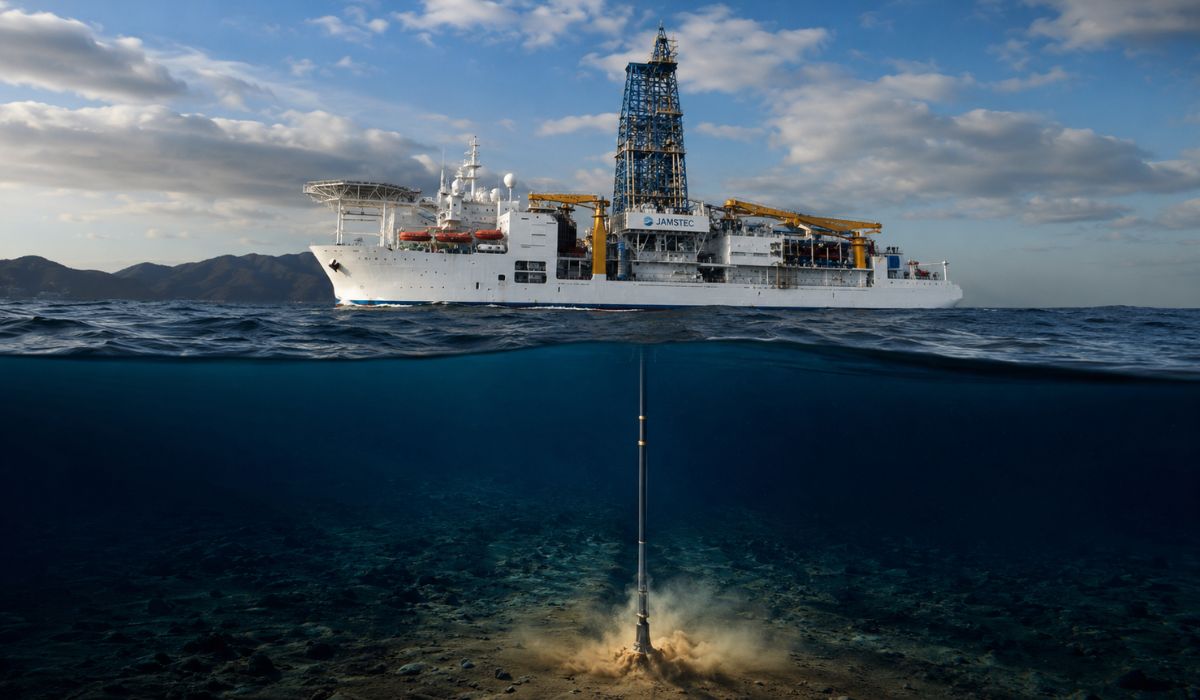


I confess I am fascinated by the logistics of this. Each modern turbine is the size of a lying skyscraper, and the ship needs to transport several such pieces at once, from the port to the park, and assemble them in sequence without stopping. The larger the crane and the more stable the platform, the more turbines the ship installs per trip, and that’s where the Norse Wind makes a difference.

The race for ever larger turbines
There is a logic behind all this gigantism. The larger the turbine, the more energy it generates, and the wind industry is on a climb where each new generation of equipment surpasses the previous one in size. The problem is that a giant turbine requires a giant ship to install, and the old ones simply can’t handle the current blades and foundations. That’s why vessels like the Norse Wind are so strategic, they unlock the next generation of offshore parks.
It’s an interesting domino effect. The blade grows, so the foundation grows, so the crane needs to grow, so the entire ship needs to be redesigned. Each size leap of the turbine pulls a billion-dollar investment in a new installation fleet, and few companies in the world have the strength to fund these machines.
DEME is precisely one of those few. The Belgian company has built a reputation over the past decades in complex maritime works, from dredging to offshore park installation, and the Norse Wind is its bet for the next wave of giant turbines. Ordering such a ship is a long-term decision because the vessel costs hundreds of millions and only pays off over many years of installed parks. It’s the kind of bet that only makes sense for those who believe that offshore wind energy is here to stay and grow. And the queue of wind projects in Europe seems to support this view, because the North Sea alone currently concentrates a race of parks spread across the waters of several countries, in a collective effort to replace fossil fuel with wind that the entire continent closely follows. Each new installation ship is, in this sense, a vote of confidence in the future of this industry.

The sea that Brazil has yet to explore
It’s impossible to look at this and not think about our coastline. Brazil has one of the largest coasts in the world and a wind potential at sea that experts describe as gigantic, especially in the Northeast and South, and yet offshore wind energy here is still in its infancy, stuck in regulatory discussions while Europe fills the sea with turbines.
Ships like the Norse Wind are exactly the type of technology that would make a difference in a future Brazilian offshore wind park. We see Europe building this industry piece by piece, creating jobs, fleet, and knowledge, while our high-quality wind continues to blow for free over an ocean that no one has yet harvested. Official studies have already mapped a Brazilian offshore wind potential greater than the entire electrical capacity currently installed in the country, and yet no park has come off the drawing board so far.

The machine that makes offshore wind possible
I wonder how much of the clean energy that Europe celebrates depends, in the end, on half a dozen of these silent ships that almost never appear in the headlines. Without them, the giant turbines would be just projects on paper. The Norse Wind is, in this sense, one of those invisible pieces that support the entire energy transition.
It goes into operation at a time when the world is increasingly betting on offshore wind, and each turbine it plants will generate electricity for decades. It’s a discreet, gigantic, and fundamental job, transforming empty ocean into a power plant.
Will Brazil finally harvest the wind from its sea, or will we watch Europe do it for another decade?


Be the first to react!