






 Portuguese
  Spanish
  4 min of reading
  0 comments


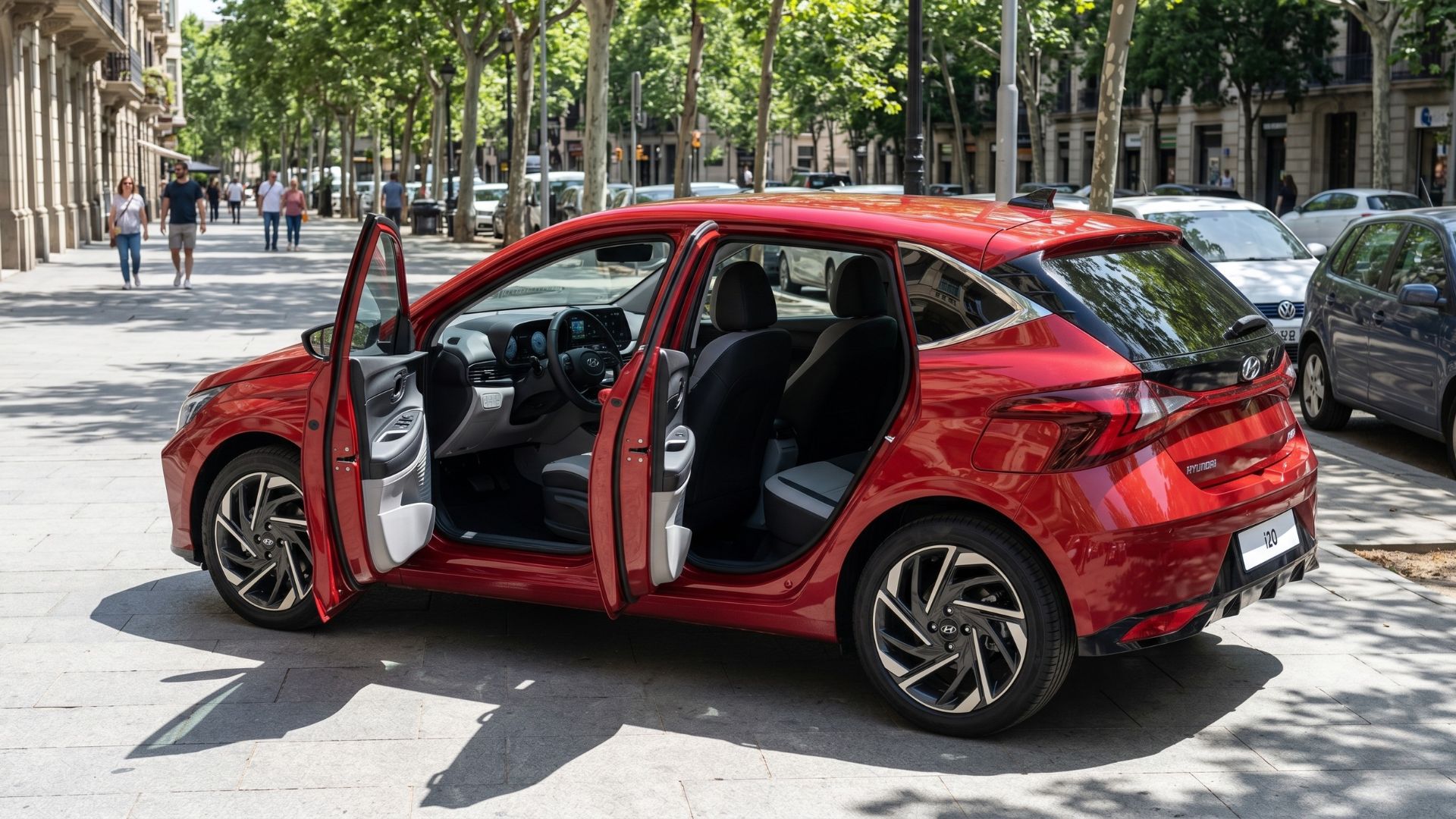
Hyundai i20 starts at around R$ 31.7 thousand in India, features 6 airbags as standard, ESC, hill assist, and 1.2 engine.
For years, equipment such as six airbags, electronic stability control, and hill-start assist were restricted to more expensive versions or higher categories in several emerging markets. But the pressure for safety and regulatory changes have begun to alter this scenario in some countries, including in the compact hatch segment. One of the most recent examples is the Hyundai i20 sold in India, a model that now offers 6 airbags as standard, in addition to a safety package usually associated with more expensive vehicles.
The hatch starts at approximately ₹5.99 lakh, which is around R$ 31.7 thousand in direct conversion, without considering Brazilian taxes, freight, homologation, importation, and other market costs.
The compact hatch received a safety package that became a priority in the Indian market
Hyundai recently expanded the safety equipment of the i20 across the entire line. According to the manufacturer itself, the model offers 6 airbags, in addition to ESC (Electronic Stability Control), VSM (Vehicle Stability Management), ESS (Emergency Stop Signal), and HAC (Hill-start Assist Control).
-
Uber Faces Shareholder Scrutiny as Board Accused of Ignoring Safety, Compliance, and Harassment Warnings Amid Over 3,500 U.S. Lawsuits

-
Ferrari’s First Electric Car Divides Fans, Priced at $630,000, Amid Concerns Over Limited Editions; Brand Clarifies It’s Not Just for Future Perks
-
BYD Dolphin Mini: The Electric Car That Defies Depreciation, Losing Only 3.58% in a Year and Becoming the Best-Selling Retail Model Under $22,000

-
Electric Car JAC E-JS4 Loses $19,000 in Value in One Year, Leading Record Depreciation of Used Cars in Brazil Due to Expensive Battery and New Models


The brand highlights that the six airbags have become part of the hatch’s protection package in all versions.

The move follows a growing trend in the Indian market, which has been pressuring manufacturers to expand safety equipment even in entry-level cars.
Stability control and hill assist appear in a car that costs just over R$ 30 thousand in conversion
The highlight is not just on the airbags. Hyundai states that the i20 also receives electronic stability control, vehicle stability management, and hill-start assist, systems usually linked to preventing loss of control in curves, emergency braking, and hill starts.


In many markets, features like this still appear mainly in mid-range or higher versions of various compact models.
1.2 Kappa Engine continues to be the heart of Hyundai’s urban hatch
Under the hood, the i20 uses the well-known Kappa family engine. According to Hyundai India, the hatch is equipped with a 1.2 Kappa engine of 1,197 cm³, delivering up to 88 PS in versions with iVT transmission and 83 PS in manual configurations.
The model is offered with a manual gearbox and also with the iVT transmission, a continuously variable system developed to prioritize smoothness and efficiency in urban use.
The car tries to occupy a space that has practically disappeared in the Brazilian market
The i20 draws attention because it represents a type of vehicle that has lost strength in Brazil. For years, compact hatches were the main entry point for consumers seeking a brand-new car.

Today, however, the national market has undergone significant price increases and migration to higher segments, mainly compact SUVs.
In India, on the other hand, manufacturers continue to compete for huge sales volumes precisely among compact cars, which helps maintain more affordable versions and intense competition for equipment.
Besides safety, the hatch received features that were previously seen as premium items
Even in the more affordable versions, the i20 continues to offer equipment that helped consolidate its position among the most sophisticated hatches in the Indian segment.
Depending on the configuration, the model can receive a multimedia center with a 10.25-inch screen, digital panel, wireless charger, ambient lighting, and smartphone integration.
Hyundai’s strategy is to combine features of a compact urban car with equipment typically associated with higher categories.
Hyundai was one of the first brands to expand airbags across the entire lineup in India
The advancement in safety did not happen only in the i20. Reports from the Indian automotive sector indicate that Hyundai was one of the manufacturers that began to expand the offer of 6 airbags across the entire range of models and versions before several direct competitors.

In recent years, the discussion about safety has gained momentum in the country after independent tests and regulatory changes heightened consumer attention to active and passive protection equipment.
The small hatch shows how some markets still try to balance low price and safety
The Hyundai i20 is not the cheapest car in India nor does it aim to compete with entry-level microcars. Even so, the model draws attention because it combines a safety package that includes 6 airbags, ESC, VSM, and hill assist in a price range that, in direct conversion, is close to many extremely basic vehicles.
While various markets are moving towards increasingly larger and more expensive cars, Hyundai’s hatch shows another strategy: maintaining a compact, urban, and relatively affordable vehicle, but raising the level of protection that was previously reserved for higher categories.





Be the first to react!