






 Portuguese
  Spanish
  4 min of reading
  0 comments


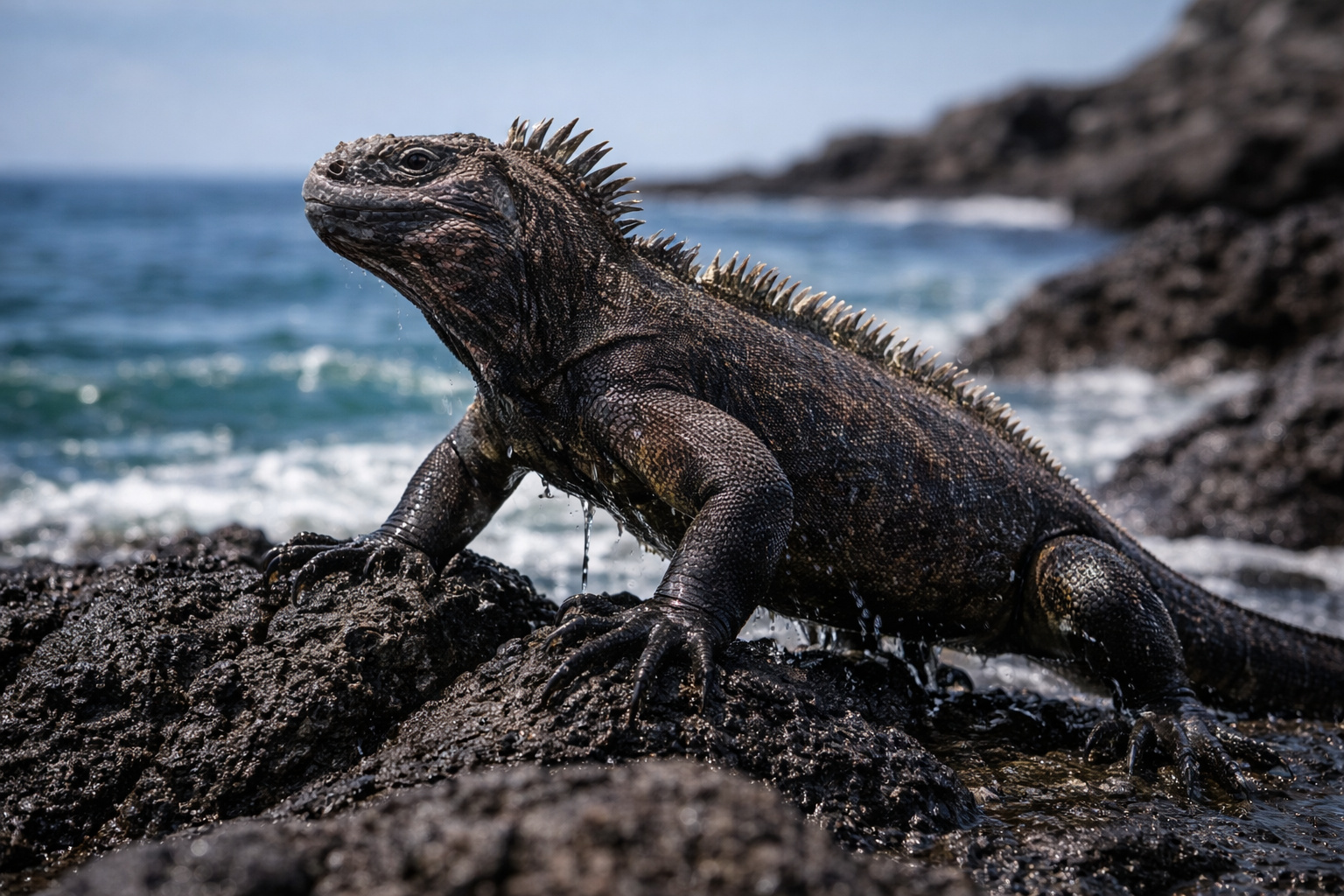
The Marine Iguana Is The Only Marine Lizard In The World: Dives For 30 Minutes, Hunts Underwater, And Regulates Heat On Volcanic Rocks In The Galapagos.
The first time biologists observed the Amblyrhynchus cristatus diving and feeding underwater, the astonishment was immediate: no other living lizard on the planet has a marine lifestyle. Documented exclusively in the Galapagos Islands, Ecuador, this reptile combines physiologically and behaviorally atypical characteristics within the group. Studies published in specialized journals like Ecology, Evolution, Marine Ecology Progress Series, and Journal of Comparative Physiology describe prolonged dives, underwater feeding strategies, extreme thermoregulation, and a thermal biology outside the norm for a lizard.
A Lizard That Behaves Like A Marine Mammal
While terrestrial lizards rely on puddles, insects, or small vertebrates on the ground, the marine iguana employs a different strategy: it submerges in the cold waters of the Pacific and collects food directly from the rocks. At low depths, it also captures small crustaceans, revealing a highly specialized menu. For a reptile, the simple act of submersion would already be a physiological barrier — but the Amblyrhynchus cristatus goes further: the animal holds its breath for long periods, with reliable records of continuous dives lasting up to 30 minutes.
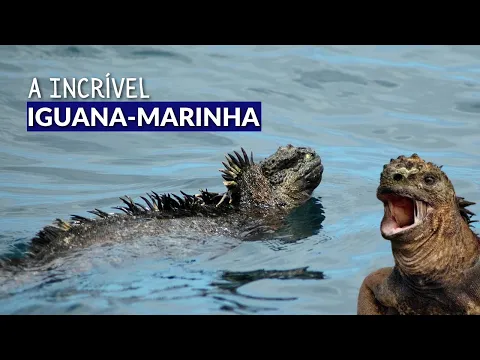

For comparison, many terrestrial lizards enter thermal stress in just a few minutes under extreme conditions and would never tolerate long periods in cold water. This biological contrast has made the species one of the evolutionary symbols of the Galapagos, often cited as one of the strongest examples of Darwinian adaptation in the archipelago.
-
In the USA, thousands of people are being paid to wash dishes and clean the house with body cameras, every movement turning into data to train robots to imitate humans, in a new “digital gig” that could redefine the future of domestic work.

-
At 22 years old, a young person from Recife creates an artificial intelligence startup with a team barely over 25, serves giants like Bayer and Ipiranga, earns millions without taking a cent from investors, and transforms a young company into a national AI phenomenon.
-
The invisible danger inside the house: plugging too many devices into the same outlet and spreading extensions throughout the rooms can overload the electrical network, silently heat wires, and turn a common habit into one of the leading causes of house fires.

-
Goodbye traditional laundry: Roborock launches washer and dryer with super hydrolysis, microbubbles, 99.99% sterilization, low-temperature drying, automatic detergent, app control, and cycles to remove stains, odors, mites, and bacteria from clothes.





Underwater Feeding And Tooth Adaptations To Rocks
The main food of the marine iguana consists of algae that grow attached to volcanic rocks on the sea floor or in the intertidal zone. Its flattened teeth function as a “scraper,” removing carpets of algae and microcrustaceans with precision. This trophic specialization means that it directly depends on the rhythm of the tides, the water temperature, and the primary productivity of the algae.
This dietary dependence is so strict that years of the El Niño phenomenon — which warms waters and reduces algae productivity — have been associated with mass mortality in the marine iguana population, showing the degree of ecological fragility of the species.
Unlikely Physiological Technology: Slow Heart And Blood Too Hot For A Lizard
As a reptile, the marine iguana lacks internal heat production mechanisms like birds and mammals, but it has developed a complex behavioral system to regulate temperature. After exiting the cold water — often between 15 °C and 20 °C — the animal lies on sun-warmed volcanic rocks and remains still until it restores its body temperature to about 35 °C, necessary for normal metabolism.
During dives, the opposite occurs: peripheral circulation is reduced, prioritizing vital organs and conserving energy. This type of cardiac and vascular control is more common in marine mammals like seals and otters, but very rare in reptiles.
An Archipelago, One Unique Home And An Evolutionary Puzzle
No other place on the planet hosts this species. The animal is endemic to the Galapagos — an isolated volcanic group in the equatorial Pacific — and this restricted distribution creates one of the most interesting evolutionary paradoxes in herpetology: how did a primarily terrestrial lizard adapt to the ocean and underwater feeding?
Hypotheses suggest that terrestrial ancestors explored the intertidal zone during periods of food scarcity, and over thousands of generations, natural selection favored individuals capable of diving longer, surviving cold water, and dealing with extreme thermal fluctuations. The result is an animal that resembles nothing else among modern reptiles.
Human Pressures And Risk Of Disappearance
Despite its extraordinary adaptation, the marine iguana faces serious threats: ocean warming, more frequent El Niño events, poorly regulated tourism, marine pollution, industrial fishing, and oil spills are on the list of risks. Ocean warming decreases the algae that sustain the base of its diet, and extreme climatic phenomena can eliminate hundreds or thousands of individuals in a single season.
Because of this, researchers working on conservation in the region warn that the species needs constant monitoring, both for its ecological importance and for its unique value to evolutionary science.
In a world with over 11,000 known species of reptiles, only one dives, hunts underwater, and regulates its temperature on volcanic rocks to survive. That is why the Amblyrhynchus cristatus is not just a biological curiosity — it is an evolutionary rarity that carries an entire chapter of the natural history of lizards.




-

-

-

-

20 people reacted to this.