Portuguese
  Spanish


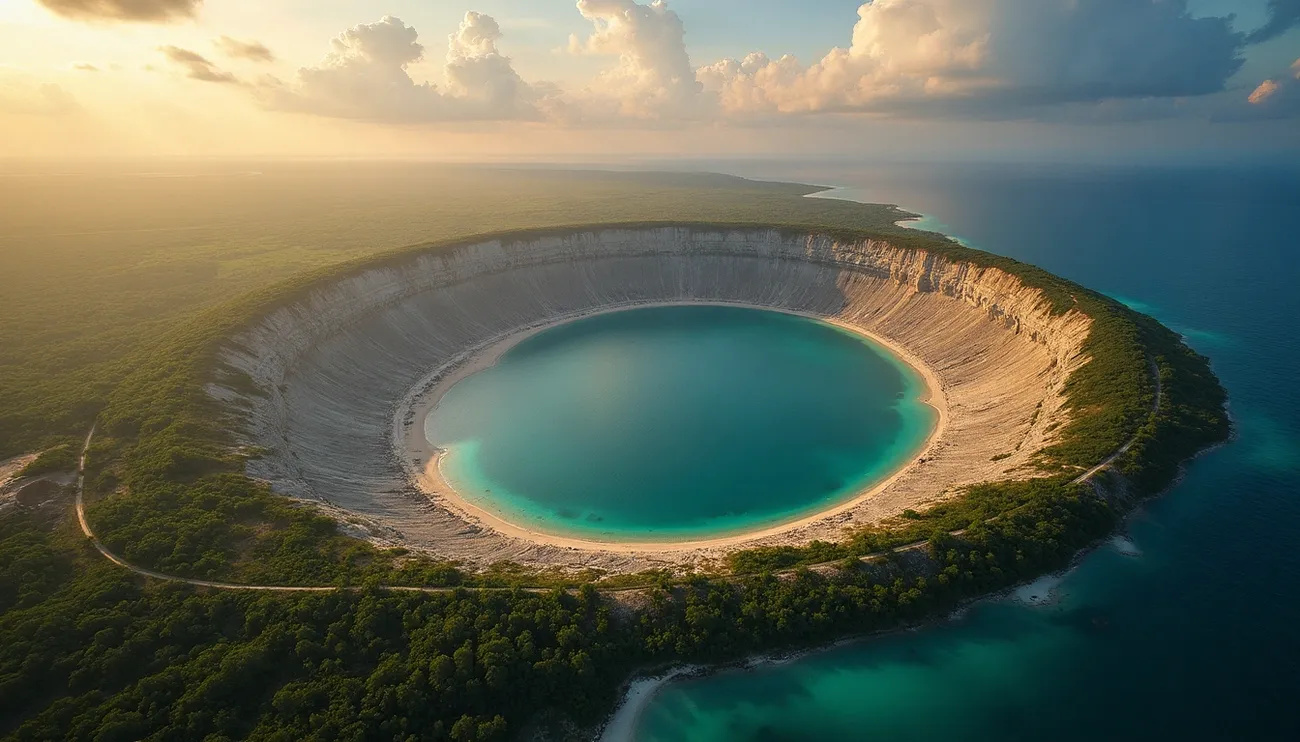


The Impact That Extinguished The Dinosaurs Created The Chicxulub Crater And Activated Hydrothermal Systems For Hundreds Of Thousands Of Years, Possibly Favoring Life After The Catastrophe.
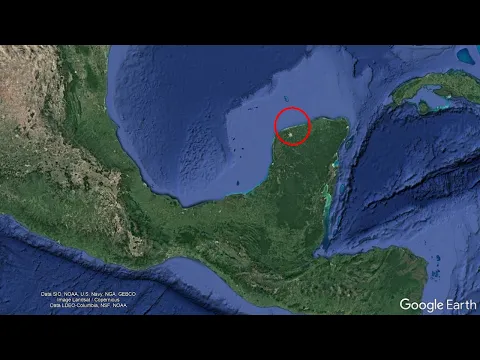
About 66 million years ago, a catastrophic event marked the history of the planet: an asteroid approximately 10 kilometers in diameter struck the region that is now the Yucatán Peninsula in Mexico. The impact was so violent that it opened a crater nearly 200 kilometers in diameter, now known as Chicxulub, and triggered a chain of events that led to the extinction of about 75% of Earth’s species, including non-avian dinosaurs.
For a long time, Chicxulub was studied only as a symbol of destruction. However, geological research and scientific drilling conducted in recent decades have revealed a fascinating paradox: the same impact that devastated the surface biosphere may have created, at depth, an environment favorable to the emergence and maintenance of microbial life for long periods.
The Formation Of A Colossal Crater And Its Immediate Effects
The impact released an amount of energy difficult to imagine. In seconds, rocks were vaporized, the ground behaved like a fluid, and seismic waves traveled across the planet. The result was a complex crater, with concentric rings and a central peak formed by the so-called “elastic rebound” of deep rocks.
-
China Establishes State Centers to Train Humanoid Robots, While the West Lags Behind with Makeshift Solutions

-
The Trap of Modern Technology: How Screen Overload and Digital Connections Can Impact Your Mental Health and Well-being
-
Wyoming Couple Grows Tropical Fruits Year-Round in -40°C Using Geothermal Greenhouse, Demonstrating Earth’s Heat Can Produce Oranges and Lemons in Snow Without Traditional Heating

-
Ship Returns from Brazilian Coast with Thirty Newly Discovered Life Forms




This extreme deformation not only reshaped the Earth’s crust, but also created deep fractures and a massive amount of residual heat, stored in rocks that remained warm for a long time after the impact.
The Emergence Of A Deep Hydrothermal System
As seawater infiltrated these fractures, a process similar to that observed in hydrothermal vents at the bottom of today’s oceans began. Water penetrated the hot rocks, heated up, chemically reacted with minerals, and circulated back, creating an active hydrothermal system.
Studies indicate that this system was not brief. On the contrary, it may have remained functional for hundreds of thousands of years, possibly extending for up to 1 million years, depending on the region of the crater and the depth analyzed.
Why Hydrothermal Systems Are So Important For Life
On Earth, hydrothermal vents are known to support entire ecosystems without relying on sunlight. In these regions, microorganisms use chemical energy released by the reactions between hot water and rocks to survive.
This makes hydrothermal environments ideal candidates for:
- a refuge for life right after major catastrophes
- maintaining ecosystems in extreme conditions
- possible “biological refuges” when the surface becomes hostile
In Chicxulub, the post-impact surface scenario was devastating, with fires, global darkness, and collapse of food chains. However, the heat and water created exactly the opposite: relative stability and available energy.
Evidence Brought By Scientific Drilling

The turning point in understanding Chicxulub came with deep scientific drilling, conducted by international research programs. Samples extracted from inside the crater revealed:
- minerals altered by hot water
- typical structures of hydrothermal circulation
- signs of long interaction between rocks and fluids
These data confirmed that the system was not a brief or localized phenomenon, but a vast hydrothermal network, distributed over large areas of the crater.
A Possible Cradle For Life After The Mass Extinction
The scientific irony is powerful: the impact responsible for one of the largest extinctions in history may have simultaneously created ideal conditions for microscopic life to thrive at depth.
Some researchers suggest that Chicxulub may have functioned as a “biological incubator”, helping microorganisms to survive and expand while the planet’s surface slowly recovered.
This concept changes the way catastrophic events are viewed: they would not only be agents of destruction, but also creators of new ecological niches.
Chicxulub As A Model For Other Worlds

The interest in Chicxulub goes beyond Earth’s history. Similar impact craters exist on Mars, the Moon, and other bodies in the Solar System. If large impacts can generate lasting hydrothermal systems here, the same may have occurred on other planets and moons.
This reinforces the hypothesis that cosmic impacts, far from merely eliminating life, can create environments favorable to its emergence, especially on cold worlds or those with little geological activity.
A New Look At Planetary Catastrophes
For decades, the narrative about Chicxulub has been dominated by the extinction of dinosaurs. Today, it is starting to be rewritten with more nuance. The impact was undoubtedly devastating, but it also:
- deeply heated the crust
- created water circulation for long periods
- generated protected and energetically active environments
On a geological scale, these factors are precisely the ingredients that life needs.
The Scientific Legacy Of Chicxulub
Chicxulub has ceased to be merely the “end site” and has also become a natural laboratory on the resilience of life. It shows that, even after extreme events, the planet finds unexpected ways to keep biological processes active.
This discovery broadens not only our understanding of Earth’s past but also the possibilities of life in the Universe, where cosmic impacts are common and, perhaps, essential for the very existence of life.