






 Portuguese
  Spanish


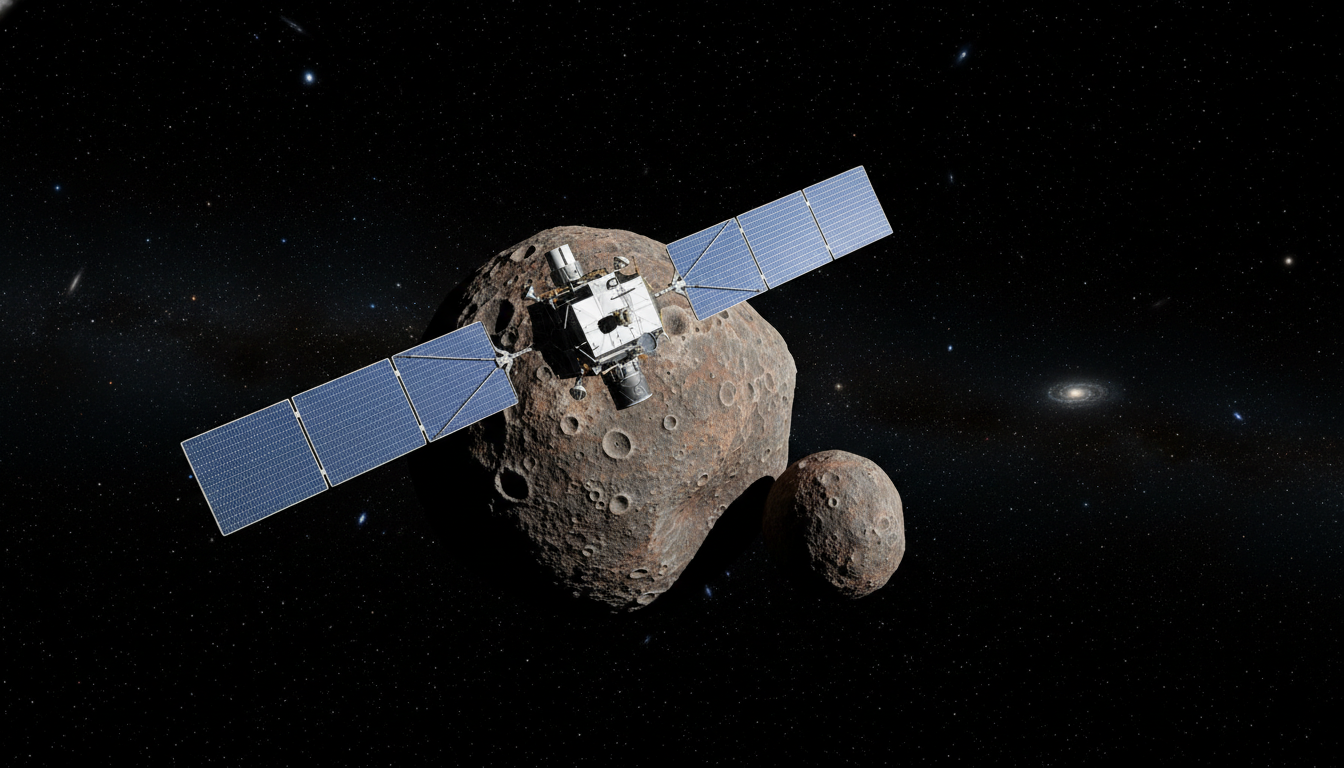


In 2022, NASA shot a spacecraft at an asteroid to deflect it from its path — now Europe’s Hera probe is traveling there to inspect the damage up close and turn the test into a real planetary defense technique
Four years ago, humanity did something unprecedented. On September 26, 2022, NASA’s DART spacecraft intentionally collided with the asteroid Dimorphos at a speed of 6.6 kilometers per second. The impact altered the asteroid’s orbit by 33 minutes — 25 times more than the minimum required to prove the technique works.
But proving it works was just the first step. Now Europe wants to understand exactly how and why.
The Hera probe, from the European Space Agency, arrives at the Didymos-Dimorphos system in November 2026, after a two-year journey since its launch in October 2024.
-
ChatGPT Alerts FBI to Prevent Planned Murder of 8-Year-Old in Brazil’s Espírito Santo

-
Scientists Discover 125-Million-Year-Old “Pregnant Fossil” with Preserved Embryos and Microscopic Larvae Inside Mollusk in England

-
17-Year-Old Justin Bernstein Develops Bacteria to Produce Glass on Arctic Ice to Reflect Sunlight, Wins $50,000 U.S. Scholarship

-
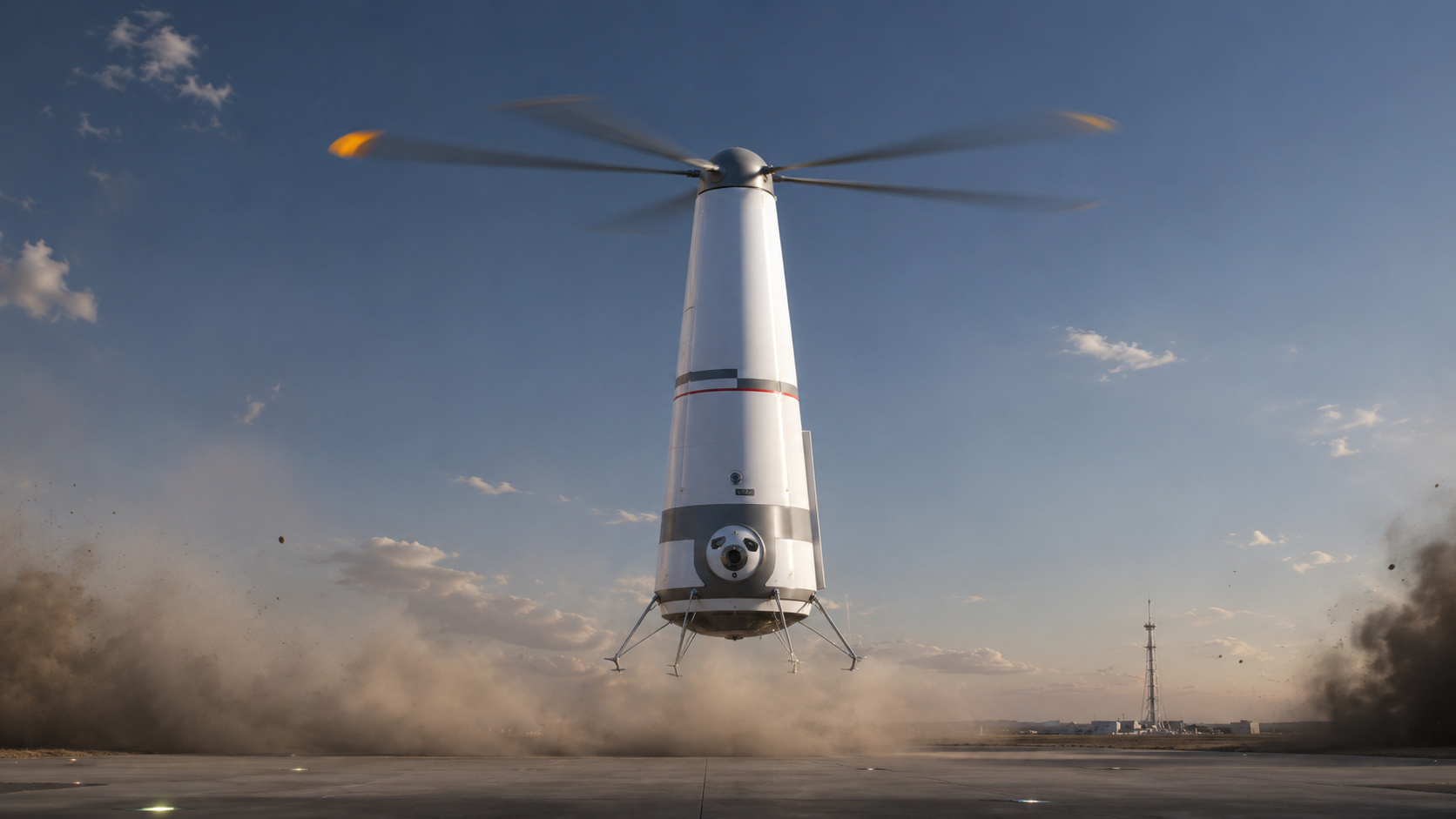
The 19-Meter Rocket-Helicopter: A Private Industry Prototype That Challenged Space Race Logic


What Hera will do when it reaches the asteroid
Hera’s mission is simple to understand, but extraordinarily difficult to execute.
It needs to find two small, dark asteroids in deep space, approach within just 1 kilometer of the surface, and study every detail of what DART left behind.
The probe will map the impact crater, measure the mass and internal structure of the asteroids, and analyze whether the collision excavated surface material or exposed deeper layers.
The investigation will last six months. During this period, Hera will also release two mini-satellites called CubeSats:
- Juventas — will analyze the asteroid’s surface up close
- Milani — equipped with a hyperspectral camera that captures light in wavelengths invisible to the human eye, revealing the asteroid’s composition
The collected data will feed into ESA and NASA impact models, allowing for precise calculation of the so-called “beta factor” — the actual deflection efficiency by impact.

What DART did in 2022 — and why it wasn’t enough
DART weighed 570 kilograms. Dimorphos is about 160 meters in diameter. It’s like throwing a tennis ball at a mountain — and making the mountain move.
And it worked. Dimorphos’ orbital period around the larger asteroid Didymos changed from 11 hours and 55 minutes to 11 hours and 22 minutes.
But ground-based telescopes can only measure the orbital change. They cannot see the size of the crater, the composition of the ejected material, or how the asteroid’s internal structure absorbed the impact.
Without this data, the impact deflection technique is a shot in the dark. We know it worked once, but we cannot predict how it would work on another asteroid with a different size, composition, or structure.
That’s exactly what Hera will solve.
The two-year journey and the maneuver equivalent to “going from stationary to supersonic”
Hera was launched from Cape Canaveral on October 7, 2024, aboard a SpaceX Falcon 9 rocket.
During the journey, the probe had a surprise: it passed through the cometary tail of the interstellar object 3I/ATLAS in October 2025, collecting bonus data on a visitor from outside the Solar System.
Between February and March 2026, Hera executed its largest deep-space maneuver, described by ESA engineers as “equivalent to accelerating from stationary to supersonic.”
The probe measures just 2.2 by 2 by 1.8 meters — smaller than a popular car — and weighs up to 1,214 kilograms with fuel. Its solar panels cover 8.7 square meters and power 12 scientific instruments.
In October 2026, precise engine burns will transition it from cruise to rendezvous with the asteroid.

Why protecting Earth from asteroids matters — even without a current threat
There is no known asteroid on a collision course with Earth in the coming centuries.
But geological history shows that impacts happen. 66 million years ago, a 10-kilometer asteroid wiped out the dinosaurs. And smaller asteroids — 100 to 300 meters — could devastate entire cities or generate catastrophic tsunamis.
The difference between a science fiction scenario and a real catastrophe is precisely having a validated and predictable deflection technique ready before the threat appears.
That’s what the DART + Hera combination represents: the first complete planetary defense test in history.
DART proved that it’s possible to move an asteroid. Hera will transform that proof into a technique that can be repeated and calculated with precision.
14 years of collaboration between NASA and ESA
The project began to be planned in 2013, when NASA and ESA first discussed complementary planetary defense missions.
It took 14 years from the initial concept to Hera’s arrival at the asteroid — one of the longest collaborations between the two largest space agencies in the West.
No other space agency — neither Russia’s Roscosmos nor China’s CNSA — has an equivalent mission underway.
The DART-Hera combination places the United States and Europe in absolute leadership in planetary defense.
Hera is part of ESA’s Space Safety Program, and the agency’s Estrack network of ground stations tracks the probe throughout the mission.

What to expect from November 2026
When Hera arrives, the first data from the impact crater will be the most anticipated.
Knowing the size and depth of the crater will reveal how much energy the impact transferred to the asteroid — and how much was lost in material ejection.
Dimorphos’ internal structure is also crucial. If the asteroid is a loose cluster of rocks, the impact dissipates differently than in a solid body.
Understanding this difference is what separates a “probable” planetary defense technique from one that can be calculated with certainty.
However, the mission faces considerable technical challenges. Dimorphos is small and dark — difficult to locate even for advanced instruments. Approach maneuvers require extreme precision, and software updates are continuously being sent to the probe to optimize operations near the asteroid.
If all goes as planned, humanity will have, for the first time in history, not only proven that it can deflect an asteroid — but understood exactly how to do it again.


