






 Portuguese
  Spanish


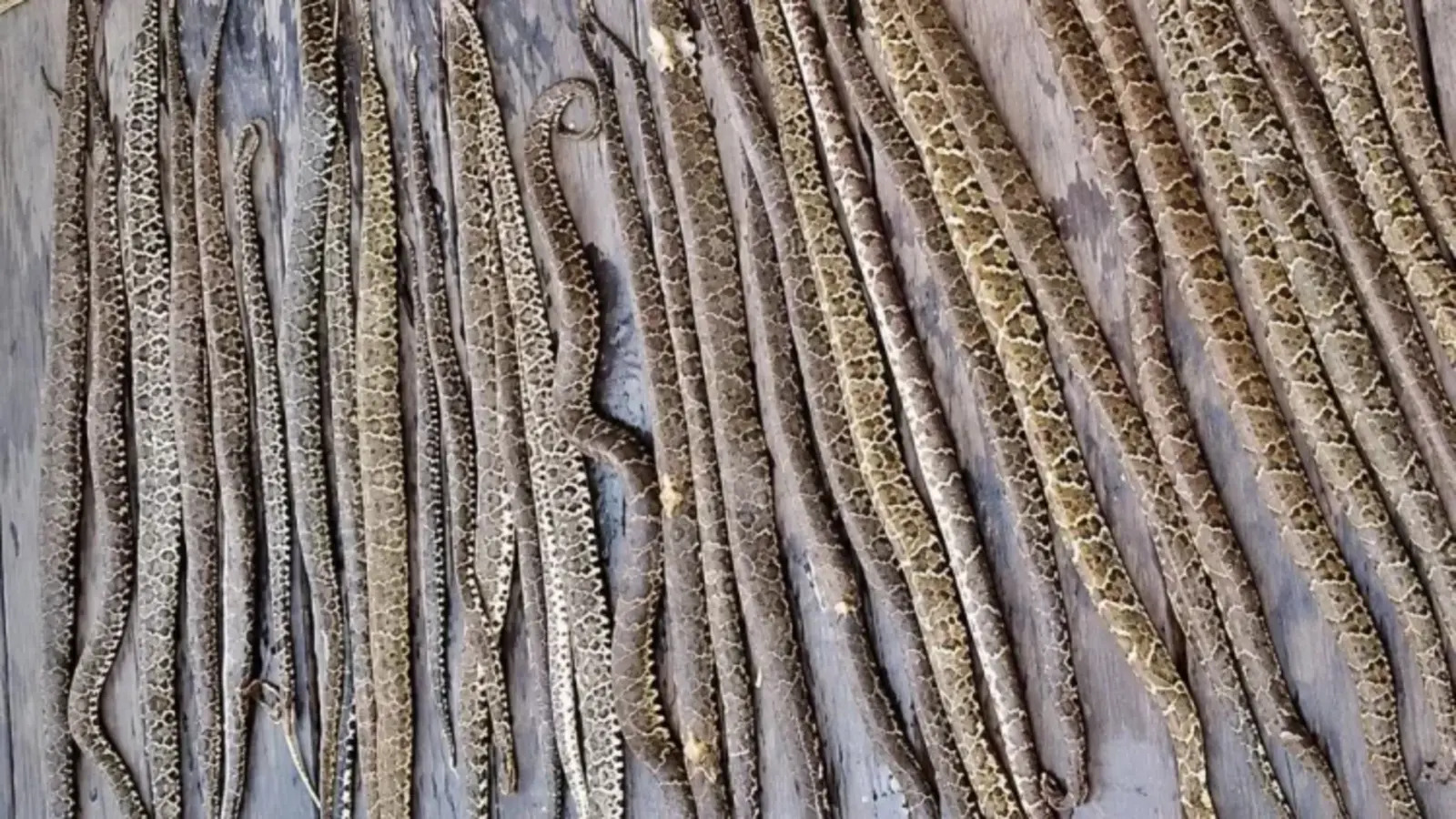


Case of 36 pit vipers found in farm shed divided opinions on social media involving fear of attacks, family safety, environmental legislation, and the role of snakes in rodent control
36 pit vipers found in a farm shed during cleaning led a farmer to eliminate the snakes out of fear of attacks and sparked discussion about safety, environmental law, and rural management.
Case went viral after farmer found dozens of pit vipers
The episode gained attention in recent days after the farmer himself reported in a video on social media that he found 36 pit vipers hidden inside a structure used on the rural property.
Frightened, he expressed concern for his family, employees, and farm animals. The decision to kill the animals divided producers, environmentalists, and internet users, as it involved real fear and wildlife protection.
-
Boeing Buys Back Spirit AeroSystems for $8.3 Billion After 737 Mid-Flight Door Incident

-
Nike’s Old Shoes Recycled into Courts, Tracks, Playgrounds, Gym Floors, and New Footwear in Program Transforming 67,000 Tons of Sports Waste into a Global Industry

-
Canadian Woman Who Donated Savings to Haiti Earthquake Victims at Age 5 Wins $48 Million in Lottery 13 Years Later
-
118-Year-Old Brazilian Man, Living in a Care Home for 55 Years, May Become World’s Oldest Man Pending Guinness Validation


The scene brought a common situation in the countryside. On one side, there is the fear of one of the most dangerous snakes in the country. On the other, the debate about legislation and environmental balance arises.
Some defended the reaction as an attempt to protect lives. Others stated that the correct action would be to call specialized teams to safely remove the snakes.
Why pit vipers are a concern in rural areas
The pit viper belongs to the Bothrops genus and is a snake of great medical importance in Brazil.
Data from the Ministry of Health indicate that Bothrops accidents, caused by pit vipers, represent the majority of snakebite incidents recorded in the country.
These snakes appear in various Brazilian regions, especially in humid areas, places with dense vegetation, stream banks, deposits, warehouses, sheds, and rural environments where there are rats.
Experts explain that accidents usually occur when the snake feels threatened, when someone steps on the animal without noticing, or during cleaning and handling in the field, in accidental contact with shelters.
The Ministry of Health advises that any bite should receive immediate medical attention. The interval between the accident and the application of the serum can be decisive to avoid serious complications.
Snakes also help in rat control
Despite the fear, pit vipers play an important role in environmental balance and can help the rural producer. They control rats and small animals that attack crops, feed deposits, silos, and warehouses.
In addition to economic losses, rodents can transmit dangerous diseases to humans and animals, such as leptospirosis, hantavirus, and salmonellosis. Some can lead to death and do not have simple treatments.
Researchers warn that indiscriminately eliminating snakes can unbalance the environment and increase pest infestations in the field, making the problem greater than the initial scare.
Killing a snake may constitute an environmental crime
Under Brazilian law, pursuing, capturing, injuring, or killing wild animals without authorization may constitute an environmental crime, as provided by the Environmental Crimes Law, Law No. 9.605/98.
Experts state that situations with immediate risk to human life can generate different interpretations, depending on the context. This point fueled controversy on social media.
Rural producers argued that dozens of jararacas in a shed used daily make the reaction inevitable. Environmental professionals emphasized that the ideal is to call for specialized support whenever possible.
How to act and avoid new occurrences
The management guideline is to keep a distance, isolate the area, keep children and animals away, do not handle the snake with your hands, avoid provocation, and call environmental agencies or trained teams.
The rescue may involve Firefighters, Environmental Military Police, Civil Defense, municipal secretariats, CETAS, universities, biologists, veterinarians, or trained professionals.
Prevention requires clean sheds, rodent control, sealing gaps, protective screens, low grass, elevated wood piles, and the removal of debris, old tiles, organic waste, and leftovers.
Guinea fowls, trained dogs, and monitoring appear as complementary supports. The case of the 36 jararacas posed a difficult question in the field: how to protect lives without worsening environmental imbalance?
With information from Compre Rural.


