Portuguese
  Spanish


Cosmic distances, limits of the speed of light, energy consumption, and the laws of thermodynamics cast doubt on one of the greatest dreams of science fiction
The idea that humanity will one day colonize other stars has been present in movies, series, and books for decades. However, when scientists analyze the problem from the perspective of physics, mathematics, and engineering, the scenario becomes much more complex. Various scientific concepts suggest that traveling to another star system may be a much greater challenge than popular imagination tends to admit.
The debate gained momentum again after the repercussion of an analysis based on the teachings of physicist Richard Feynman, Nobel Prize winner in Physics in 1965, who advocated a rigorous approach to reality. According to this view, it is not enough to believe that future technology will solve current problems. It is necessary to verify whether the fundamental laws of nature allow a particular solution to exist.
The discussion involves concepts developed by some of the greatest scientists in history. The mathematical foundations include Newton’s Third Law, formulated by Isaac Newton in the 17th century, the Tsiolkovsky Rocket Equation, published by Konstantin Tsiolkovsky in 1903, the Theory of Special Relativity, presented by Albert Einstein in 1905, and studies on entropy and statistical mechanics developed by Ludwig Boltzmann in the 19th century. Together, these theories help explain why interstellar travel remains one of the greatest challenges ever faced by humanity.
-
Scientists Discover Mysterious Black Fungus Thriving in Chernobyl for Nearly 40 Years, Challenging Extreme Radiation and Potentially Revolutionizing Space Missions

-
Antarctica’s Blood Falls: Scientists Uncover a 1.5-Million-Year-Old Isolated Ecosystem, Shedding Light on Potential Ice Changes
-
Mati Carbon Wins $50 Million Prize for Boosting Harvests and Capturing Carbon by Distributing Free Basalt Dust to Small Farmers in India and Africa

-
Human Waste in Kenya is Solar-Treated and Turned into Fuel Briquettes, Tackling Open Sewage, Charcoal Use, and Deforestation




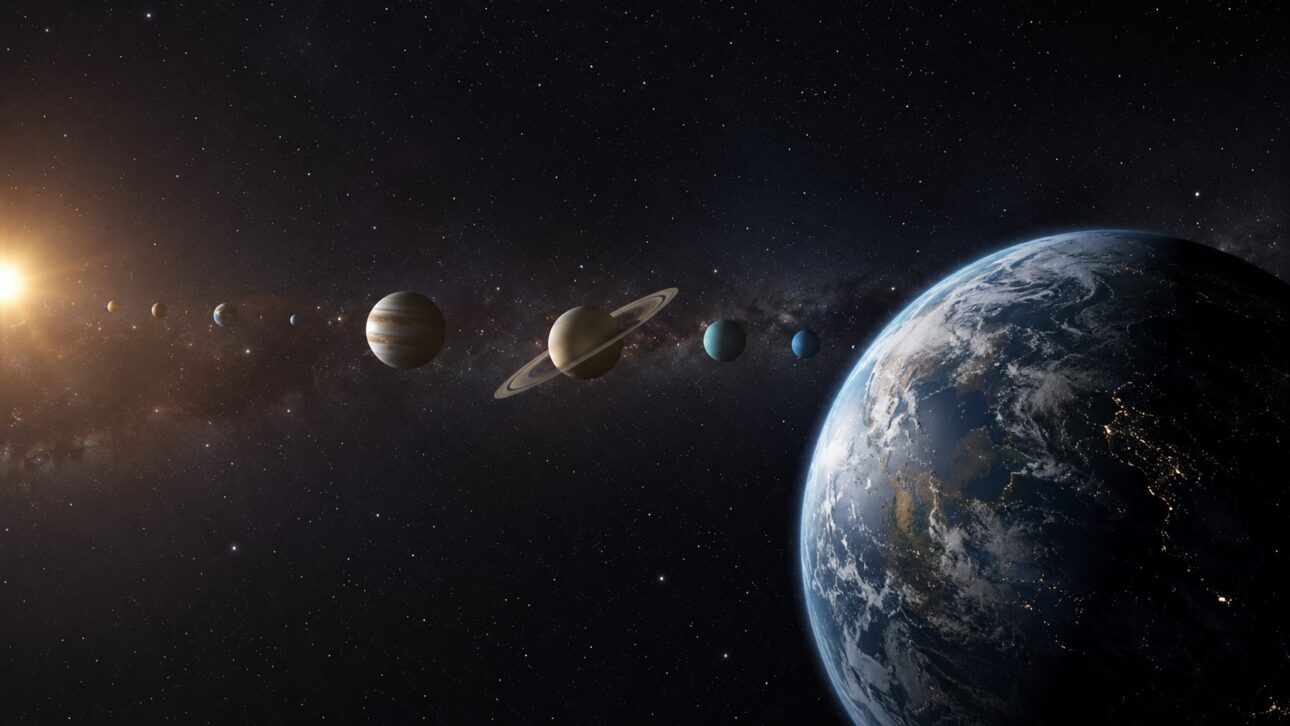
The enormous challenge of distances between stars
The closest star to the Solar System is Proxima Centauri, located approximately 4.24 light-years from Earth.
Although this number seems small in astronomical terms, it represents an almost unimaginable distance by human standards. A single light-year corresponds to about 9.46 trillion kilometers. This means that Proxima Centauri is located more than 40 trillion kilometers from our planet.
To understand this scale, just observe the trajectory of the Voyager 1 probe, launched by NASA in 1977. Even being the human-made object that has traveled the farthest in space, it would take tens of thousands of years to reach the nearest star if it continued in that direction.
The enormous separation between star systems demonstrates that the main obstacle to interstellar colonization is not simply building a bigger or more modern ship. The real problem lies in the very dimension of the universe.
Richard Feynman used to emphasize that nature cannot be fooled. For him, any theory should be confronted with real numbers. When the numbers of interstellar distances come into the equation, reality becomes much less optimistic than science fiction usually portrays.
Newton’s Third Law and the Birth of the Space Age
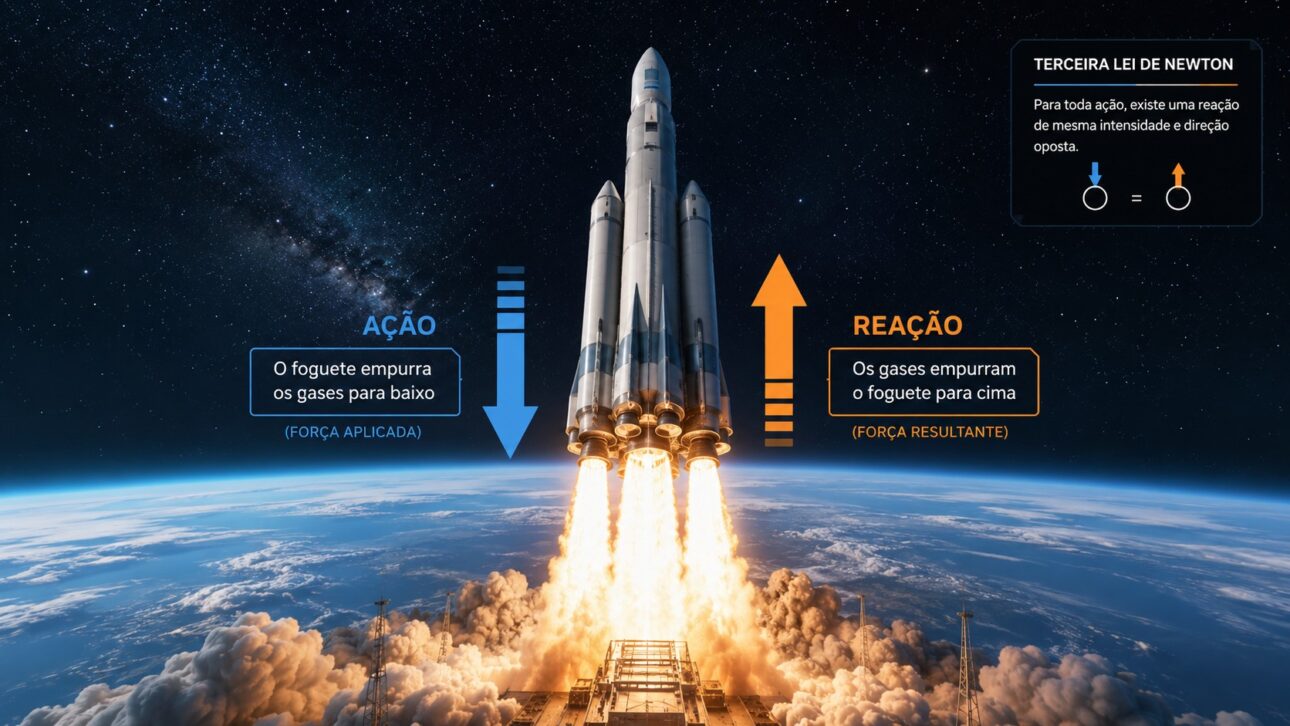
Every rocket ever built follows a principle described by Isaac Newton over 300 years ago.
The so-called Third Law of Newton states that for every action, there is an equal and opposite reaction.
It is precisely this principle that allows rockets to leave Earth. By expelling gases at high speed backward, the spacecraft gains forward thrust.
This idea seems simple but carries an important consequence. To accelerate a spacecraft, it is necessary to carry enormous amounts of mass in the form of fuel.
The greater the desired speed, the greater the amount of fuel required.
This concept has become the basis of all modern space exploration.
Tsiolkovsky’s Rocket Equation Imposes Severe Limits
At the beginning of the 20th century, the Russian scientist Konstantin Tsiolkovsky developed the famous Tsiolkovsky Rocket Equation, considered one of the pillars of modern astronautics.
The equation mathematically demonstrates that the speed achieved by a spacecraft directly depends on the amount of available fuel and the efficiency of the propulsion system.
The problem is that the growth of fuel occurs exponentially.
To carry more fuel, the spacecraft becomes heavier.
To move a heavier spacecraft, it is necessary to carry even more fuel.
This cycle creates a problem known to space engineers for over a century.
Even the most powerful rockets ever built use most of their mass just to carry fuel.
When the goal shifts from the Moon or Mars to another star, the numbers become gigantic.
For this reason, many physicists consider interstellar distance one of the greatest technological challenges in history.
Albert Einstein and the speed of light barrier
If the fuel problem already seems enormous, the situation becomes even more complicated when the Theory of Special Relativity, developed by Albert Einstein in 1905, comes into play.
According to Einstein, the speed of light, approximately 300 thousand kilometers per second, represents the maximum speed limit for any object that has mass.
This is not a technological limitation. It is a fundamental characteristic of the universe itself.
As an object accelerates, the energy required to continue accelerating grows rapidly.
The closer to the speed of light, the greater the energy required.
In theory, reaching exactly the speed of light would require an infinite amount of energy.
For this reason, modern physics considers it impossible for a manned spacecraft to reach this limit using conventional matter.
Richard Feynman dedicated part of his famous physics lectures to explaining how relativistic effects completely alter our intuition about speed and energy.
Traveling at 10% of the speed of light would still be dangerous
Many experts note that it might not be necessary to reach the speed of light.
A spacecraft traveling at just 10% of the speed of light would already drastically reduce travel time to nearby star systems.
However, new problems arise.
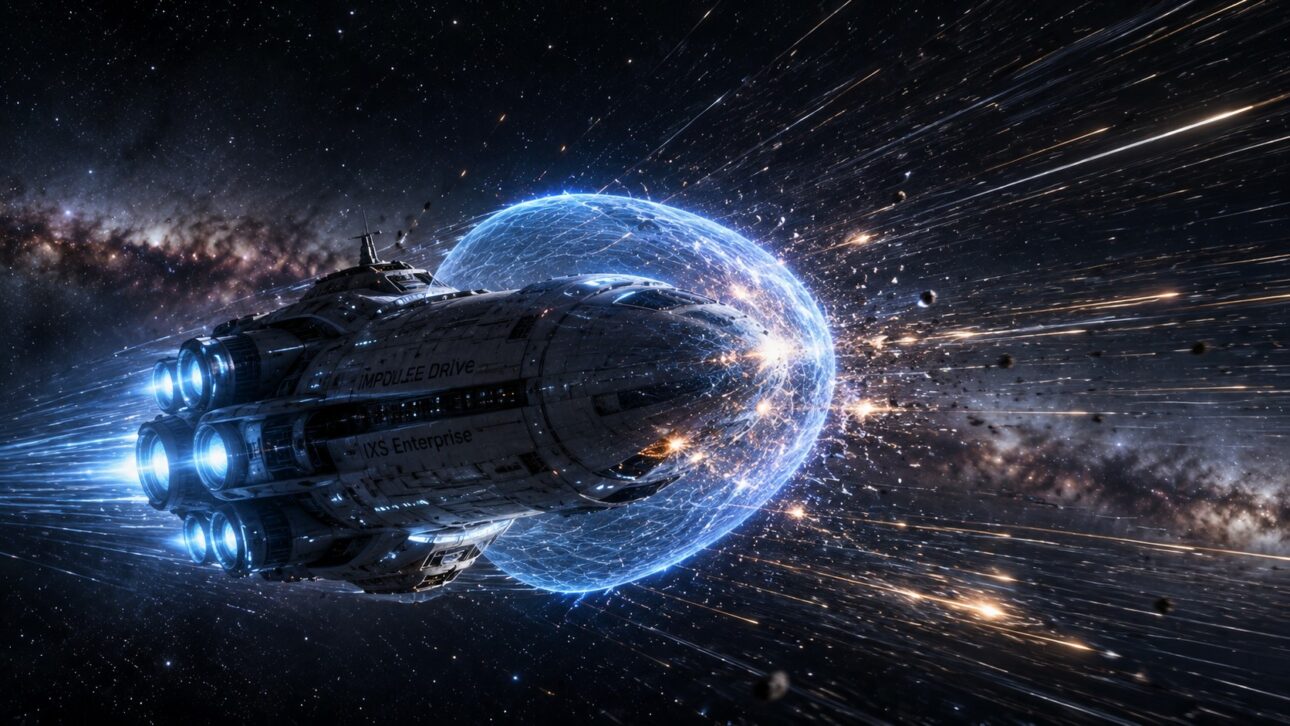
The so-called interstellar medium is not completely empty.
Between the stars, there are hydrogen particles, radiation, and small grains of cosmic dust.
At extremely high speeds, these particles turn into projectiles of enormous energy.
A microscopic grain of dust could cause significant damage to a ship’s hull.
Furthermore, constant exposure to radiation would increase the risks for equipment and crew.
This scenario makes the protection of the ship as complex a challenge as propulsion itself.
Cosmic radiation represents a permanent threat
The Earth has an extremely efficient natural protection: the magnetosphere.
This magnetic field helps block a significant portion of the energetic particles coming from space.
Away from this protection, astronauts become much more vulnerable.
Research conducted by agencies like NASA and ESA shows that prolonged exposure to radiation can cause various problems.
Among them are:
- DNA damage;
- increased cancer risk;
- neurological changes;
- accelerated cellular aging;
- failures in electronic equipment.
A decades-long interstellar mission would require protection systems far superior to those currently available.
The challenge becomes even greater when considering the need to reduce weight to save fuel.
Could generational ships solve the problem?
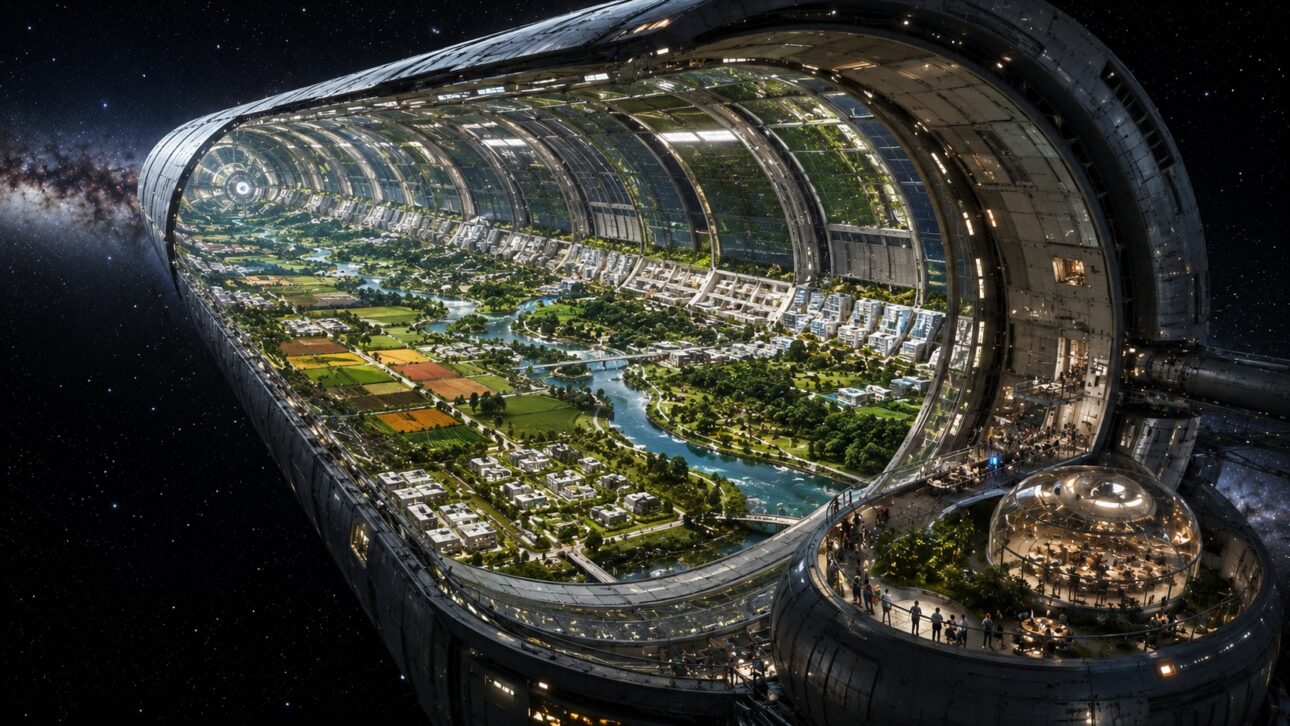
Given the practical impossibility of fast travel, the concept of so-called generation ships emerged.
The proposal consists of building true space cities capable of sustaining entire populations for centuries.
In this model, the passengers who would start the journey would never see the final destination.
The arrival would be the responsibility of their descendants.
The concept frequently appears in works of science fiction but has also been analyzed by scientists and engineers over the past decades.
Despite this, the challenges are enormous.
The ship would need to operate for hundreds of years without receiving external help.
Any serious failure could compromise the entire mission.
Ludwig Boltzmann and the Second Law of Thermodynamics
This is where one of the most important laws of modern physics comes in.
The Austrian physicist Ludwig Boltzmann helped establish the foundations of the Second Law of Thermodynamics through statistical mechanics.
This law is associated with the concept of entropy, which represents the natural tendency of physical systems toward disorganization.
In simple terms, everything tends to wear out.
Machines age.
Parts suffer fatigue.
Materials degrade.
Electronic systems accumulate failures.
Even recycling processes present losses.
Over decades or centuries, small imperfections can accumulate and generate significant consequences.
Therefore, many scientists question whether it would be possible to maintain an isolated civilization functioning perfectly for hundreds of years inside a spaceship.
The human body was shaped for Earth
Another frequently overlooked challenge is human biology itself.
The species evolved over millions of years under extremely specific conditions.
We live under:
- constant gravity;
- oxygen-rich atmosphere;
- natural magnetic protection;
- regular cycles of sunlight;
- abundance of liquid water.
When these factors disappear, various physiological problems arise.
Astronauts who spend months in Earth’s orbit already experience muscle loss and reduced bone density.
A decades-long journey would require much more advanced solutions to preserve the crew’s physical and mental health.
Artificial gravity: solution or new problem?
One of the most discussed alternatives involves the creation of artificial gravity.
The concept usually involves a spacecraft continuously rotating to generate acceleration similar to Earth’s gravity.
The idea has a solid physical foundation.
However, building gigantic rotating structures brings new challenges.
Mechanical stresses increase.
Energy costs rise.
Maintenance systems become more complex.
Once again, each solution ends up generating new engineering obstacles.
The Solar System remains the most realistic frontier
Even in the face of so many limitations, space exploration continues to advance.
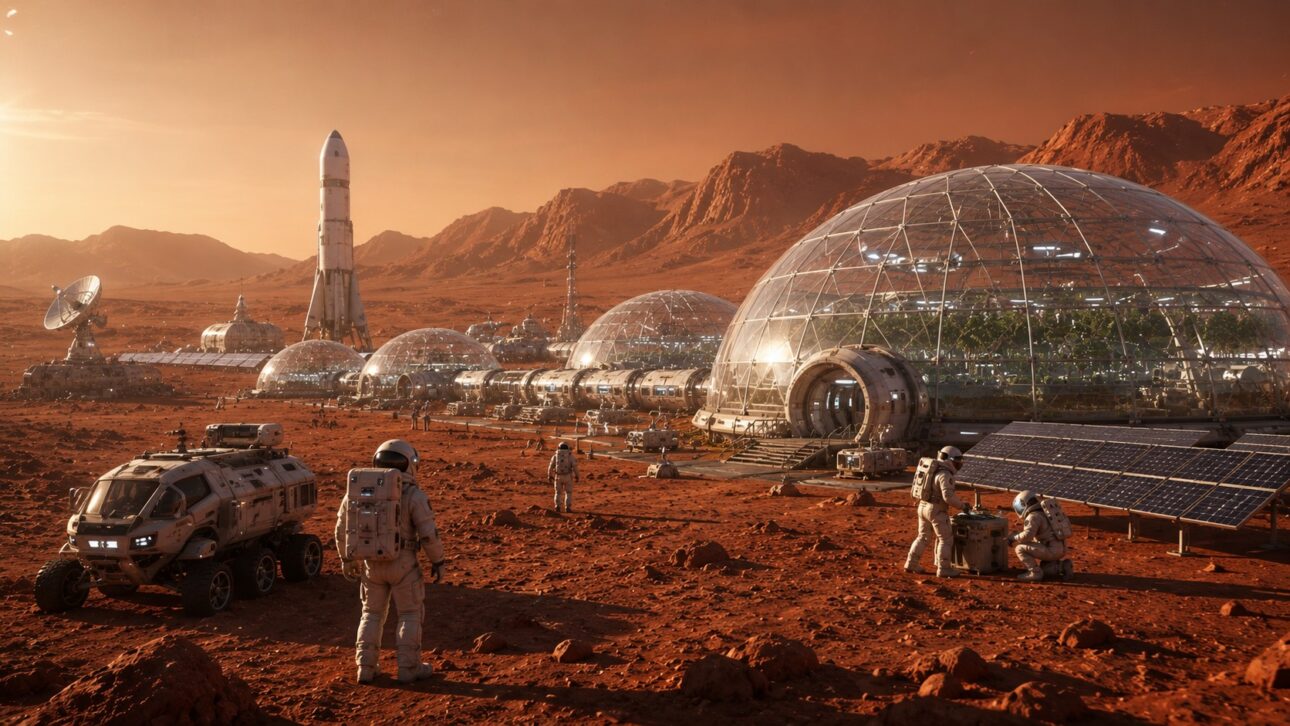
Currently, several projects are studying future human bases on the Moon, on Mars, on moons of Jupiter, and even on asteroids rich in mineral resources.
These destinations remain extremely difficult, but they are within a much more plausible technological scale than the colonization of other star systems.
Therefore, many researchers believe that human expansion will first occur within the Solar System itself.
Is humanity really trapped in the Solar System?
This is a question that remains without a definitive answer.
Current science clearly demonstrates that there are enormous barriers related to energy, speed, radiation, biology, and thermodynamics.
On the other hand, stating that humanity will never leave the Solar System is not yet a scientific consensus.
What currently exists are known limitations and problems that remain unsolved.
History shows that many barriers considered impossible have been overcome by new discoveries.
However, there are also physical limits that may never be overcome.
What this debate teaches about the future of humanity
Regardless of the fate of space exploration, one conclusion already seems evident.
The more we understand the laws of nature described by Isaac Newton, Albert Einstein, Konstantin Tsiolkovsky, Ludwig Boltzmann and explained to the general public by Richard Feynman, the more we realize the rarity of our planet.
If interstellar colonization truly proves to be unfeasible, Earth will cease to be just a starting point to become the most valuable resource of human civilization.
In this scenario, preserving our planet becomes not just an environmental issue, but also a matter of long-term survival.
Perhaps one day we will reach other stars. Perhaps we never will.
But, until this answer is found, science continues to show that the Solar System remains the greatest realistic frontier for humanity and that Earth continues to be the only proven habitable home for our species in the entire known universe.