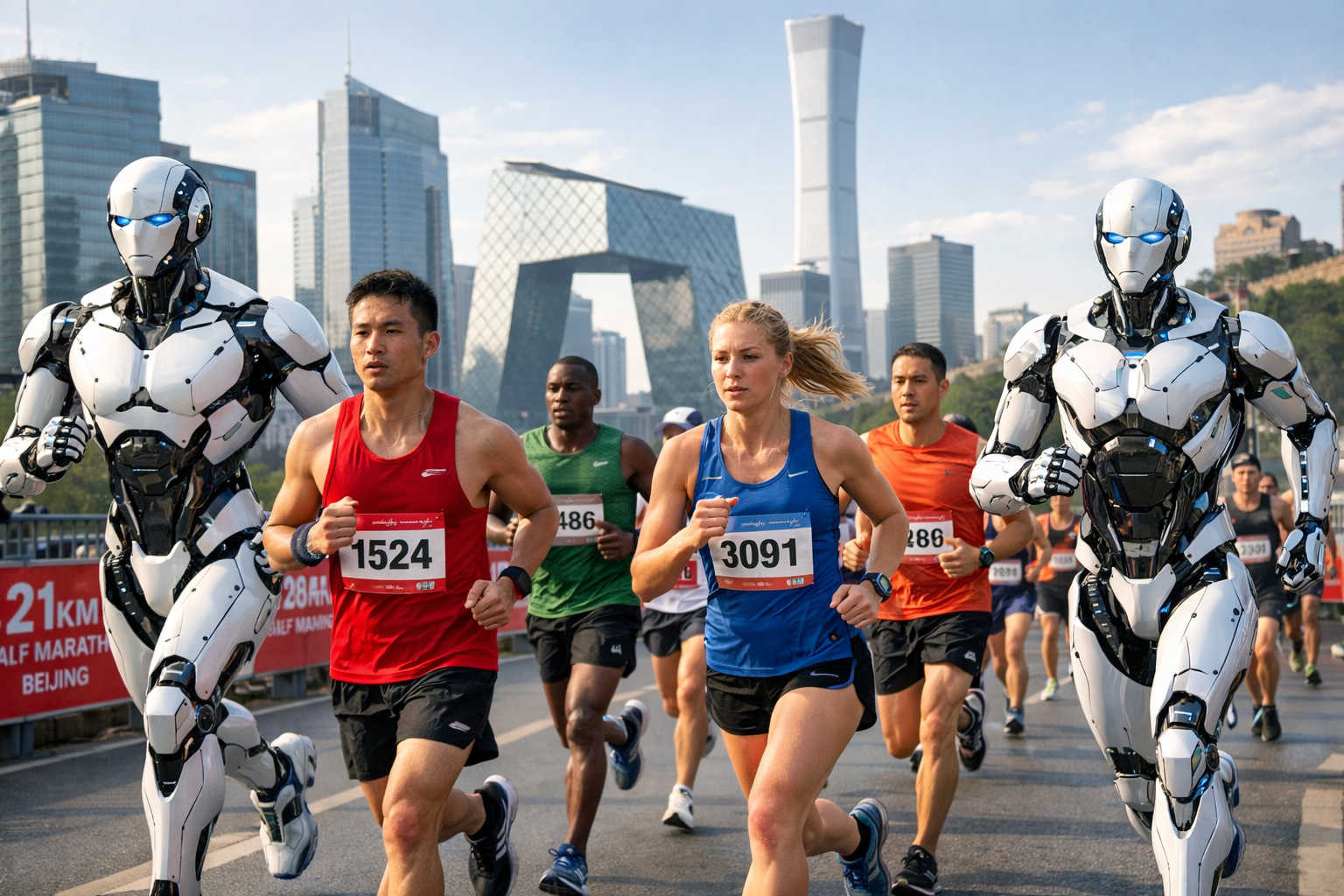

Test in China puts humanoid robots to the test on a 21 km course and uses human performance as a reference to measure technological advancement
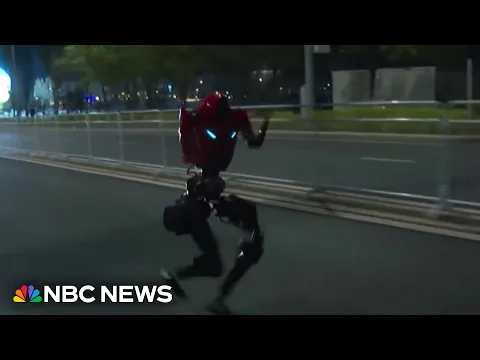
In China, more than 300 humanoid robots participate in a 21 km half marathon in Beijing in an extreme test that draws attention not for having them compete directly with humans, but for using human capability as a reference to measure how far technology has advanced. The event, now in its second edition, serves as a showcase for the sector and, at the same time, as a real laboratory to assess autonomy, endurance, component durability, and navigation capability of the machines in more demanding terrains.
The information was released by “Reuters”, which highlighted the strategic nature of the competition for China, which is currently committed to making humanoid robotics one of the pillars of its economy. According to the report, more than 70 teams participate in the event, a growth of almost five times compared to the previous year, underscoring the event’s significance in the country’s technological calendar.
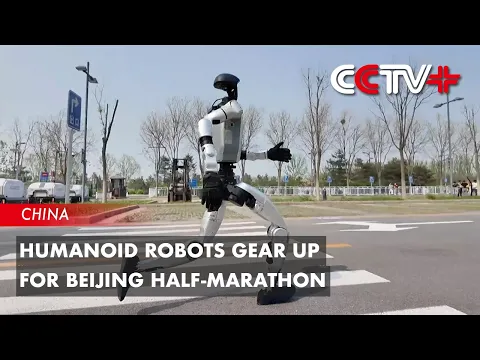
Furthermore, this year’s course was designed to be more challenging. The race includes paved paths, park areas, and other sections intended to test not only speed but also stability, autonomy, and battery life. Thus, the half marathon becomes not just a visual spectacle but a concrete indicator of the current stage of artificial intelligence integrated into the mechanical body.
-
Humanoid Robots Transition from Demonstrations to Real Work in Factories

-
Anti-poaching patrol in Thailand accidentally discovers hidden cave with 2,000-year-old petroglyphs, geometric engravings, and mysterious three-finger patterns on sandstone walls.

-
Russia Deploys Largest Nuclear Icebreaker in Arctic Capable of Breaking Through Three-Meter-Thick Ice
-
TCL Launches Energy-Efficient Refrigerator in Brazil, Promising 70% Less Consumption Than Competitors





Robots do not race against humans, but are still measured by the performance of professional athletes
This is precisely where the most important correction of the text lies: the competition is not an official race between robots and humans. In practice, the robots compete against each other. However, for the audience to understand the extent of the advancement — and also the limitations — the performance of the machines is compared to that of professional human athletes.
This comparison is clearly evident when the text mentions the Tiangong Ultra, a model developed by the Beijing Humanoid Robotics Innovation Center in partnership with UBTech. Last year, it won the event by completing the half marathon in 2 hours and 40 minutes. Although this result was enough to lead among the robots, this time was more than double that recorded by the human winner of the conventional race, according to Reuters.
Nevertheless, there was a significant technical evolution from one year to the next. In 2025, all participating robots were remotely controlled. In this edition, nearly 40% of the competitors are expected to navigate the course autonomously, indicating an important leap in perception, decision-making, and responsiveness.
The Tiangong Ultra, for example, is expected to operate “completely autonomously,” using only sensors to avoid obstacles and replicate human gait with the support of large-scale data simulation training. According to the center responsible for the robot’s development, when the machine operates at speeds close to those of professional human athletes, the perception and decision-making window becomes extremely short, requiring high computational power, sophisticated algorithms, and almost instantaneous systemic responses.
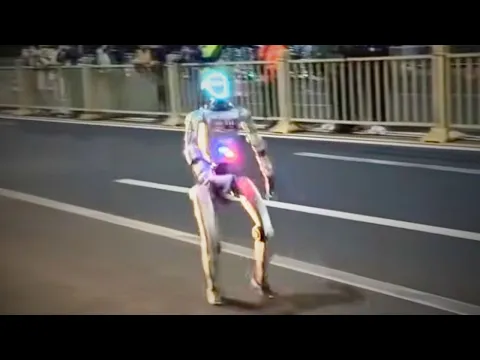
At the same time, training videos shared on social media show that reality is still far from perfection. Some models reached speeds of 14 km/h and managed to reasonably imitate human running, but others exhibited jerky movements, falls, and even collisions with barriers, revealing that completing the 21 km may still be a considerable challenge for some competitors.
China leads the global humanoid robot market, but experts say the sector is still in its elementary phase
While the event in Beijing serves as a showcase, the numbers show that China has already gained a significant advantage in the global humanoid robotics race. Data cited by Reuters, based on Counterpoint Research, indicates that the country accounted for over 80% of the 16,000 humanoid robot units installed worldwide in 2025. During the same period, Tesla, the leading supplier in the United States in this segment, represented only 5% of global installations.
Additionally, Chinese companies like AgiBot and Unitree shipped over 5,000 units each last year, the largest volume in the world. Unitree, in fact, promised to expand its production capacity to 75,000 humanoid robots per year, a number that helps explain why Beijing sees this sector as strategic for boosting productivity and modernizing traditional industry.
On the other hand, experts warn that a half marathon does not signify broad commercial maturity. The ability to run, maintain balance, and avoid obstacles does not automatically translate into industrial efficiency. In factories and productive environments, crucial skills include manual dexterity, real-world perception, adaptability to unforeseen situations, and execution of complex tasks beyond repetitive movements.
This skepticism is strongly reflected in the statements of Tang Wenbin, founder of the embedded intelligence startup Yuanli Lingji. At a technology forum in Beijing, he stated that the reason applications have not yet taken off lies in the “low IQ” of robots, in still weak models, and in low success rates. In an even harsher tone, he declared that the overall level of the industry remains quite elementary and that much of what is seen today would be “dance disguised as work.”
At the same time, Georg Stieler, managing director for Asia and head of robotics at the consulting firm Stieler, highlighted another central market pressure: finding a balance between constantly evolving products and competitive prices. In other words, it is not enough to innovate; it will be necessary to make the technology economically viable on a large scale.
The sector bets on massive data collection to try to bring machines closer to human efficiency
To reduce this gap in relation to human capability, Chinese companies are heavily investing in the collection of real data. According to Reuters, the strategy involves both the use of human workers equipped with sensors and the expansion of the number of robots operating within factories. The more high-quality data that is collected, the greater the training capacity of the artificial intelligence systems that control these humanoids is likely to be.
UBTech is one of the most emblematic examples of this escalation. In 2024, the company had fewer than 10 humanoid robots in factories. Last year, that number jumped to over a thousand. Now, the goal is even more ambitious: to launch 10,000 life-sized humanoid robots this year, including new models tailored for different business scenarios. The company’s commercial director, Michael Tam, summarized the logic of this race by stating that AI directly depends on the quantity and, above all, the quality of the data that can be collected.
In this context, the Beijing half marathon gains even greater symbolism. It does not pit machines against humans in a direct competition, but publicly exposes how much the industry wants, in the future, to bring — and eventually surpass in specific tasks — the physical and operational efficiency of people. For now, robots still race among themselves and remain far from full human performance. Nevertheless, the speed of technological evolution shows that this comparison will cease to be merely a curiosity and will increasingly become a strategic competition for global leadership.