Portuguese
  Spanish




SPC Brazil and Serasa Surveys Show That Nearly Half of the Adult Population Is Defaulting Amid Rising Interest Rates and Growing Debt.
Brazil has just recorded a historical milestone: the highest consumer default rate ever observed. According to data from Serasa Experian, in April 2025, around 76.6 million Brazilians were overdue on debts and had their names restricted in credit registries. This amounts to 47.1% of the working-age population.
The survey conducted by the National Confederation of Shopkeepers (CNDL) and SPC Brazil confirms the same trend. In May, the number of defaulters was estimated at 70.73 million people, or 42.6% of the adult population. Whether through Serasa’s methodology or the CNDL survey, the scenario is alarming: nearly half of the country is facing difficulties in paying their bills.
Companies Also Break Records in Debt
The crisis is not affecting only families. In January 2025, Serasa revealed that 7.1 million Brazilian companies were in default, the highest level since the beginning of the historical series. This contingent corresponds to 31.4% of all businesses in the country, with debts totaling around R$ 155 billion.
-
Brazilian Startup Turns Coffee Grounds into Plant-Based Leather, Cutting Water Use by Over 50 Times for High-Impact Sustainable Fashion

-
Eco Invest Auction Aims to Unlock $10 Billion in Investments, Focusing on Green Fertilizers, Critical Minerals, Batteries, and AI for Clean Industry in Brazil

-
Half of Brazilians Prefer Lower Taxes with Private Health and Education, While 44% Opt for Higher Taxes for State-Provided Services, Datafolha Survey Reveals

-
Brazil’s Most Expensive Toll Rises to R$ 40.60 on Route from São Paulo to the Coast, Nearly Matching Bus Fare to Santos




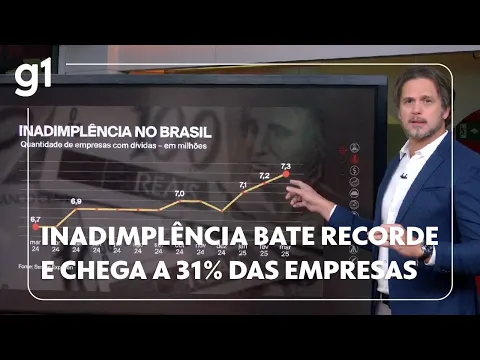

The most affected sectors were commerce and services, which directly deal with the decline in consumption and the rising cost of credit. For many entrepreneurs, keeping operations up to date has become a daily challenge in light of rising interest rates and difficulties in renegotiating with suppliers and banks.
The Burden of Expensive Credit
One of the main factors behind this record is the cost of credit. Despite a slight reduction in the Selic rate throughout 2024, interest rates remain at high levels. The result is a cascading effect: financing, credit cards, and personal loans become more expensive, making it difficult for consumers and companies to meet their obligations.
Inflation, although more controlled than in previous years, still erodes income. With salaries not keeping pace with price increases, many families find themselves forced to choose between paying basic bills, such as energy and food, or settling financing installments.
Debts That Weigh Heavily on the Wallet
Studies indicate that the credit card continues to be the main villain of default. Long-term installments, extremely high revolving interest rates, and easy access turn the credit card into a trap for millions of Brazilians.

In addition, basic bills such as water, electricity, phone, and internet also rank among the most overdue debts. In the financial sector, late payments on loans and vehicle financing are another cause for concern.
Impacts on Consumption and the Economy
The record of default has direct repercussions on the economy. Indebted families reduce consumption, compromising sales in commerce and investments by companies. For the financial sector, it increases credit risk, making it even harder to access new loans for already indebted individuals and businesses.
This vicious cycle stifles economic growth and generates uncertainties in the job market, as struggling companies end up postponing hiring and new projects.
Paths to Reverse the Situation
Experts advocate a combination of measures to reverse this situation. Among them are financial education, which is still not widely disseminated in the country, and debt renegotiation programs that offer real payment conditions.
In recent years, initiatives like Desenrola Brasil have provided some relief to millions of debtors. However, the volume of new debts shows that default is not just the result of isolated crises, but of an expensive credit model and a system that burdens low- and middle-income families.
Record Default in Brazil in 2025
The record of default in Brazil in 2025 exposes a harsh reality: the country is experiencing a silent crisis in the wallets of consumers and businesses. With over 76 million people and 7.1 million businesses in debt, the problem now affects nearly half the population and a third of companies.
Without structural changes, such as reducing the cost of credit, stimulating renegotiation, and implementing a policy for real income increases, Brazil will remain trapped in this cycle of indebtedness. For millions of Brazilians, escaping the list of defaulters still seems a distant challenge.