






 Portuguese
  Spanish


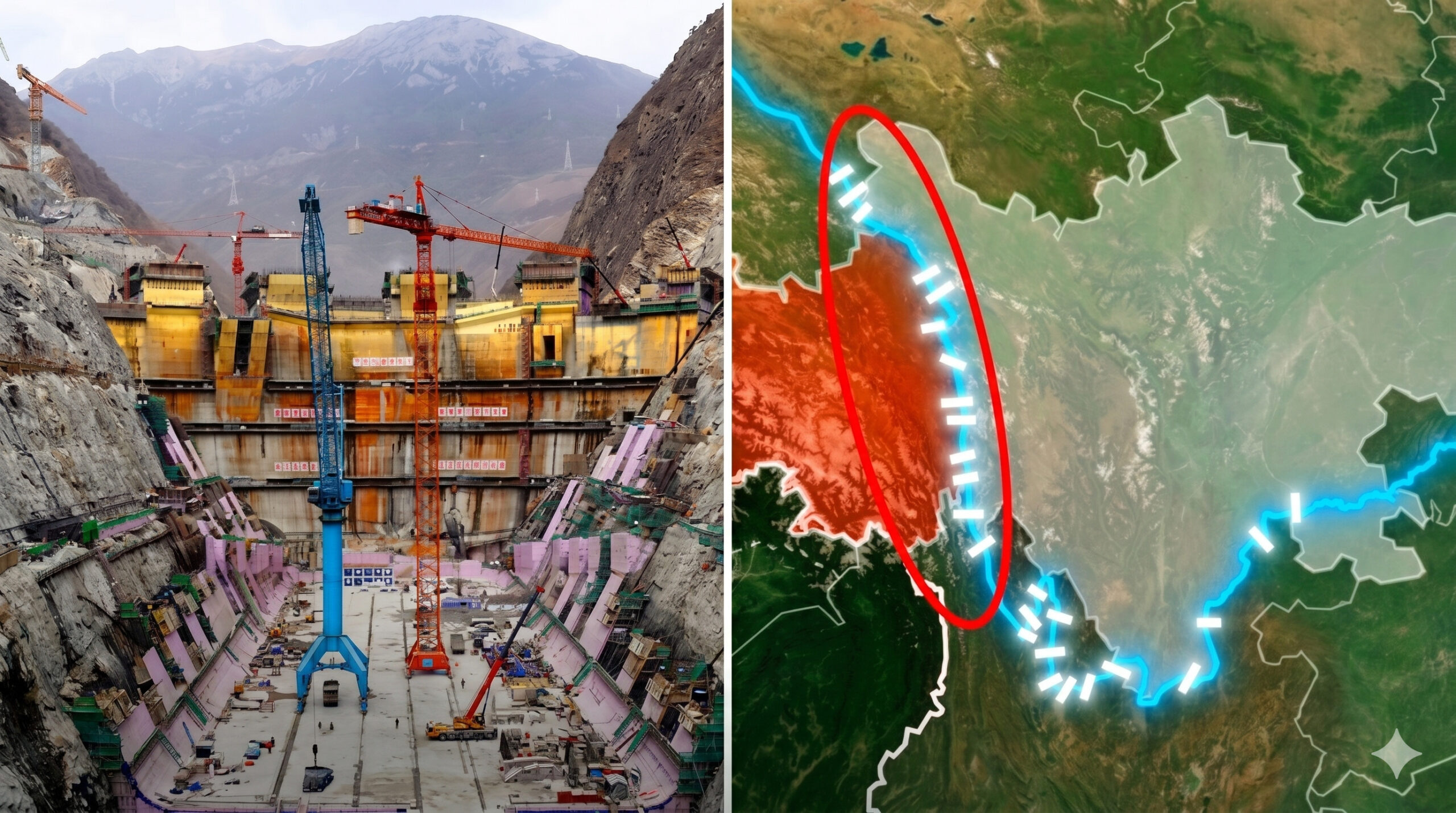


China begins filling dam at 3,000 meters altitude with 2,240 MW and invests in energy integration in the upper Jinsha River.
In October 2025, China initiated one of the most critical stages of the construction of the Yebatan Hydroelectric Power Plant, located in the upper reaches of the Jinsha River, on the border between Sichuan province and the Tibet Autonomous Region. According to the Global Times, on October 14, 2025, the project began the filling of the reservoir, a phase that marked the entry of the largest hydroelectric plant in the Sichuan-Tibet section of the Jinsha into the final preparations for the operation of the first generating units. The project impresses with its numbers: the plant has 2,240 megawatts of installed capacity, a dam 217 meters high, a reservoir of 1.08 billion cubic meters, and is situated in an area with an average altitude close to 3,000 meters.
The construction is also described by the Chinese state media as the highest altitude double-curvature concrete arch dam in China, built under extreme conditions of cold, low pressure, oxygen deficiency, and high geological complexity.
The filling of the reservoir ceased to be just a preparatory milestone when, on December 27, 2025, CGTN reported that the first batch of generating units of the Yebatan Hydroelectric Power Plant began operation, delivering power to the Chinese grid. When fully operational, the official expectation is that the plant will generate more than 10.2 billion kWh per year, reinforcing the clean energy corridor of the upper Jinsha and transmission to Central China.
-
A newly opened terminal in the middle of the Amazon has begun transporting soy and corn through Amapá, eyeing the queue of ships that is congesting the ports in the South.

-
Goodbye to old tiles: renovation technique without construction transforms bathrooms in a few hours, eliminates debris, and reduces costs with coverings using special paints, high-resistance adhesives, and modern finishes that completely renew the space.

-
Goodbye to the traditional clay brick: Indian startup transforms burnt straw into a carbon-negative brick that costs half, insulates better, and even removes CO2 from the air.

-
A Japanese governor single-handedly stalled the construction of the world’s fastest train for nine years, and only now has he agreed to allow a tunnel excavated at a depth of 1,400 meters.




Extreme location poses rare engineering and logistics challenges
The Yebatan Plant is situated in one of the most complex regions from a geographical and climatic perspective. The upper Jinsha River, which is part of the Yangtze River system, cuts through mountainous areas with rugged terrain, geological instability, and harsh climate.


The average altitude of 3,000 meters imposes additional challenges to construction, including:
- Lower oxygen concentration, which affects workers and equipment
- Lower temperatures, which interfere with concrete curing
- Logistical difficulties in transporting heavy materials
Building a dam of this size under these conditions requires advanced planning, adaptive engineering, and specific solutions for each stage of the construction.
Moreover, the region is considered sensitive from an environmental and geological standpoint, which requires constant monitoring.
217-meter structure places Yebatan among the large dams in China
With 217 meters in height, the Yebatan dam ranks among the major hydroelectric structures in the country, although it is not the largest.
Still, the size is sufficient to create a reservoir with significant volume and the capacity to regulate the river flow on a large scale.
The height of the dam is directly responsible for the potential energy stored, which will be converted into electricity by the turbines. The greater the waterfall, the higher the generation potential, which explains the strategic choice of location.
Capacity of 2,240 MW integrates project into China’s energy strategy
The plant will have an installed capacity of 2,240 MW, making it a relevant piece within the Chinese energy system. For comparison, this power is sufficient to supply millions of households, depending on consumption patterns.

The project is part of a broader strategy by China to expand clean energy generation, reducing dependence on fossil fuels.
Hydropower continues to be one of the pillars of this strategy, especially in mountainous regions with great hydraulic potential.
Integration with solar and wind points to a new energy model
One of the most relevant aspects of the Yebatan Plant is its integration with other renewable sources, such as solar and wind energy.
The upper Jinsha region presents favorable conditions for these types of generation, including high solar incidence and consistent winds.
The combination of these sources allows for the creation of a more stable system, compensating for natural variations in each type of energy.
For example:
- Solar energy is stronger during the day
- Wind energy can vary according to the weather
- Hydropower acts as a regulator, adjusting production
This hybrid model represents a growing trend in modern energy systems.
Reservoir filling alters river and region dynamics
The start of the reservoir filling is a critical phase that profoundly transforms the local environment.
As water accumulates, previously exposed areas become submerged, altering:
- Local ecosystems
- Land use
- Water flow dynamics
This process is carefully controlled to avoid abrupt impacts and ensure the stability of the structure. Additionally, the filling allows for testing safety and monitoring systems before full operation.
Jinsha River is a strategic axis for hydroelectric generation in China
The Jinsha River, which forms the upper course of the Yangtze, is considered one of China’s main hydroelectric corridors.
Several plants have already been built along the river, forming a cascade system that maximizes water utilization.

Yebatan integrates into this system, helping to increase the efficiency and total generation capacity of the region.
This type of planning allows for the same water to be used in multiple stages, increasing energy production without the need for new water resources.
Large-scale engineering requires rigorous risk control
Projects of this magnitude involve significant risks, including:
- Geological instability
- Possible landslides
- Pressure on the dam structure
Therefore, construction and operation require advanced monitoring systems. Sensors, computational models, and constant inspections are used to ensure the safety of the structure and surrounding areas.
The filling phase is especially critical, as it is when the dam begins to bear the full pressure of the water.
Environmental and social impact accompanies large hydroelectric plants
Like other large-scale hydroelectric projects, Yebatan also involves environmental and social impacts. The filling of the reservoir may require the displacement of communities and changes in land use.
In addition, there are effects on local fauna and flora. These impacts are generally assessed in preliminary studies and monitored by mitigation measures.

China has adopted policies to balance energy development and environmental preservation, although the topic continues to be debated.
Project strengthens Chinese leadership in infrastructure megaprojects
The construction of the Yebatan Plant reinforces China’s position as a global leader in large infrastructure projects. The country is already responsible for some of the largest hydroelectric plants in the world, including the famous Three Gorges.
The ability to execute works in extreme environments and on a large scale is one of the main differentiators of the Chinese engineering sector. This type of project also serves as a technological and strategic showcase.
The model adopted in Yebatan, combining hydroelectric, solar, and wind power, indicates a clear trend in the energy sector. Instead of relying on a single source, modern systems seek integration to ensure stability and efficiency.
This concept can expand to other countries, especially those with water and renewable potential. Energy diversification is seen as a way to increase security and reduce emissions.
Do you believe that megaprojects like this are the way to the future of energy?
The start of filling the Yebatan dam marks another step in the expansion of renewable energy on an industrial scale. At the same time, it raises questions about environmental impact, sustainability, and the balance between development and preservation.
In light of this, the reflection remains: do integrated hydroelectric megaprojects with other renewable sources represent the best solution for global energy demand, or are there more efficient alternatives in the long term?





The Chinese can learn a lot from Americans with regards to preservation of ancestral and religious sites. Americans did a wonderful job with regards to preservation of indigenous Indian scared sites and grounds in 17/18 century
Tremendous
The world should change over to clean energy rather than depends on polluting fossil fuels. Critical time to change before the world collapses!