Portuguese
  Spanish


The agricultural machine of Bachubhai Savjibhai Thesiya, a 58-year-old inventor from Gujarat, replaced the steering wheel with levers, born from an idea inspired by cart oxen, cost Rs 90,000 to develop, and promised to perform tractor tasks using 5 liters in almost 8 hours in the Indian field.
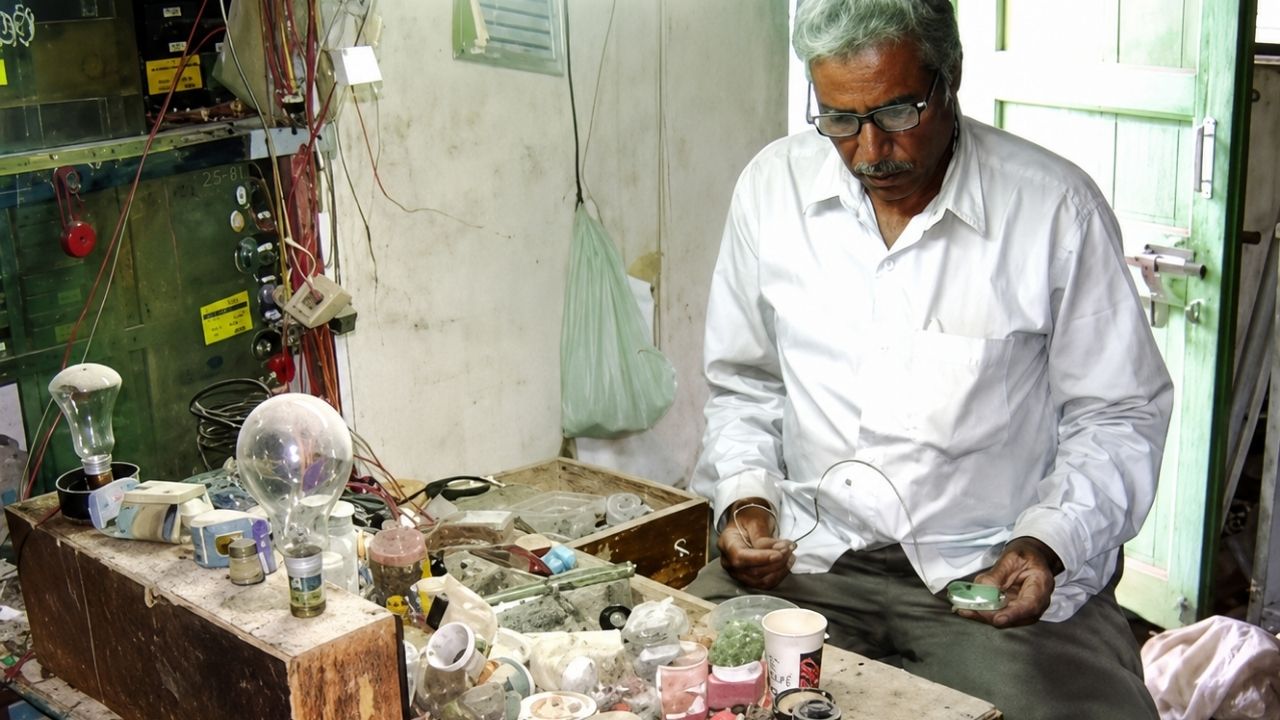
An agricultural machine without a steering wheel placed Bachubhai Savjibhai Thesiya, a 58-year-old inventor from Jamnagar, Gujarat, among the recognized names at the Fifth National Grassroots Innovation Awards 2009, in the category of Farm Machinery and Food Processing Technologies.
According to the award material, Bachubhai developed a lever-operated machine capable of performing most agricultural operations done by tractors. The project was created in Kalavad, a village located about 30 km from Jamnagar, and had a patent application filed by NIF in 2008.
Idea born from the way cart oxen were guided
The inspiration for the agricultural machine came from a simple observation of the field. Bachubhai thought about how cart oxen respond to the rope: when pulled to one side, the animal turns; when pulled hard, it stops.
-
Scientific Breakthrough: Bacteria Found in a Rio de Janeiro Lagoon Guide Mars Research After Scientists Identify Similarities to Extreme Environments, Expanding Understanding of Extraterrestrial Life Possibilities

-
Brazilian Mechanic Wins Indian Presidential Award for Inventing Fuel-Efficient Agricultural Machine

-
Brazilian Senate Approves Bill to Automate Child Support Payments Directly from Debtors’ Accounts

-
Brazilian Student in the U.S. Helps Provide Clean Water to 50 Families in São Paulo Slum, Launches Year-Long Volunteer Project with National Expansion Plans

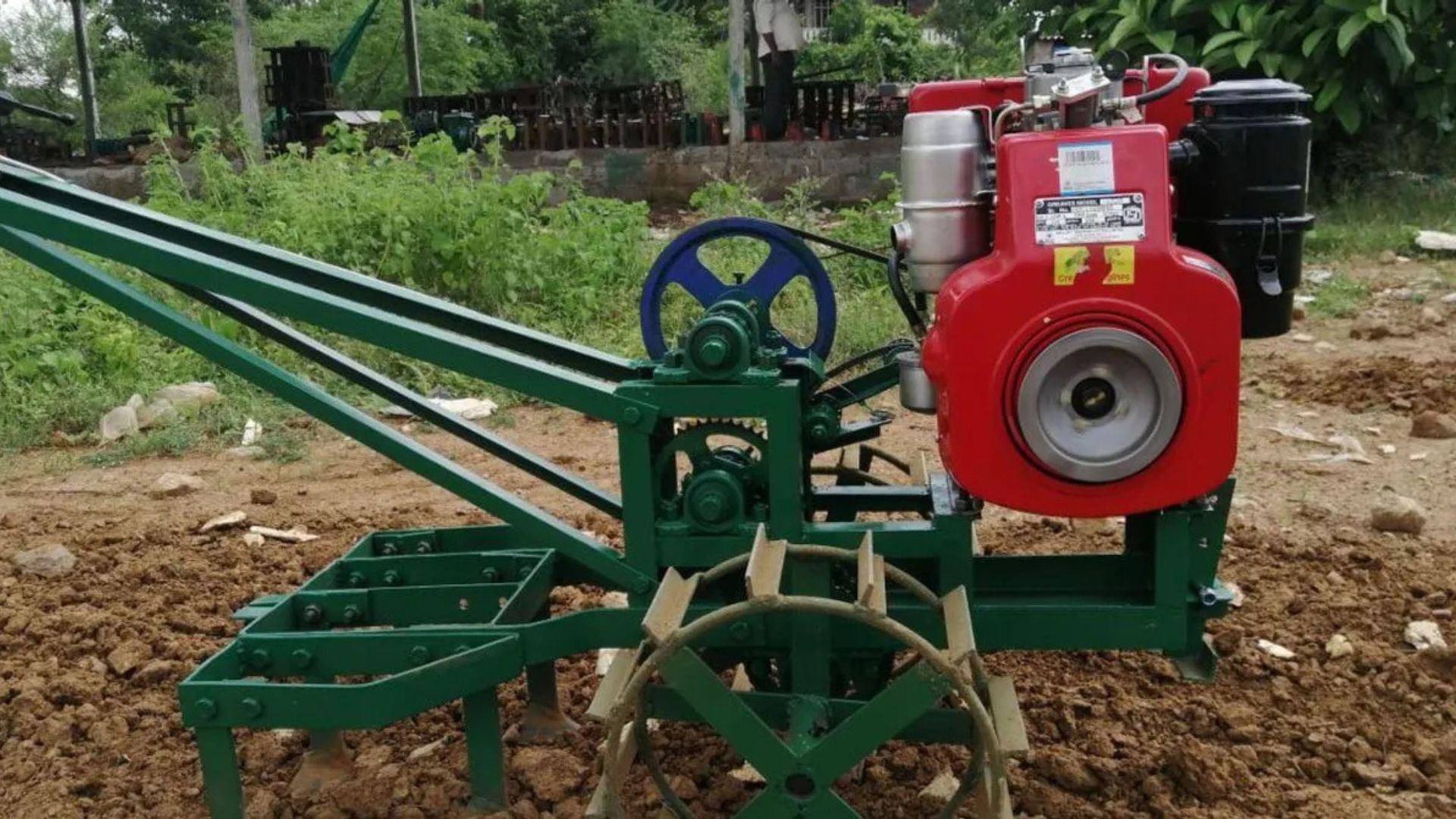


From this logic, he designed a system without a steering wheel. Instead of conventional steering, the machine uses functional levers that act as steering, clutch, and brake. The solution replaced a common command in tractors with a mechanical language closer to the rural routine the inventor knew.
Project took about a year and cost Rs 90,000
The development did not happen all at once. The document states that Bachubhai spent four to five months putting the design on paper until he considered the idea ready to move out of the planning phase.
After that, his friend Ghanshyam bhai assisted in the manufacturing, which took about six months. In total, the agricultural machine took approximately a year of development and Rs 90,000, an amount cited by the source as the investment made by the inventor throughout the process.
Levers make the machine turn almost on its own axis
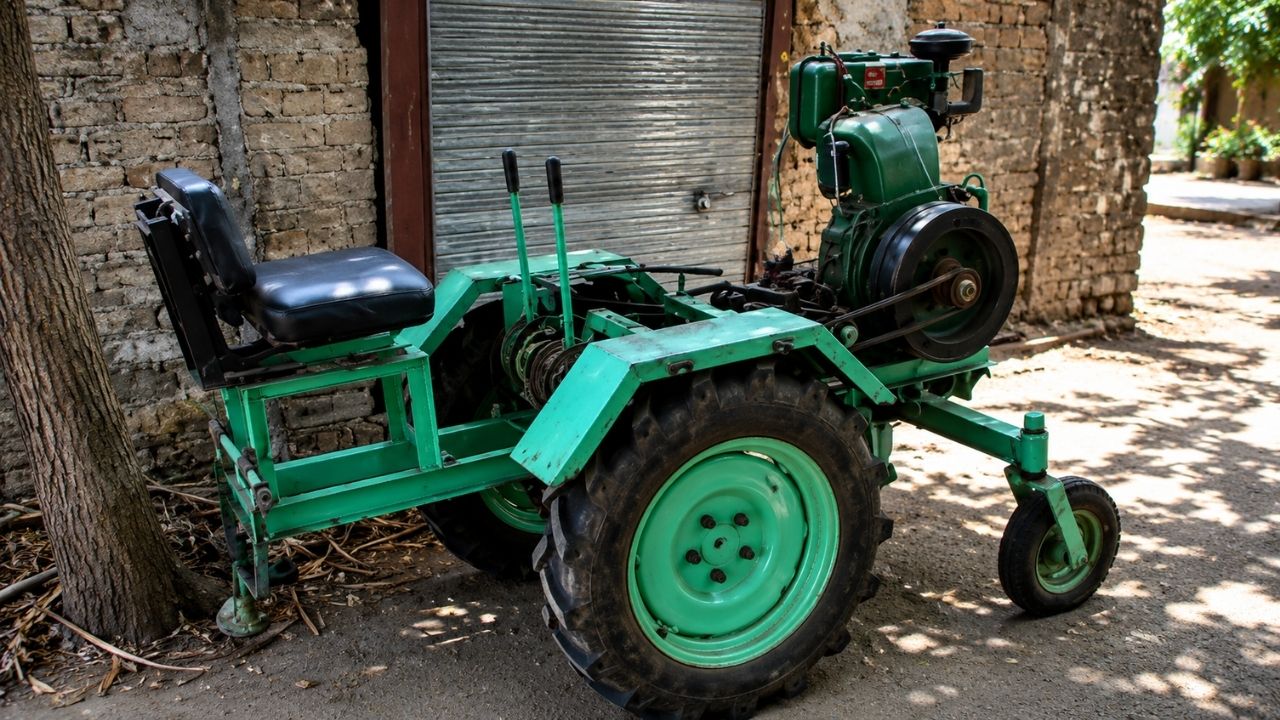
The operation draws attention for its maneuverability. To turn left, for example, the operator pulls the left lever and pushes the right lever forward. The front wheels, capable of turning nearly 90 degrees, help the vehicle rotate almost on its own axis, in a movement close to 360 degrees.
This capability facilitates operations in small areas or field maneuvers where larger tractors may struggle. The novelty, according to the source, is not in the rotation itself, already known in previous technologies, but in the lever control system created for this agricultural machine.
Diesel consumption and lower weight drew attention
Another highlighted data in the material is consumption. The agricultural machine uses about 5 liters of diesel in almost 8 hours of work, according to the award description.
The source also points out an advantage related to weight. Being lighter than conventional tractors, the machine would reduce soil compaction, a problem associated with heavy agricultural equipment. This makes the project relevant not only for its cost but also for its practical impact on cultivation conditions.
Equipment uses three-point hitch like conventional tractors
Despite not having a steering wheel, the agricultural machine was designed to perform typical field tasks. Soil preparation implements are attached by a three-point hitch system, similar to that used in traditional tractors.
The document states that the equipment is capable of performing the tasks that a tractor does, but at a fraction of the cost. This comparison helps explain why the innovation gained prominence: it does not try to compete for technological luxury, but for simplicity, function, and adaptation to the reality of small producers.
Bachubhai already accumulated other rural inventions
The agricultural machine without a steering wheel was not Bachubhai’s only creation. The material mentions other projects, such as a motorcycle-operated agricultural device, a sensor system for irrigation, a modified lamp to last longer, and a multifunctional machine with a generator, water pump, flour mill, and iron cutter.
Before dedicating himself to agriculture, Bachubhai studied up to the tenth grade, took a radio repair course, and opened Jyoti Radio Service in 1984. Later, with declining earnings and the advent of televisions, he took a TV repair course and opened another business, showing a trajectory linked to electronics, maintenance, and experimentation.
Recognition came from a solution made in the field
The story of Bachubhai shows how innovation can be born outside major industrial centers. The agricultural machine emerged from a practical need, accumulated knowledge in rural routine, and an attempt to create a more accessible alternative to common tractors.
The case also raises an important discussion: how many solutions for the field might be hidden in small workshops, family properties, and the experiences of inventive farmers? Do you think simple machines like this should receive more support for testing, manufacturing, and large-scale use? Leave your opinion in the comments.