Portuguese
  Spanish


Indonesia closed the purchase of BrahMos supersonic missiles for $630 million during Indian Prime Minister Narendra Modi’s visit to Jakarta, becoming the third country in the world to operate one of the most feared anti-ship weapons on the planet, in a deal that shifts the balance of power in Southeast Asia.
The agreement was signed between July 6 and 8, during Modi’s visit to the Indonesian capital. And it’s not just any contract: it places Indonesia in a small and select club of nations capable of firing a missile that flies at almost three times the speed of sound against enemy ships.
What makes the BrahMos so feared
The BrahMos is a supersonic cruise missile developed in partnership between India and Russia, and its name combines the Indian Brahmaputra and Russian Moskva rivers. It flies low, close to the sea surface, and hits the target at a speed that leaves very little reaction time for a ship’s defenses.
This combination of speed and low flight is what makes the BrahMos almost impossible to intercept. While common subsonic missiles give defense systems time to react, the supersonic arrives before the operator finishes processing the threat. It’s the difference between seeing the punch coming and simply being hit.
-
India Allocates $40 Billion to Upgrade Navy with 114 Rafale Jets and Six P-8 Poseidon Surveillance Aircraft, Aiming for Indian Ocean Dominance by 2030

-
VisionWave Unveils Autonomous Drones Capable of Target Identification and Interception at World’s Largest Land Defense Expo
-
Ukraine Converts Magura V7 Robotic Boats into Drone Carriers: Now Launching FPVs and Thermobaric Rockets from the Black Sea Unmanned
-
U.S. Space Force Activates Meadowlands, the Most Compact Satellite Jammer Ever, Plans Five New Electronic Warfare Bunkers Worldwide


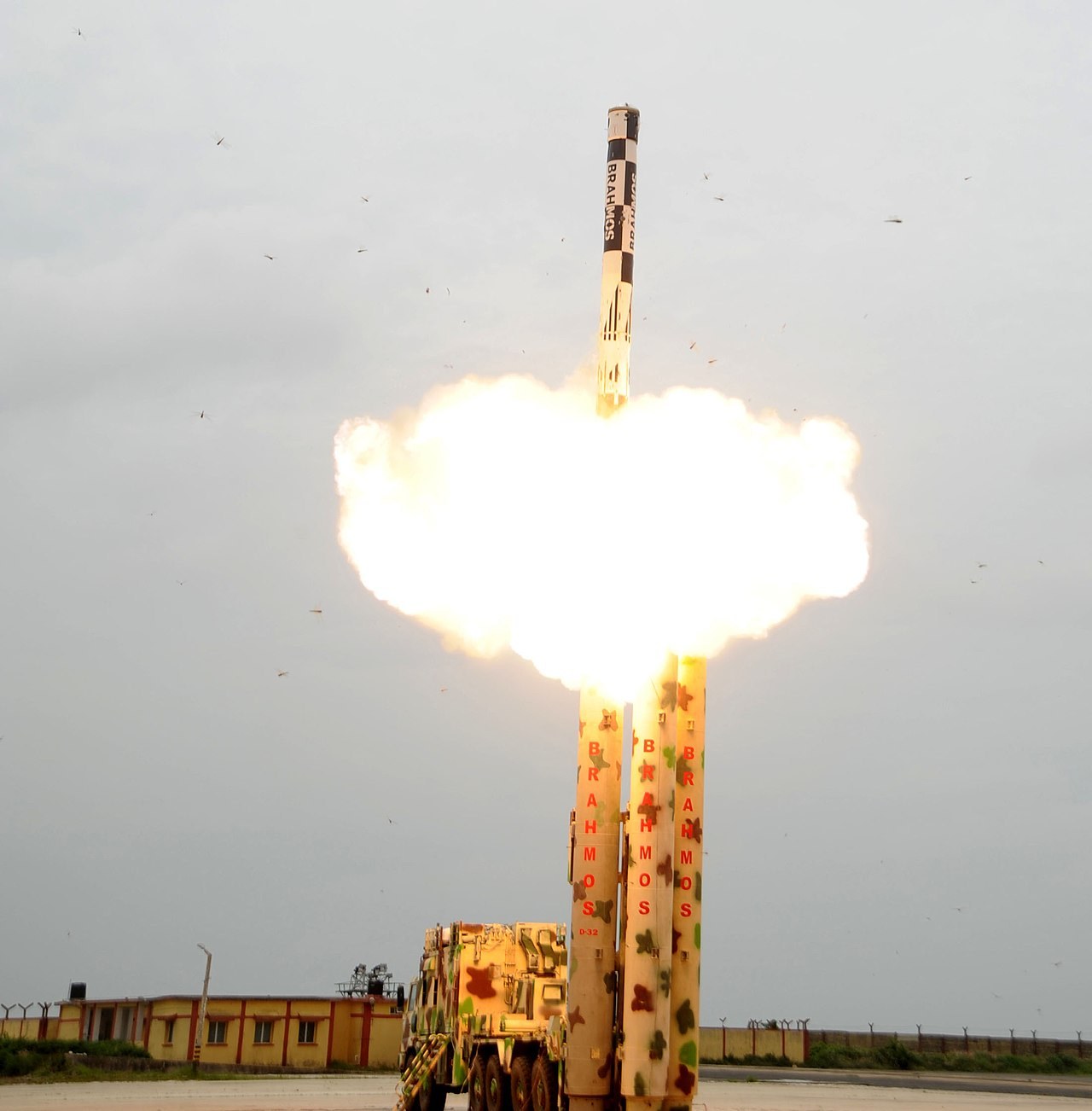
The package purchased by Indonesia also includes long-range air-to-air Astra missiles, also of Indian manufacture. With the arrival of the BrahMos, Indonesia retires the old Russian Yakhont missile, which had been in operation since the past decade without public launch records since 2012. It’s quite a modernization for the navy of the world’s largest archipelago.
India as an arms seller and the message to China
Before Indonesia, only the Philippines and Vietnam had purchased the BrahMos abroad. Indonesia is, therefore, the third export customer of the weapon, and all three buyers have something in common: they are countries bordered by the South China Sea, a region where Beijing claims territories and builds militarized artificial islands.
It’s no coincidence. India has turned the BrahMos into an instrument of foreign policy, selling firepower to nations that want to shield themselves against Chinese naval expansion. Each contract reinforces India’s presence on the Asian board and loosens Russia’s weight as a traditional supplier to these navies.
I imagine the calculation behind this $630 million purchase. Indonesia is not just buying metal and explosives: it’s buying the message that any ship approaching its waters with bad intentions will face a weapon that few can intercept.
Range, versions, and the flexibility that made the missile successful
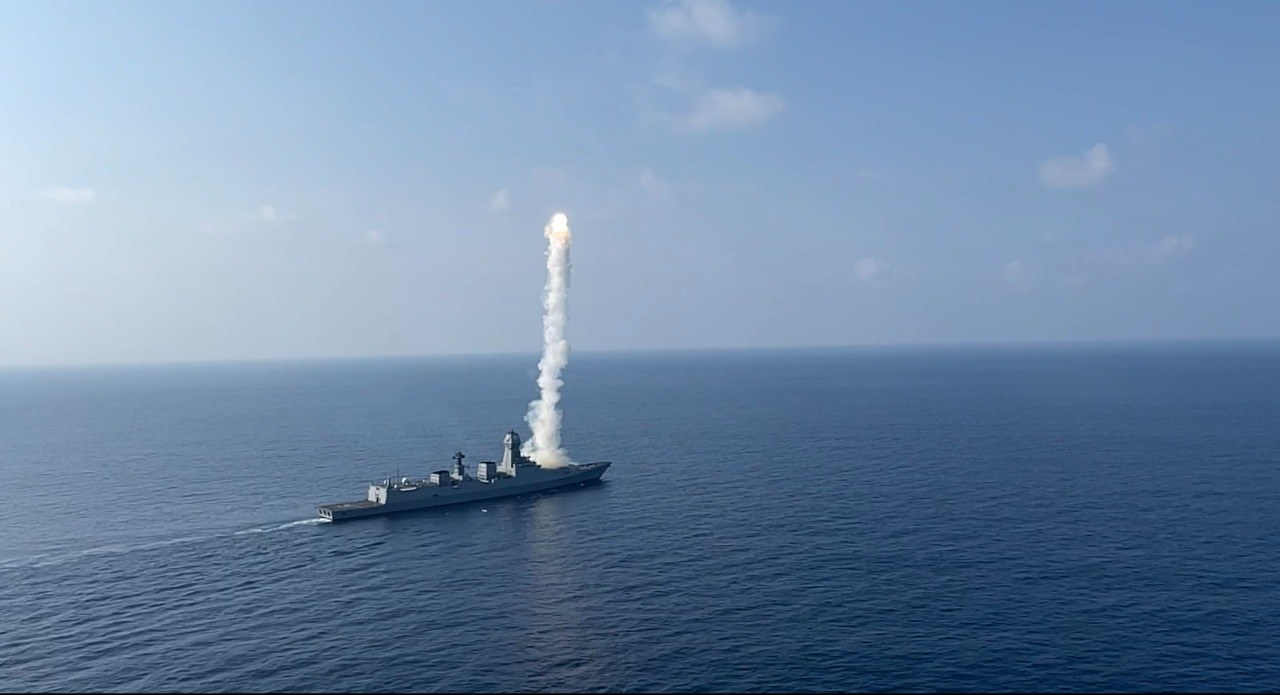
Part of the BrahMos’ appeal lies in its versatility. The missile can be launched from ships, land batteries, submarines, and even fighter jets, allowing for a multi-layered defense network with the same weapon. The export versions have a range of hundreds of kilometers, enough to hit targets long before they come close to the coast.
This ability to keep the enemy at a distance has a name in military jargon: area denial. In practice, a country with BrahMos can turn a huge stretch of sea into a territory too dangerous for the adversary’s navy to navigate without risk. For nations made up of scattered islands, like Indonesia, it’s the difference between defending each isolated beach and defending the entire sea at once.
The joint venture that manufactures the weapon, created by India and Russia back in the 1990s, is also working on lighter and longer-range versions, keeping the product updated and attractive to new buyers. Each country that joins the client list helps dilute development costs and fund the next generations of the missile.
The contrast that stands out from here
While Southeast Asian countries invest half a billion dollars to shield their coasts with supersonic missiles, no South American nation, including Brazil, has an anti-ship system of this category in operation. Our coast of over 7,000 kilometers is defended by much more modest means.
It’s not about alarmism, but about priority scale. Indonesia, an archipelago of over 17,000 islands, sees sea control as a matter of survival and acts accordingly. The deal with India is concrete proof that, for some countries, maritime defense has ceased to be a luxury and has become a strategic urgency.
For Brazil, whose economy increasingly depends on oil extracted at sea, this discussion is far from abstract. The pre-salt platforms, export terminals, and shipping routes that sustain our trade balance are hundreds of kilometers from the coast, in an ocean strip that is currently monitored with modest means. It’s not necessary to imagine a war scenario to recognize that critical infrastructure in the middle of the sea requires some degree of protection.
What makes this race even more interesting is India’s prominence. A country that until recently was seen only as an arms buyer now sells cutting-edge technology and competes in markets with Russians, Europeans, and Americans. We are witnessing, in real-time, the rise of a new defense exporting power.
It’s worth noting that Modi’s visit to Jakarta was not limited to the missile. It sealed a strategic rapprochement between the two most populous countries in Southeast and South Asia, with agreements ranging from defense to trade. The BrahMos was just the most visible piece of a repositioning that promises to bear fruit for many years and quietly reorganizes alliances throughout the region.
Does it make sense for a continental country like Brazil to leave its immense coast without a modern anti-ship defense?