Portuguese
  Spanish


Retired Zhao Shuhai created a solution against drought that stores moisture near the roots, helps seedlings survive on arid slopes, and integrates a trajectory of 90 patents. The technology was presented at COP16 and applied on the Loess Plateau and deserts of northwest China for lasting local reforestation.
The drought in arid regions of northern China led inventor Zhao Shuhai, about to turn 70, to develop a water retention device for plants. The technology is buried near the roots and gradually releases moisture to help seedlings survive with minimal irrigation.
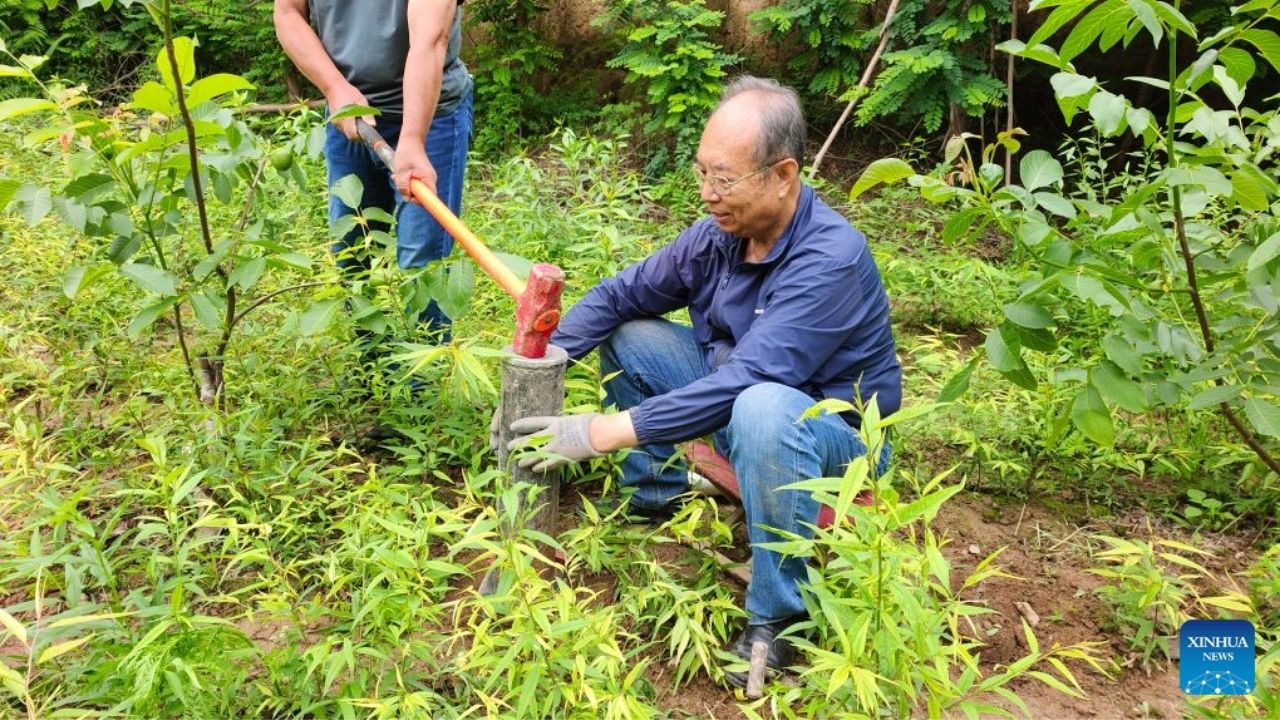
According to Xinhua, in a report published on June 17, 2026, Zhao lives in Yuncheng, in Shanxi province, and has accumulated 90 registered patents over 30 years. The article shows the inventor in fieldwork with new tools aimed at ecological restoration and planting in dry areas.
Device stores water near the roots of the seedlings
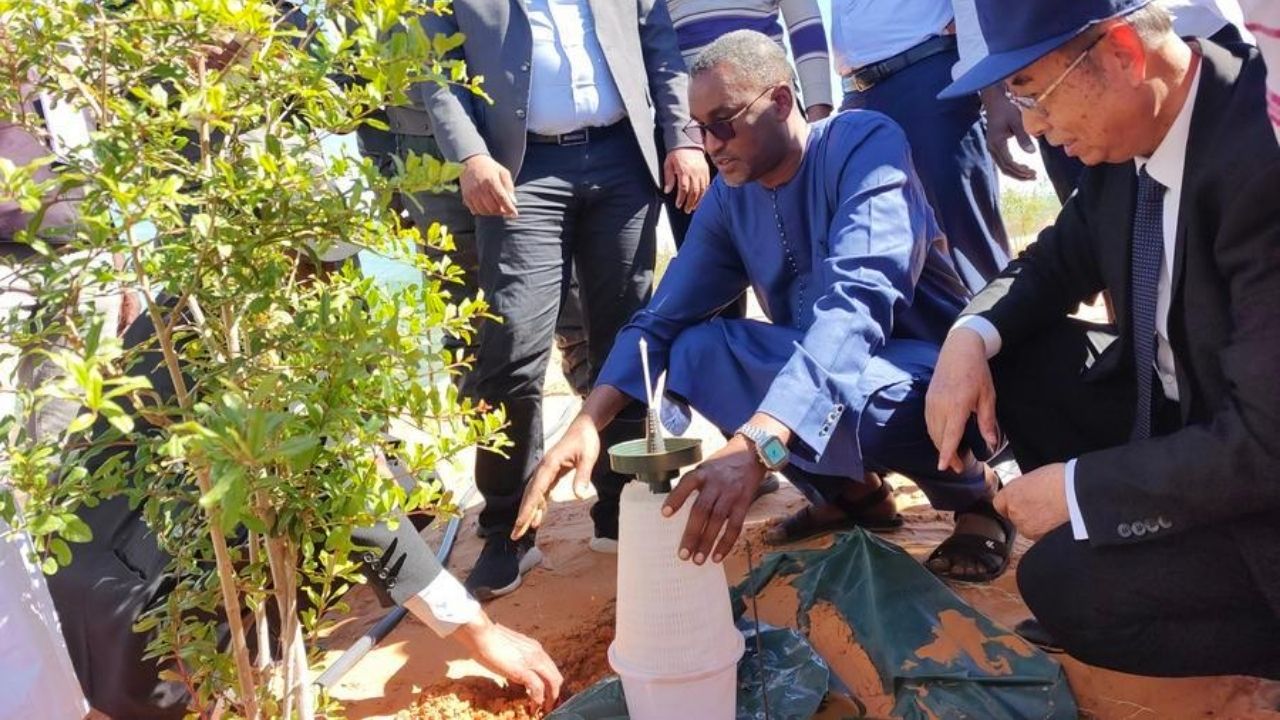
The invention most linked to combating drought is the SHUBAO, a water retention container for plants. Buried near the roots, the device collects and stores moisture from the surrounding environment, gradually releasing water during dry periods.
-
Researchers want to change the way of producing rare earth magnets, reducing purification steps and making better use of the elements found in Swedish deposits.

-
5.5 tons pulled from the seabed: a ‘living carpet’ of invasive coral was suffocating the Baía de Todos-os-Santos until the Brazilian Navy descended with divers, steel brushes, and acid salt to carry out the largest eradication operation of the species ever conducted in the country.

-
A Brazilian project dumped 5,500 concrete blocks and 2 barges into the ocean to block trawling in Paraná, and 25 years later what seemed like a risky intervention turned into an underwater nursery, a diving spot, and a refuge for endangered species.
-
Micron invested $9.3 billion in a factory in Hiroshima to produce the memory that powers the brain of global artificial intelligence.



The idea is to reduce the reliance on heavy irrigation in areas where water is scarce. According to Xinhua, the technology was applied on the slopes of the Loess Plateau and in the deserts of northwest China, with a significant increase in the survival rate of the seedlings.
Inspiration came from real problems in arid areas
Zhao realized that reforestation projects in Yuncheng faced low seedling survival due to drought and low rainfall. Instead of relying solely on more irrigation, he sought a simple, low-cost, and easy-to-use solution for arid regions.
The inspiration came from observing dew drops on plastic covers. From this principle, he created a system capable of retaining moisture around the roots, trying to give young plants more time to establish in difficult soils.
Technology was taken to COP16 against desertification
The SHUBAO device was presented in December 2024 at the 16th Conference of the Parties to the United Nations Convention to Combat Desertification. According to the report, it appeared as one of the solutions selected by China for desert control.
This recognition places the invention within a larger debate on ecological restoration. In regions where drought compromises newly planted seedlings, simple technologies can make a difference if they are cheap, replicable, and adapted to the local terrain.
Inventor accumulates 90 patents in three decades
Zhao’s journey did not start with reforestation. From a young age, he was interested in solving practical problems and learned by observing mechanics repairing diesel engines. Later, he worked at a local electric company, where he created solutions for maintenance challenges.
One of his previous inventions was a wind-powered cleaning ring for electrical insulators. The device used wind power to reduce dirt and prevent failures, earning Zhao a gold medal at the International Exhibition of Inventions in Geneva in 2014.
New transplanter seeks to protect root ball
In addition to the drought system, Zhao is working on a seedling transplanter. The tool helps to remove the plant with a firm but not compacted root ball, improving conditions for replanting in mountainous areas.
In May 2026, according to Xinhua, he was recorded using the equipment in the village of Huangfu, in Wanrong, in the city of Yuncheng. The goal is to transport young almond seedlings to nearby arid slopes as part of a vegetation recovery effort.
Local innovation accompanies China’s green goal
The report also connects Zhao’s work to the advancement of ecological initiatives in China. The country records a forest coverage rate of 25.09%, with continuous growth in forest area and stock, as well as sustained reduction of desertified and sandy lands, according to the cited data.
The case shows how grassroots innovation can complement large environmental policies. While national programs set goals, local inventors test specific solutions for concrete obstacles, such as low rainfall, difficult soils, and low seedling survival.
Idea also inspires young people and local companies
As president of the Yuncheng inventors association, Zhao also guides students and company researchers. He visits schools and research and development departments to encourage new practical solutions.
With his help, an organic fertilizer company patented bacterial encapsulation technology that combines fertilizers and microbial agents. The proposal aims to improve saline-alkaline soils and increase local fertility, another challenge linked to the recovery of degraded areas.
What this invention brings to the debate
The story of Zhao Shuhai shows that fighting drought does not only depend on large irrigation works. In some cases, the difference can be in small devices, placed at the right spot, capable of keeping moisture near the roots and increasing the chances of seedling survival.
Do you believe that simple solutions like this can accelerate the recovery of arid areas or does combating desertification still mainly depend on large public projects? Leave your opinion in the comments and join the discussion.