Portuguese
  Spanish


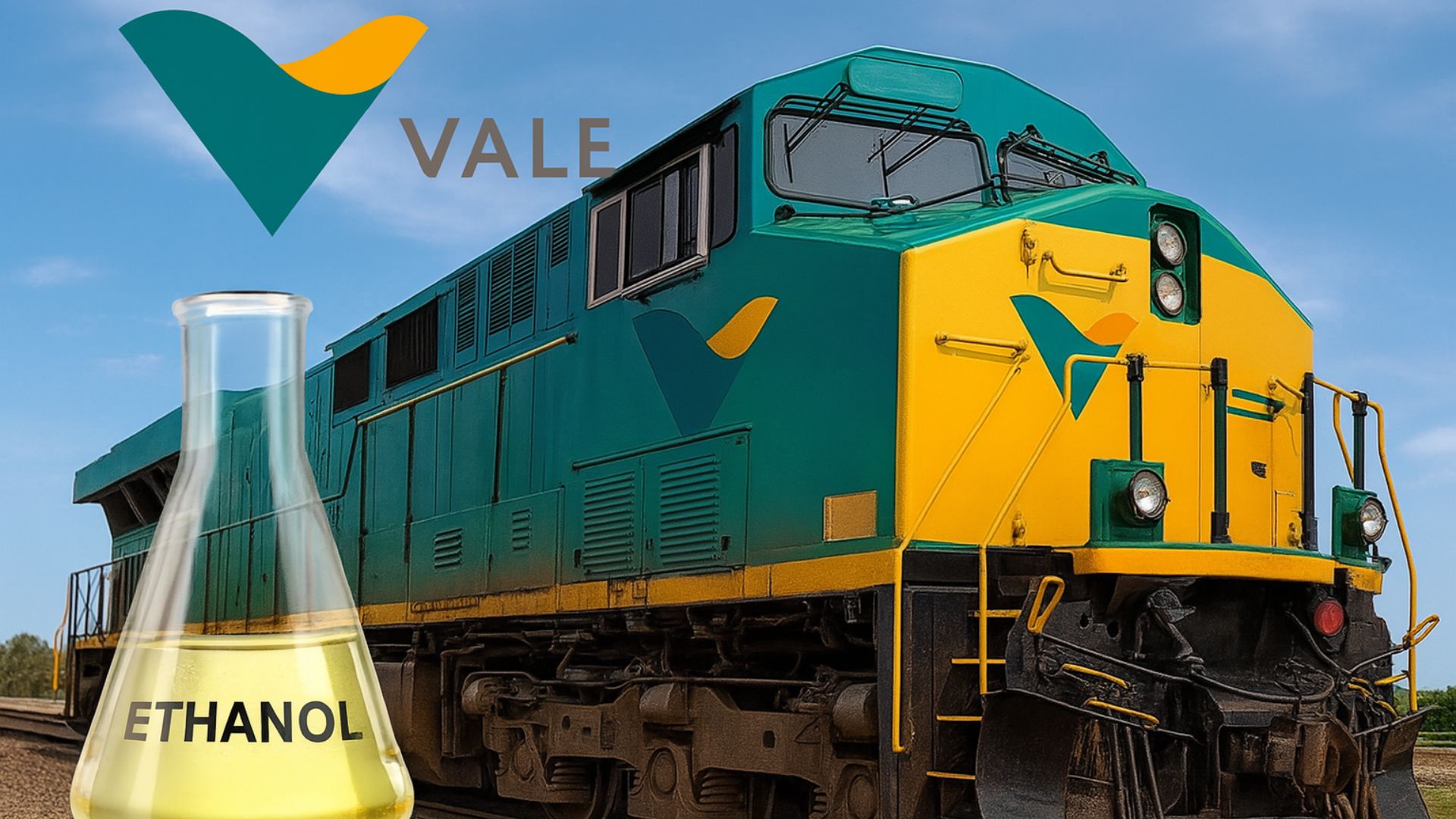

Vale and Wabtec Plan Pioneering Tests with Ethanol in Locomotives to Reduce Emissions and Drive Sustainable Rail Innovation in Cargo Transport in Brazil
Mineradora Vale announced on Monday (13) a strategic partnership with locomotive manufacturer Wabtec Corporation to develop a dual fuel engine capable of operating with diesel and ethanol. According to a report published by Agência Eixos, the goal is to test sustainable alternatives to reduce greenhouse gas emissions in rail operations, especially on the Estrada de Ferro Vitória a Minas (EFVM), one of the company’s main logistics routes.
Strategic Partnership Between Mineradora Vale and Wabtec
The initiative marks another step in Vale’s decarbonization program, aligning with global sustainability targets and the energy transition in the cargo transport sector.
The collaboration between Mineradora Vale and Wabtec focuses on developing a flexible engine that can operate on diesel and ethanol, promoting rail innovation and contributing to the reduction of carbon emissions.
-
Railway returns to prominence in Brazil after STF approval: a R$ 25.2 billion project promises to save R$ 9 billion in freight, transport 50 million tons per year, and transform Sinop into a logistics powerhouse for agribusiness.

-
US$ 7 billion, green hydrogen, and steel with up to 95% less CO₂: the first green steel plant on the planet emerges in Sweden and targets Brazil as the next chapter

-
Retired trains leave European tracks and become tons of steel, aluminum, and copper in dismantling yards where recycling exceeds 90%, but batteries, composites, and electronics create a new frontier of railway waste.

-
The strategic railway of Santa Catarina will receive R$ 608 million, will undergo historic modernization, and could transform logistics between Mafra and the Port of São Francisco do Sul.



Among the main objectives of the partnership are:
- Develop a dual fuel engine for locomotives.
- Reduce CO₂ emissions in rail operations.
- Assess the technical and economic feasibility of using biofuels.
- Promote sustainable solutions in cargo transport.
The initial tests will be conducted at Wabtec’s facilities, with future application planned for the EFVM fleet. This railway was chosen due to its strategic importance and the high volume of iron ore transportation.
Ethanol as a Sustainable Alternative to Diesel
Ethanol, being a renewable fuel, has stood out as a viable alternative to fossil diesel. Produced from sugarcane or corn, ethanol has a lower environmental impact and can significantly contribute to reducing greenhouse gas emissions.
According to the Sugarcane Industry Union (UNICA), the use of ethanol can reduce CO₂ emissions by up to 90% compared to gasoline. This characteristic makes the biofuel a key player in the energy transition of the rail sector.
The partial or total replacement of diesel with ethanol can transform the energy matrix of Brazilian locomotives. Furthermore, ethanol is widely available in Brazil, facilitating its large-scale adoption and strengthening the domestic production chain.
Mineradora Vale’s Sustainability History
The partnership with Wabtec is not Vale’s first action aimed at sustainability. In March 2025, the company announced the acquisition of 50 locomotives equipped with Evolution Series engines, designed to operate with up to 25% biodiesel blended with diesel.
These actions are part of the miner’s strategic plan to achieve carbon neutrality by 2050. The company also invests in equipment electrification, reforestation, and solar energy use in its operations.
Sustainability is one of the pillars of Vale’s long-term strategy. With these initiatives, the company aims not only to reduce its environmental impact but also to lead the transformation of the mining and logistics sector in Brazil.
Wabtec and Global Rail Innovation
Wabtec Corporation, Vale’s partner in this project, is one of the global leaders in rail technology. Based in the United States, the company develops advanced solutions for rail transport, including propulsion, control, and energy efficiency systems.
Wabtec’s expertise will be essential for developing the dual fuel engine, which needs to ensure performance equivalent to diesel, operational safety, and compatibility with existing infrastructure.
The company is already involved in various rail decarbonization projects worldwide, including electric and hybrid locomotives, reinforcing its technical capability to lead this transformation alongside Vale.
Expected Impacts on Logistics and the Environment
The adoption of ethanol in EFVM locomotives could generate positive impacts in several areas:
- Environmental: significant reduction in CO₂ emissions and other pollutants.
- Economic: decreased dependence on fossil fuels and stimulation of the ethanol production chain.
- Logistical: modernization of the fleet and increased energy efficiency.
According to the National Logistics Plan 2035, rail transport accounts for about 17.7% of the Brazilian logistics matrix, being essential for the flow of ores, grains, and fuels.
Therefore, any technological advancement in this sector has a great potential impact. Additionally, the initiative could serve as a model for other companies in the sector, encouraging the adoption of more sustainable practices throughout the logistics chain.
Technical Challenges and Next Steps for Vale and Wabtec
Despite the optimism, the project faces technical and regulatory challenges. The validation of the dual fuel engine requires rigorous tests for safety, durability, and efficiency. Moreover, it will be necessary to adapt the refueling infrastructure on railways to support the use of ethanol.
The studies are expected to be completed by 2027, with gradual implementation planned for EFVM locomotives. If the results are positive, the technology may be expanded to other routes operated by Mineradora Vale.
Another important point will be training technical teams to operate and maintain the new systems, ensuring operational safety and efficiency.

Sustainability and Rail Innovation as a Competitive Differentiator
The partnership between Mineradora Vale and Wabtec represents a milestone in Brazilian rail innovation, with the potential to transform the logistics sector and contribute to the decarbonization of the economy. The use of ethanol in locomotives is a promising solution that combines technology, sustainability, and environmental responsibility.
With initiatives like this, Brazil positions itself as a leader in the adoption of renewable fuels and reinforces its role in the fight against climate change. The expectation is that, in the coming years, more companies will follow Vale’s example and adopt sustainable practices in their operations.
Rail innovation, driven by strategic partnerships and investments in clean technology, can become a competitive differentiator for the national logistics sector. By investing in solutions like ethanol, Vale demonstrates that it is possible to reconcile economic growth with environmental responsibility—a path increasingly necessary and valued in the global scenario.