Portuguese
  Spanish


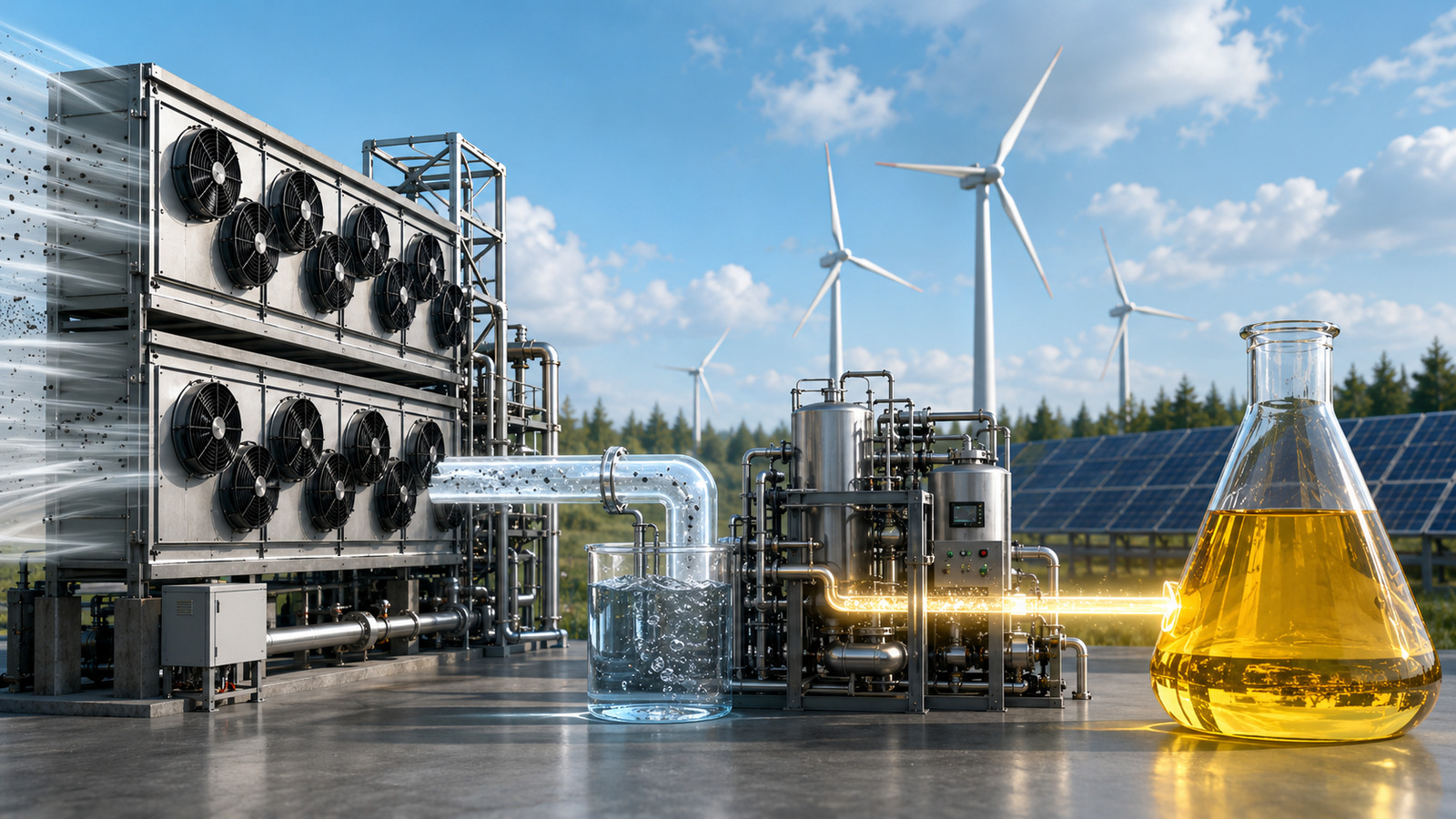

Synthetic fuel created in Sweden uses water, CO₂ captured from the environment, and clean electricity to power current engines, but still faces low energy efficiency and high consumption in the production process
In Sweden, Liquid Wind and Övik Energi are developing an eFuel facility aimed at producing e-methanol, a liquid synthetic fuel made with renewable electricity, hydrogen obtained from water, and biogenic origin captured CO₂. The project seeks to offer a low-carbon alternative for sectors difficult to electrify, but still depends on high availability of clean energy and advances to gain commercial scale. This article includes data from Brasil 247.


Synthetic fuel uses captured carbon and hydrogen from water
The technology combines direct carbon capture with water electrolysis. First, atmospheric filtering systems isolate carbon dioxide molecules present in the air. In another step, clean source electricity is used to separate hydrogen from liquid water.
Then, carbon and hydrogen are recombined under specific pressure and temperature conditions. The result is a liquid hydrocarbon with a molecular structure similar to conventional fuels used today in combustion engines.
-
Brazil on Track for Record 40.7 Billion Liters of Ethanol in 2026/27 Season, Driven by Corn Ethanol
-
Petrobras Approves $1.2 Billion Refinery in Brazil to Produce Aviation Fuel and Diesel from Plants

-
US$ 7 billion, green hydrogen, and steel with up to 95% less CO₂: the first green steel plant on the planet emerges in Sweden and targets Brazil as the next chapter

-
Brazil begins to transform wheat, residues, sweet potatoes, and soy molasses into ethanol, in a new phase of biofuels that seeks to utilize leftovers from the field and industry to fuel flex-fuel cars.



The main practical advantage lies in compatibility. Since the final product is equivalent to traditional fossil fuel, it can be used in current engines without requiring expensive mechanical changes or complex adaptations in vehicles.
This point makes the research relevant for sectors where direct electrification is still more difficult. The liquid fuel can also take advantage of part of the existing distribution and supply infrastructure.
Process promises to reduce sulfur and oil dependency
Among the features highlighted in the material is the elimination of polluting sulfuric residues during regular combustion.
The process also uses resources available on a large scale, such as water, carbon dioxide, and renewable electricity.
Another highlighted point is the reduced dependence on international oil extraction chains. Instead of extracting oil from the ground or the sea, the technology starts from elements present in the environment and energy generated from clean sources.
In practice, the model proposes transforming carbon already present in the atmosphere into fuel. When this fuel is burned, it returns to the air the carbon used in manufacturing, instead of adding fossil carbon extracted from underground reserves.
This logic creates a closed carbon cycle, as long as all the energy used in production comes from renewable sources.
Therefore, clean electricity is not a secondary detail but an essential part of the project’s environmental viability.
Energy consumption still limits commercial viability
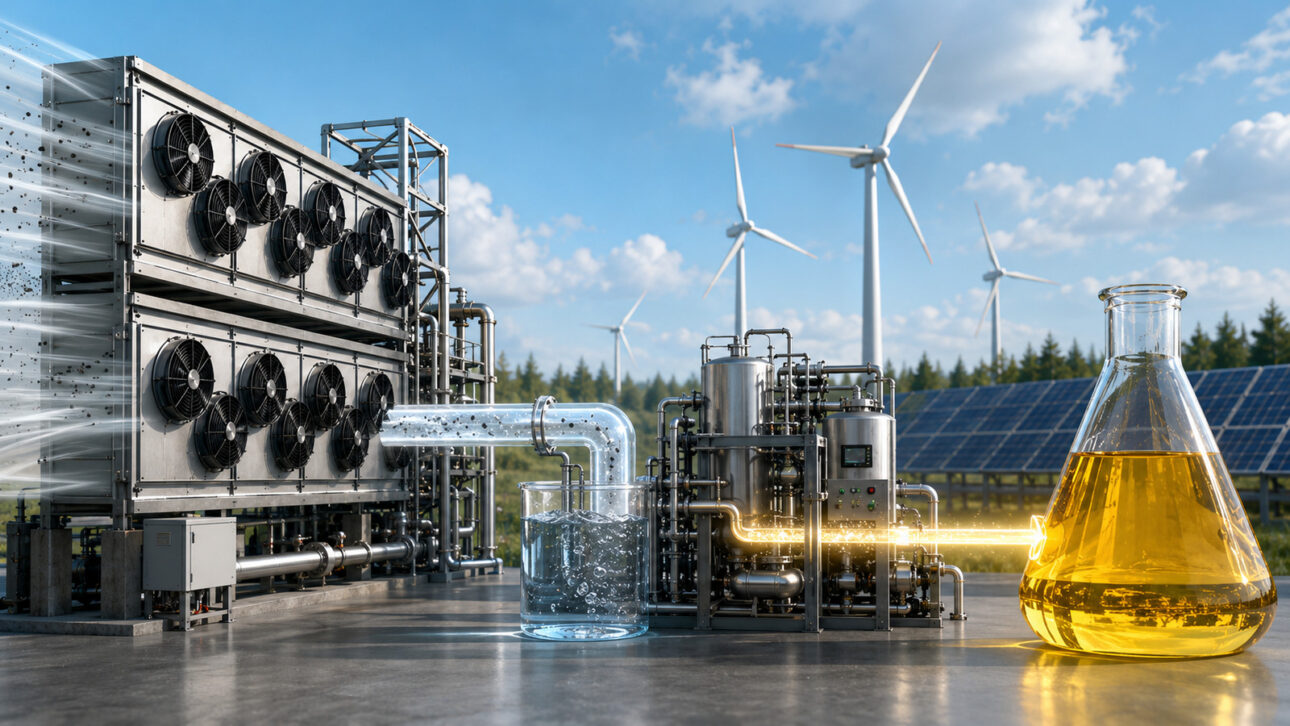
The biggest challenge of the technology lies in the energy balance. The cited technical data indicate that the system consumes exactly double the energy load that synthetic gasoline can return when burned in propulsion systems.
This means that, at the current stage, production requires more electricity than the fuel stores for later use. The problem makes the operation expensive and reduces the efficiency of the complete cycle.
The material points out three factors that help explain this limitation: the need for dedicated high-performance generating plants, high initial operating costs of thermal reactors, and significant loss of useful heat during chemical transformation stages.
For this reason, the technology still depends on advances in efficiency, reduction of manufacturing costs, and improvement of chemical catalysis techniques.
Without this progress, competition with traditional fuels at the pumps remains limited.
Renewable energy defines the environmental impact of the project
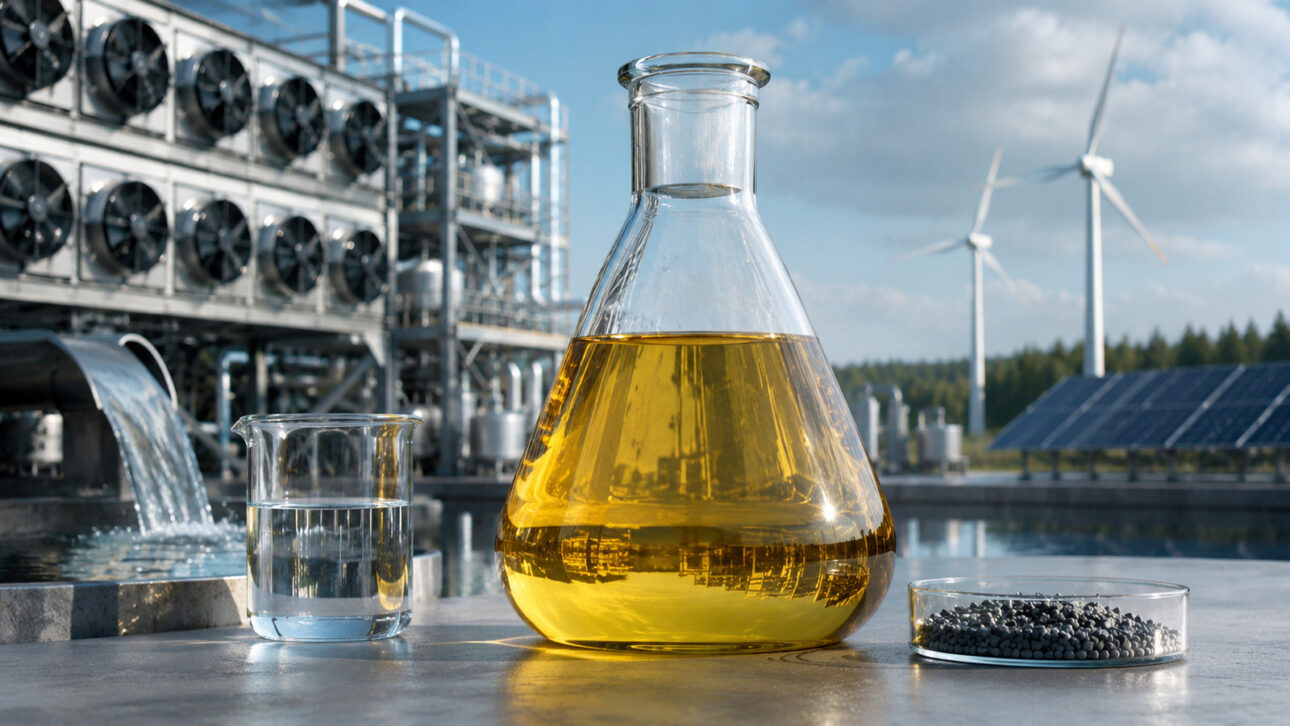
The proposal only makes climatic sense if the electricity used in the process comes from clean sources. If the production depends on coal-fired power plants, the carbon emitted in energy generation would nullify the environmental goal of synthetic fuel.
In the Swedish case, the material cites the use of renewable electricity, supported by wind farms and solar plants in the Scandinavian region.
This energy powers the compressors and industrial systems involved in environmental capture and chemical conversion.
The integration with renewable sources also opens another possibility: transforming intermittent electricity surpluses into a stable liquid fuel. Thus, the energy generated by wind and sun could be stored in chemical form.
In the long term, the cited benefits include less need for deep-sea drilling, reduced risk of oil spills, and decreased toxic heavy particles in large urban centers.
Even so, adoption by the automotive market depends on a decrease in cost per liter and an increase in energy efficiency.
The advancement of research will be decisive in determining whether synthetic fuel can move from a promising solution to a commercial-scale alternative.
This article was prepared based on information from Brazil 247 about the Swedish synthetic fuel project, with data, numbers, and statements preserved according to the consulted material.