Portuguese
  Spanish


Discover How Innovation in the Electric Sector Transforms Hybrid Projects into Sustainable Solutions That Expand Energy Generation with Synergy.
Innovation in the electric sector has transformed the way society generates, distributes, and consumes energy. From the earliest uses of electricity in the 19th century to modern solutions in the 21st century, energy has always been linked to technological advancement and humanity’s ability to adapt.
Over time, new ideas have emerged to solve problems of scarcity, reduce costs, and lessen environmental impacts.
Currently, one of the most relevant movements in this scenario is the combination of different renewable sources in the same location, creating so-called hybrid projects. Although the technical name is associated plants, the term hybrid projects has gained traction and represents this innovation well.
-
Brazilian scientists are simultaneously advancing two research projects on clean hydrogen and driving solutions that could transform the energy matrix, enhance industrial competitiveness, and accelerate large-scale emission reduction targets.

-
Advancement in renewable energy: A R$ 150 million project launched by Petrobras and Finep aims to create state-of-the-art electrolyzers for green hydrogen, strengthening national research and preparing Brazil to compete in a billion-dollar energy market.
-
Illiterate or semi-literate grandmothers were trained to repair solar systems, open rural workshops, and light up homes that still depended on kerosene.
-
The world has bet on green hydrogen as the fuel of the future, but now faces the side effect: producing 1 kilogram requires about 9 liters of ultrapure water, and the largest projects on the planet are precisely in the driest regions of the Earth, where water is already scarce for people.





This proposal shows how the sector can evolve by uniting distinct technologies, taking full advantage of the complementarity of sources and existing infrastructure.
The Historical Evolution and the Path of Innovation
To understand the importance of this trend, we must look back in time. In the early 20th century, the electric sector depended almost exclusively on fossil sources, such as coal and oil.
However, growing industrialization increased the demand for energy and brought increasingly urgent environmental concerns.
As a result, governments and companies began to invest in renewable sources, such as hydropower, which marked the energy matrix of countries like Brazil.
However, as the environmental impacts of these large enterprises became evident, attention turned to complementary alternatives, such as wind energy and solar energy.
In this context, innovation in the electric sector has opened up space to unite different sources in the same project. Brazilian regulation, since 2021, has officially allowed the implementation of plants that combine solar, wind, storage, and even natural gas.
This created a favorable environment for new investments and long-term solutions.
How Hybrid Projects Work in Practice
The main advantage of this model lies in the complementarity between sources. For example, solar energy peaks during the day, while wind energy performs better at night.
Thus, when combined, they deliver a more stable generation profile.
Additionally, hybrid projects generate significant savings, as there is no need to purchase new land or build duplicate transmission lines.
By taking advantage of existing connection infrastructure, such as already operating substations, costs decrease and agility increases.
In this regard, the Santa Eugênia Complex, from Statkraft, demonstrates the benefits of this path. The venture brings together 518 MW of wind, 198 MW of solar, and 1 MW in battery storage systems.
The complementarity reaches 90%, demonstrating the enormous potential of this integration.
Moreover, hybrid projects allow for the optimization of OPEX and reduction of construction time, speeding up licensing processes and increasing competitiveness in the sector.
The Role of Storage and Technology
However, generation does not always occur in perfect alignment. At times, there is overlap between sources, necessitating cuts in part of the production.
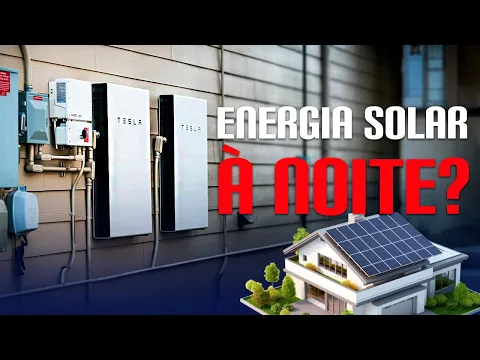
At this point, storage emerges as an essential solution. With batteries, it is possible to store excess energy and release it during peak demand times, enhancing efficiency and avoiding waste.
Additionally, other technologies gain traction in this process. Green hydrogen can become a strategic alternative for storing energy over long periods.
Thus, it acts as a link between renewable generation and future consumption, enhancing energy security.
Digitization and monitoring software also play a crucial role. Sensors and intelligent systems enable the forecasting of wind and solar radiation patterns, adjusting operations in real-time. This ensures greater reliability and maximizes the use of generated energy.
Therefore, innovation in the electric sector is not only in the combination of sources but also in how technology allows for managing, storing, and distributing energy.
This advancement is crucial for ensuring sustainability and stability in the energy matrix.
Economic, Social, and Environmental Benefits
Hybrid projects represent a clear response to the needs of the electric sector. They reduce operational costs, optimize construction timelines, and bring about environmental gains.
After all, by better utilizing infrastructure and integrating clean sources, greenhouse gas emissions are reduced.
Moreover, these projects stimulate regional development. In many locations, the construction of hybrid plants generates jobs, boosts the local economy, and drives technological innovation.
As a result, the population benefits not only from more stable energy but also from economic opportunities.
Another relevant benefit is the reduction of dependence on fossil fuels, making the sector more resilient to international oil and gas crises.
Thus, innovation in the electric sector reinforces its role as a motor of progress. Whenever new solutions arise, they not only meet immediate demand but also create foundations for the future.
Regulatory Challenges and Future Perspectives
However, as with any advancement, there are obstacles. Regulatory issues, such as financial guarantees, price differences between submarkets, and the complexity of connecting to the system, still need to be overcome.
Still, experts believe these barriers will be gradually overcome.
The global trend points towards the integration of renewable sources and the creation of more flexible business models.
In this way, Brazil can establish itself as a reference in innovation in the electric sector, leveraging its abundance of natural resources and its historical leadership in renewable energies.
Therefore, when we observe the current scenario, it becomes clear that the hybridization of plants is not just a passing trend.
On the contrary, it represents a solid strategy capable of transforming the way the world produces and consumes energy.
A Future Shaped by Innovation
By uniting economic efficiency, environmental sustainability, and technological advancement, hybrid projects consolidate innovation in the electric sector as a key element for the future.
This combination ensures that energy arrives reliably, affordably, and cleanly for millions of people.
In this way, the electric sector continues its historical journey of transformation. Just as electrification in the past changed the daily lives of cities and industries, today the integration of renewable sources redefines the present and envisions a more sustainable future.
Therefore, when we think about innovation in the electric sector, it is impossible to ignore the role of hybrid projects.
They represent the union of efforts, knowledge, and technologies towards a common goal: to generate energy with synergy, balance, and responsibility.
Additionally, these projects have opened the way for new research and solutions in energy, encouraging universities and startups to develop even more efficient and economical technologies, which strengthens the entire productive chain of the electric sector.