






 Portuguese
  Spanish




In Response to North Korean Threats, South Korea Takes Inspiration from Israel and Accelerates the Implementation of Its Own Iron Dome Defense System. Learn How This Advance Strengthens Its National Security!
On October 29, 2024, the Defense Acquisition Program Administration of South Korea (DAPA) announced an advancement in its national defense: the acceleration of the Low Altitude Missile Defense (LAMD) system implementation. The plan now anticipates operational readiness between 2029 and 2033, two years earlier than expected.
This measure comes amid rising tensions on the Korean Peninsula, intensified by threats from the North Korea, forcing Seoul to adopt faster strategies to protect critical areas of the country.
LAMD: Advanced Air Defense System
The LAMD system was initiated in 2022, with development planned until 2033, primarily aiming to defend against artillery and missile attacks from North Korea.
-
The Arctic is no longer just a frozen region and is becoming a new military board with the opening of maritime routes, expansion of bases, nuclear icebreakers, and competition among Russia, NATO, the United States, and China.

-
U.S. Dismisses Brazilian Foreign Ministry’s Military Risk Warning as “Absurd,” Cites Brazilian Criminal Gangs Operating in the U.S. Since May 2026
-
Ukraine War Impacts Brazilian Fuel Supply: Russian Diesel Imports Drop 65% in June, Brazil Turns to US and India Amid Market Concerns

-
Chinese Nuclear Submarine Launches Simulated Warhead Missile in Pacific, Heightening Regional Tensions Amid Naval Drills with Russia Near Qingdao; New Zealand and Papua New Guinea Warn of Persistent Chinese Military Presence




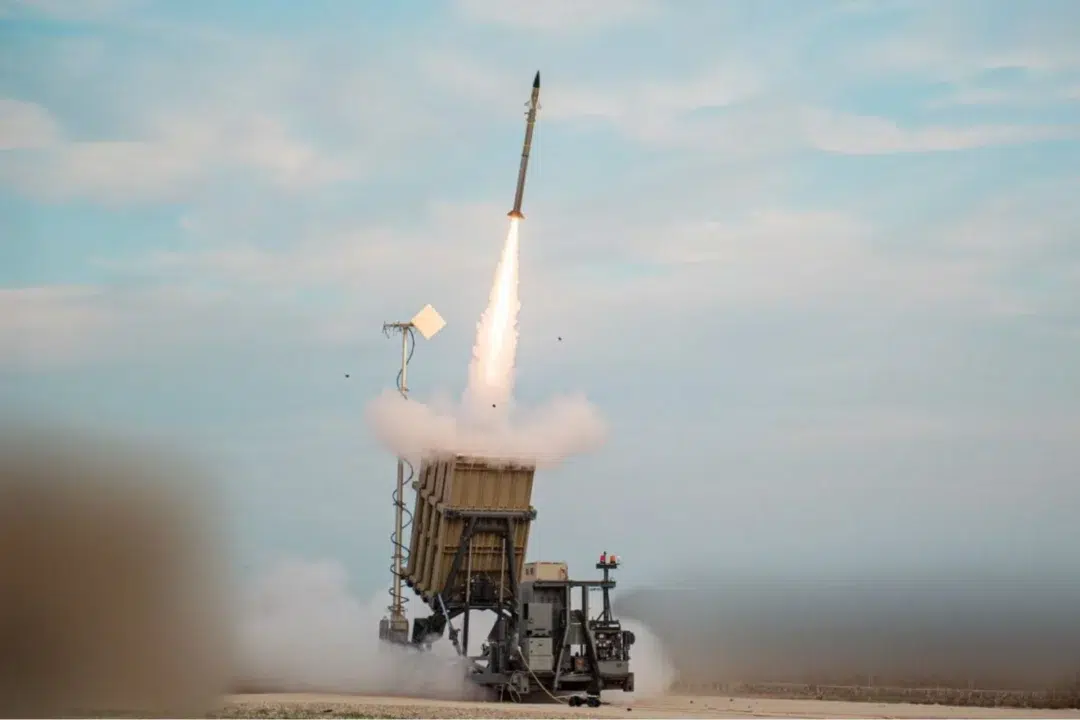
The main objective of LAMD is to protect strategic regions, especially the capital, Seoul. DAPA believes that LAMD could compete with Israel’s famous Iron Dome, consisting of radars, engagement control centers, launchers, and interceptor missiles. The intention is to mitigate the impact of potential long-range attacks.
With LAMD, South Korea strengthens its interception capabilities and elevates its defense to another level, bringing an added sense of security to residents near the Demilitarized Zone (DMZ).
Updates to the Patriot Defense System
In addition to LAMD, DAPA also authorized a new phase of improvements to the Patriot defense system, acquiring the Patriot Advanced Capability-3 (PAC-3) system. This new model uses hit-to-kill interceptors, which are more agile and accurate compared to previous systems that used fragmenting warheads. With the PAC-3, each launcher supports up to 16 missiles, as opposed to four in the PAC-2, offering greater range and better tracking capability.
These updates not only modernize the country’s defense infrastructure but also make it less dependent on foreign technologies, consolidating domestic production in military equipment.
Cooperation and Controversies with the USA and China
South Korea also operates the THAAD (Terminal High Altitude Area Defense) system, provided by the United States, aimed at intercepting missiles in their final phase. The initial deployment of THAAD in 2017 generated tension with China, which sees the system’s powerful radar as a threat to its security. In retaliation, China imposed economic and cultural sanctions, including restrictions on tourists visiting South Korea. In response, then-South Korean President Moon Jae-in committed to limiting new THAAD deployments in South Korean territory.
Nevertheless, South Korea’s defensive posture remains firm. Despite tensions with China, Seoul considers its partnership with the USA essential for maintaining its security and neutralizing potential threats from the North.
North Korean Threats and Proximity to the DMZ
Recently, North Korea has intensified its provocations. In a series of retaliations, it launched balloons with debris towards Seoul after South Korean activists sent propaganda balloons to the North. Seoul’s proximity to the DMZ — just 55 km — makes the city vulnerable to large-scale artillery attacks.
Seoul’s security concerns are justified, as North Korea possesses thousands of artillery systems along the border. This scenario further drives efforts to ensure a robust defense capable of protecting the population and vital infrastructures of the country.
Development of L-SAM and Expansion of South Korea’s Military Industry
South Korea is also working on the Long-range Surface-to-Air Missile (L-SAM) system, designed to intercept missiles at altitudes between 50 and 60 km. This system is an integral part of the Korean Air and Missile Defense (KAMD) and will be combined with the PAC-3 and Cheongung II, establishing a multi-layered defense.
Another significant advancement is the K2 Black Panther tank project. Seeking to reduce dependence on international suppliers, the next 150 K2 model tanks will have transmissions locally manufactured by SNT Dynamics. This system will also be exported to Turkey, equipping the Altay battle tanks. This effort reinforces the South Korean defense industry, increasing its competitiveness in the global market.
Since the onset of the conflict between Russia and Ukraine, South Korea has stood out as a supplier of military equipment, especially for European countries facing a growing demand for defense. With these new projects, South Korea demonstrates ambitions to establish itself as a global military power, self-sufficient and technological.
By investing in defense and autonomy, the country seeks to prepare for future challenges, solidifying its position on the international stage.







