Portuguese
  Spanish


Alert of Chinese navy nuclear submarine increased after strategic missile with simulated warhead in the Pacific Ocean, according to Beijing. The shot hit the designated area, was informed to countries in the region, and coincided with naval exercises with Russia near Qingdao, increasing concern about persistent Chinese military presence in the Pacific.
The strategic nuclear submarine of the Chinese navy launched a strategic missile with a simulated training warhead in the Pacific Ocean on July 6, 2026. According to Beijing, the shot occurred at 12:01 PM, precisely hitting a designated maritime area and was part of the annual Chinese military training.
According to NDTV, in an article published on July 6, 2026, with information from Agence France-Presse, countries in the region had been warned before the test. The publication cited alerts received by Papua New Guinea and New Zealand, in addition to the context of naval exercises between China and Russia near Qingdao, an important military port in eastern China.
Test in the Pacific exposes a message beyond the shot
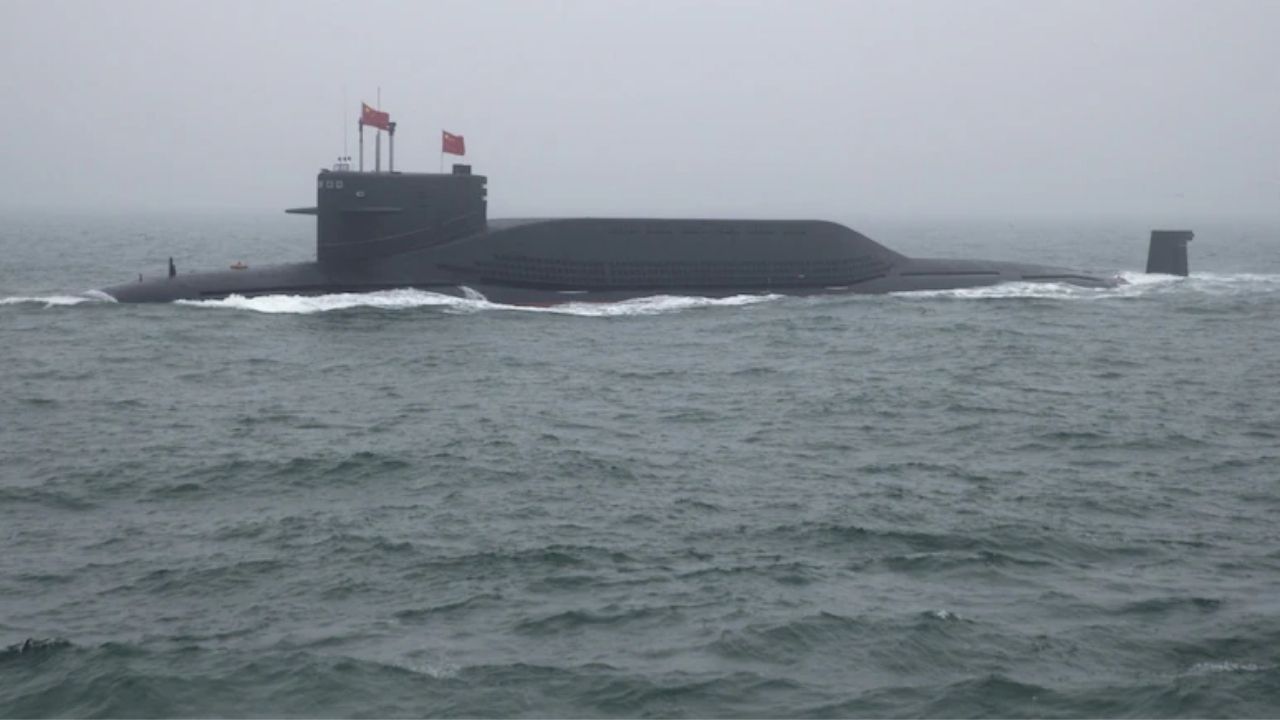
The launch conducted by a Chinese nuclear submarine drew attention not only for its strategic reach but for the chosen location. The Pacific Ocean is a sensitive area for island countries, allies of the United States, and governments that watch cautiously the expansion of Chinese naval presence.
-
Ayatollah Ali Khamenei’s Funeral Draws 15 to 20 Million in Tehran, Calls for Revenge Against Trump After Joint Israel-U.S. Attack

-
U.S. Establishes Permanent Embassy in Jerusalem, Reigniting International Debate Over Israel’s Capital
-
The world has nearly 12,000 nuclear warheads, with the majority held by the United States and Russia; see the figures for China, France, and the United Kingdom.

-
Venezuela Faces UN Alert for Hunger, Disease, and Service Collapse After Earthquakes Cause Nearly 2,000 Deaths and $6.7 Billion in Damages


Beijing stated that the test did not target any specific country and was part of a training routine. Even so, the use of a strategic missile launched from the sea heightened the geopolitical reading of the episode, because this type of capability reinforces the idea of military deterrence based on submarine platforms.
Simulated Warhead Reduces Risk, But Does Not Eliminate Political Impact
China reported that the missile carried a simulated training warhead, not a real payload. This detail is important to avoid misinterpretations about the content of the launch, but it does not lessen the strategic weight of the test, as the launch demonstrated operational capability from a submarine.
In military terms, a nuclear submarine with a strategic missile represents a platform that is difficult to track and capable of operating far from the coast. Therefore, even tests with simulated warheads are usually observed by other governments, especially when they occur in maritime areas of significant diplomatic and military dispute.
Prior Warnings Did Not Prevent Regional Concern
Papua New Guinea’s Foreign Minister, Justin Tkatchenko, told AFP that he received a personal call from the Chinese ambassador about the test. A New Zealand government source also stated that Wellington had been warned about an imminent intercontinental ballistic missile test.
Despite the warnings, the regional reaction showed discomfort. The concern was not limited to the launch itself, but to the pattern of Chinese military movement in the Pacific, which New Zealand authorities were already treating as a presence likely to become more frequent in the region’s strategic environment.
Exercises with Russia Increase the Weight of the Context
The launch occurred at the same time China and Russia were preparing to start joint naval exercises near Qingdao, in eastern China. The annual maneuver involves naval forces from both countries and includes activities related to maritime security, air defense, missile defense, and sea attack operations.
It was not immediately clear, according to the original source, whether the missile launch was part of these exercises. Even so, the temporal coincidence increased attention on Chinese movements, because the test occurred at a time of joint military demonstration between two powers that already challenge the Western-led security order.
The 2024 Precedent Returned to the Radar
The source also recalled that in September 2024, China’s Rocket Force launched a simulated warhead towards the sea near French Polynesia. At the time, analysts pointed out that the missile appeared to be from the Dong Feng-31 family, capable of carrying a thermonuclear warhead.
This history helps explain why the new test received immediate attention. When a Chinese nuclear submarine launches a strategic missile in the Pacific, the episode is not analyzed in isolation, but within a sequence of demonstrations of reach, military modernization, and expansion of Chinese capability in distant waters.
Chinese presence in the Pacific tends to become a permanent topic
An internal document cited by AFP had already indicated that New Zealand forces see Chinese naval incursions and ballistic missile tests as a “persistent” feature of the Pacific. The assessment suggests that these episodes may cease to be exceptions and become part of the regional strategic routine.
For countries like New Zealand, Papua New Guinea, Australia, and Japan, the central issue is not just the July 6 test. The most sensitive point is what this launch signals about the future of Chinese military presence in the Pacific, especially in a region marked by alliances, maritime routes, and influence disputes.
China calls the test routine; neighbors see it as a warning
The Chinese Navy stated that the launch was part of the annual military training and that relevant countries were informed in advance. This version seeks to frame the episode as a controlled, planned activity compatible with safety procedures.
On the other hand, regional governments tend to view the test for its strategic impact. A nuclear submarine launching a strategic missile in Pacific waters reinforces the perception that Beijing is expanding its ability to project power beyond its nearby waters. For you, was this test just military routine or a direct message to Pacific neighbors?