






 Portuguese
  Spanish
  5 min of reading
  0 comments


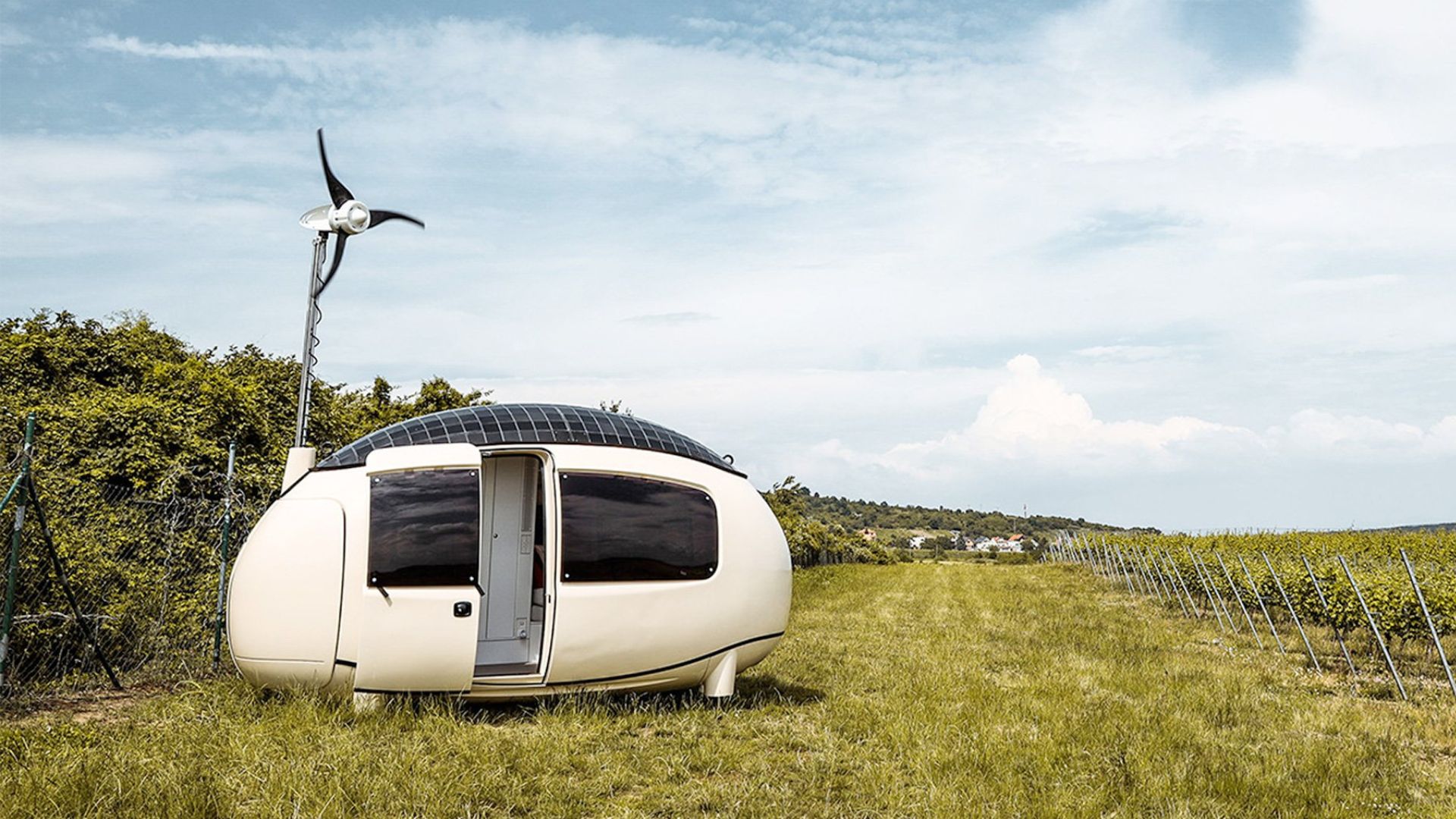
Ecocapsule creates off-grid micro-house with solar energy, wind turbine, full bathroom, and compact structure for off-grid living.
The idea of living off the grid, without depending on major construction and still using renewable energy, is no longer just a futuristic concept with the Ecocapsule, a Slovak micro-house created by Nice Architects and presented internationally as a self-sufficient residential capsule. According to Ecocapsule itself, on a technical page consulted on May 11, 2026, the current model includes 2.8 kWp solar panels, a 9.7 kWh battery, a water system, an equipped kitchen, a compact bathroom, a foldable queen-size bed, climate control, and app control within a structure designed for off-grid use.
The proposal gained attention precisely because of its unusual shape. Instead of following the standard of tiny houses on wheels or rectangular modules, the Ecocapsule became known for an oval structure designed to reduce energy loss and favor water collection, a point highlighted by ArchDaily on June 2, 2015, when it described the original project with a 750 W wind turbine, solar panels, and a 9,744 Wh battery. Today, the company also offers updated versions and larger modules, but the capsule remains the brand’s most emblematic product.
The result is a micro-house that brings together a bedroom, bathroom with shower, compact kitchen, internal storage, and its own energy systems within a metallic capsule designed to function in remote locations, isolated areas, or regions without direct connection to the conventional electrical grid.
-
Bolivian Female Construction Workers Form Association to Combat Discrimination and 38% Pay Gap in the Industry

-
Near Amsterdam, residents buy land and discover they must also build streets, manage drainage, handle waste, and grow food on half their plot.
-
Brazil’s WEG to Open New Factory in China by 2027, Expanding Production of Large Rotating Electric Machines and Low to Medium Voltage Motors in Rugao

-
Chinese Shipyard Secures $1 Billion in Orders for Low-Carbon Container Ships Amid Global Fleet Renewal Efforts


Ecocapsule bets on off-grid living to function away from traditional infrastructure
The central concept of the Ecocapsule revolves around what is called off-grid living. This means that the unit was designed to operate with the least possible dependence on external power and supply grids.
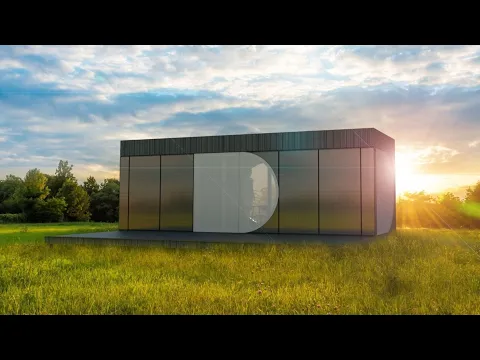

The capsule combines solar generation, wind turbine, and energy storage in internal batteries. According to the company, the goal is to allow the unit to continue functioning even in isolated locations or away from traditional urban infrastructure.
This proposal placed the micro-house within a growing market of compact dwellings aimed at energy autonomy and consumption reduction.
Capsule’s oval shape was designed to improve thermal and aerodynamic efficiency
One of the most unusual aspects of the Ecocapsule is precisely its external design. While most modular houses use conventional rectangular shapes, the company developed an oval structure similar to a futuristic capsule.
According to the creators, this design helps reduce thermal loss, improve air circulation, and decrease wind resistance, which is important for a system that partially relies on wind generation.
Solar panels and wind turbine work together to power the micro-house
The capsule uses two main energy generation systems. The first involves solar panels installed on the top of the unit. The second uses a small wind turbine integrated into the external structure of the micro-house.
The combination of the two systems aims to maintain a more stable energy supply even in variable weather conditions. The energy generated by the solar panels and the wind turbine is not only used in real-time.
The Ecocapsule also has an internal battery storage system, allowing it to accumulate electricity produced during favorable periods for later use.
This storage is fundamental for nighttime operation or on days with lower energy generation.
Compact micro-house features bed, kitchen, bathroom, and storage area
Despite its reduced size, the capsule was designed to function as a complete habitable unit. According to the company, the interior includes a foldable bed, a compact kitchen, storage space, a bathroom with a shower, and a retractable table.
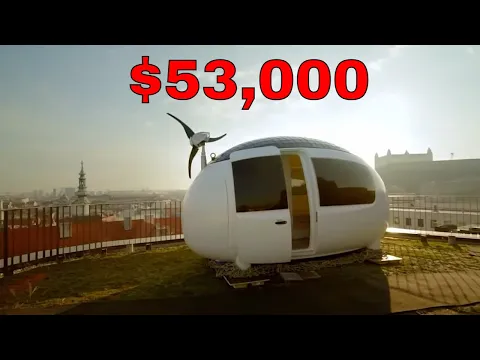
The project aims to make the most of the available space, utilizing multifunctional furniture and internal organization similar to that found in compact boats and motorhomes.
One of the most cited differentials by the company is precisely the presence of a complete bathroom inside the capsule. Even in a compact structure, the unit includes a toilet, sink, and shower integrated into the internal plumbing system.
This greatly expands the potential for using the micro-house in areas far from conventional urban infrastructure.
Water collection system helps in the autonomous operation of the unit
In addition to energy generation, Ecocapsule also works with systems linked to rational water use. The company informs that the capsule can use rainwater collection and filtration systems to supplement supply in isolated regions.
This type of resource further reinforces the micro-house’s proposal for autonomy. Another important aspect of the project is mobility.

The capsule was designed to be transported by trailers or trucks to remote locations, allowing installation without the need for traditional construction on the site.
This differentiates the project from conventional houses that depend on extensive foundations and prolonged construction.
Tiny houses and off-grid homes market grows with demand for compact housing
Ecocapsule is part of a market that has grown strongly in recent years. Tiny houses, micro-houses, and off-grid structures have gained space among consumers interested in reducing costs, living more minimally, or seeking greater energy independence.
In several countries, these units have also begun to be used as tourist accommodations, remote offices, and nature retreats. The capsule’s reduced size itself helps in consumption control.
Smaller spaces require less lighting, less air conditioning, and lower overall energy demand. This facilitates operation through compact renewable systems. The oval shape also contributes to the structure’s thermal efficiency.
Ecocapsule blends house, trailer, and futuristic capsule concepts
The project ended up attracting attention precisely because it doesn’t look like a conventional house. Visually, the structure resembles a mix between a space capsule, a futuristic trailer, and a portable scientific module.
This unusual design helped transform Ecocapsule into one of the most well-known micro-houses in the international off-grid segment. The growth of this type of solution reflects broader changes in the global real estate market.
In several countries, rising property prices, the search for sustainability, and cost reduction have driven interest in smaller, more efficient homes.
Micro-houses also attract people interested in minimalist living and reducing dependence on urban infrastructure. Perhaps the most interesting aspect of the project is precisely the integration between living and energy generation.
Instead of relying entirely on the traditional power grid, the capsule transforms the house itself into a small energy-producing unit. This brings architecture, sustainability, and energy engineering closer together within a single compact structure.
Ecocapsule’s futuristic micro-house attempts to transform mobility and autonomy into a new way of living
The company’s proposal shows how part of the housing industry is beginning to experiment with concepts very different from traditional constructions.
While conventional houses still depend on extensive foundations, grid connection, and months of construction, Ecocapsule bets on mobility, compactness, and energy independence.
In the end, the Slovak capsule represents an attempt to transform the very idea of housing into something smaller, transportable, and capable of producing part of the energy needed for its own survival.





Be the first to react!