






 Portuguese
  Spanish


In India, a gigantic drill opened the first hundred meters of a railway tunnel carved into the worst class of rock an engineer can encounter, terrain so unstable it collapses while being dug, turning every meter into a battle.
Drilling a tunnel is already difficult under normal conditions, but there is a type of terrain that makes any engineer lose sleep, the so-called Class V rock. It is the category reserved for the weakest, fractured, and unstable rocks, which instead of staying firm tend to collapse as soon as the excavation progresses. And it is exactly in this geological nightmare that India is digging.
In the railway project Indore-Budni, one of the excavation fronts, named Tunnel 2, managed to advance the first 100 meters in just two months, precisely through this treacherous type of rock. It may seem little, but drilling a hundred meters in terrain that collapses with every push of the machine is an engineering victory worth telling calmly.
The nightmare of drilling collapsing rock
To understand the challenge, one must imagine what happens inside. In firm rock, the machine advances and the tunnel stands on its own for a while, allowing time to reinforce the walls calmly. But in Class V rock, the terrain is like compacted wet sand, which gives way and slides, threatening to bury everything. Each meter excavated needs to be immediately supported to prevent collapse.
-
MIT Scientists Develop Method to Transform CO₂ into a Construction Ally, Boosting Cement Strength by 13% in 24 Hours for More Sustainable Infrastructure

-
Canadian City Builds 8 Tiny Homes in 72 Hours for Homeless Youth, Plans 40 Affordable Houses for Female-Led Families Amid Housing Crisis

-
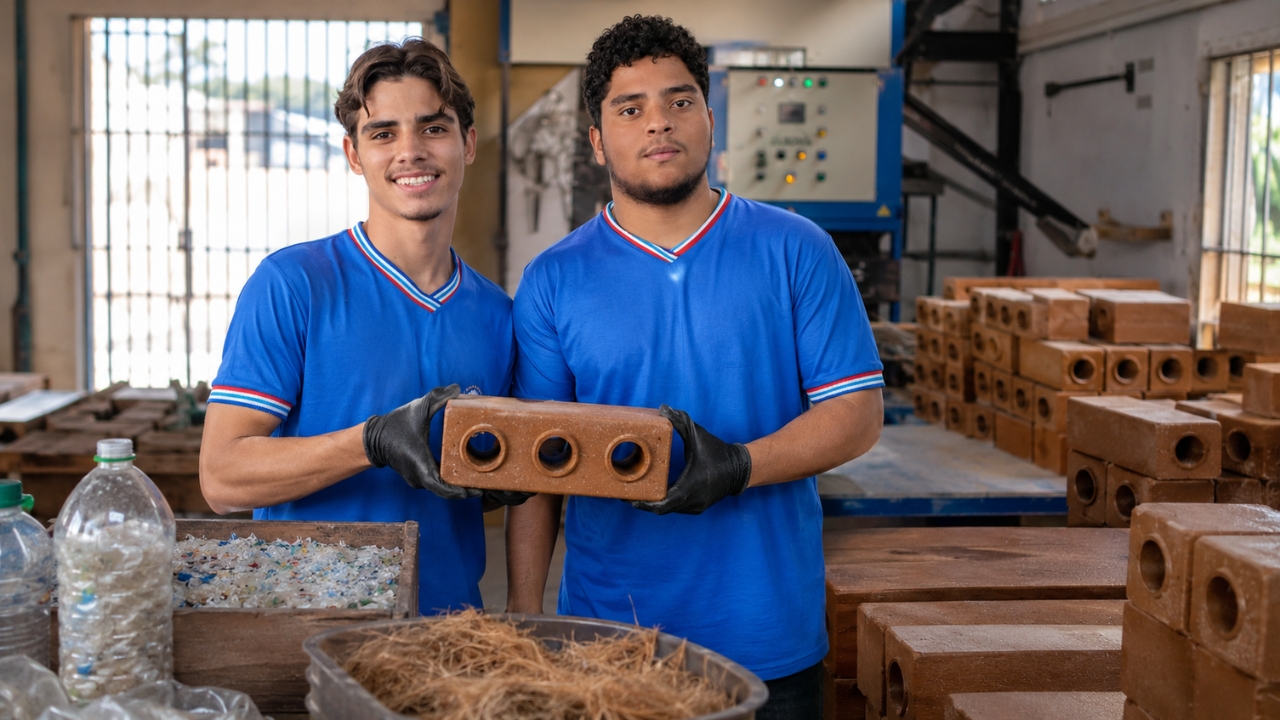
45-year-old Brazilian mother of 9 and grandmother of 12 receives 27 m² house made from recycled plastic, built in 15 hours with interlocking blocks and a recycled roof.
-
Ireland Installs 654 Modular Homes to Shelter 2,640 Ukrainian War Refugees, Offering a 60-Year Guarantee and a Model for Future Housing Crises


I confess I have enormous admiration for this type of invisible engineering. The public sees the train pass through the finished tunnel and cannot imagine the war it was to dig it. Drilling unstable rock requires a precise choreography between excavating, reinforcing, and moving forward, always with the risk of collapse lurking. It is the kind of work where patience and technique matter as much as the brute force of the machine.

The machine that eats mountains
A large part of this work is done by impressive machines, true underground mobile factories. A modern tunnel boring machine is a huge cylinder that advances by excavating the front with a rotating head full of teeth, while simultaneously assembling the tunnel walls behind it. It is capable of digging, removing debris, and lining the passage in a continuous operation, like a steel worm digesting the mountain.
But not even the most advanced machine solves everything alone when the rock is of the worst quality. In Class V terrain, each advance needs to be calculated to avoid causing collapses, and sometimes the excavation slows down on purpose to ensure safety. Advancing a hundred meters in these conditions shows that India’s engineering masters not only power but also the delicacy needed to outsmart a rock that does not want to cooperate.

Why this tunnel matters for India
All this underground struggle has a very concrete goal, to improve the railway connection of a region in India. Tunnels like the one on the Indore-Budni line shorten routes, allow trains to cross mountains in a straight line instead of going around them, and make the transportation of people and goods faster and more efficient. In a gigantic and populous country, every well-laid kilometer of railway makes a difference in the lives of millions.
India is experiencing a moment of strong investment in infrastructure, rushing to modernize its transport networks and sustain its own growth. Overcoming obstacles like Class V rock is part of this effort and shows the country’s willingness to face even the most hostile terrains to weave its railway network. Each completed tunnel is another piece of this ambition coming off the paper underground.
There is also an economic logic that justifies the heavy investment in drilling mountains. A straight tunnel allows trains to maintain speed and carry more weight, without the curves and climbs that a line going around the terrain would require. This saves fuel, time, and wear over decades of operation, offsetting the high cost of excavation. Therefore, even facing rock as bad as Class V, it is worth insisting on the route through the mountain, because the gain accumulates with each train that passes, year after year. It is the kind of calculation that only makes sense when thinking long-term and shows how a difficult work today can mean enormous savings tomorrow.

A hundred meters that are worth many
I imagine the tension and pride of the team upon completing those first hundred meters, knowing that every inch was taken from rock that wanted to collapse on them. It is the kind of achievement that does not make newspaper headlines but represents months of calculation, sweat, and nerves of steel for those who work in the dark, with tons of unstable earth weighing over their heads all the time.
The tunnel of the Indore-Budni line still has a long way to go, but these initial hundred meters prove that it is possible to tame even the worst rock with technique and persistence. When the trains finally cross this passage, few passengers will imagine the geological battle that was fought below so that their journey, up above, would be simply fast and smooth, an invisible comfort built on months of struggle against a rock that insisted on collapsing.
Have you ever stopped to think about the engineering battle hidden behind every tunnel we cross?







Be the first to react!