






 Portuguese
  Spanish


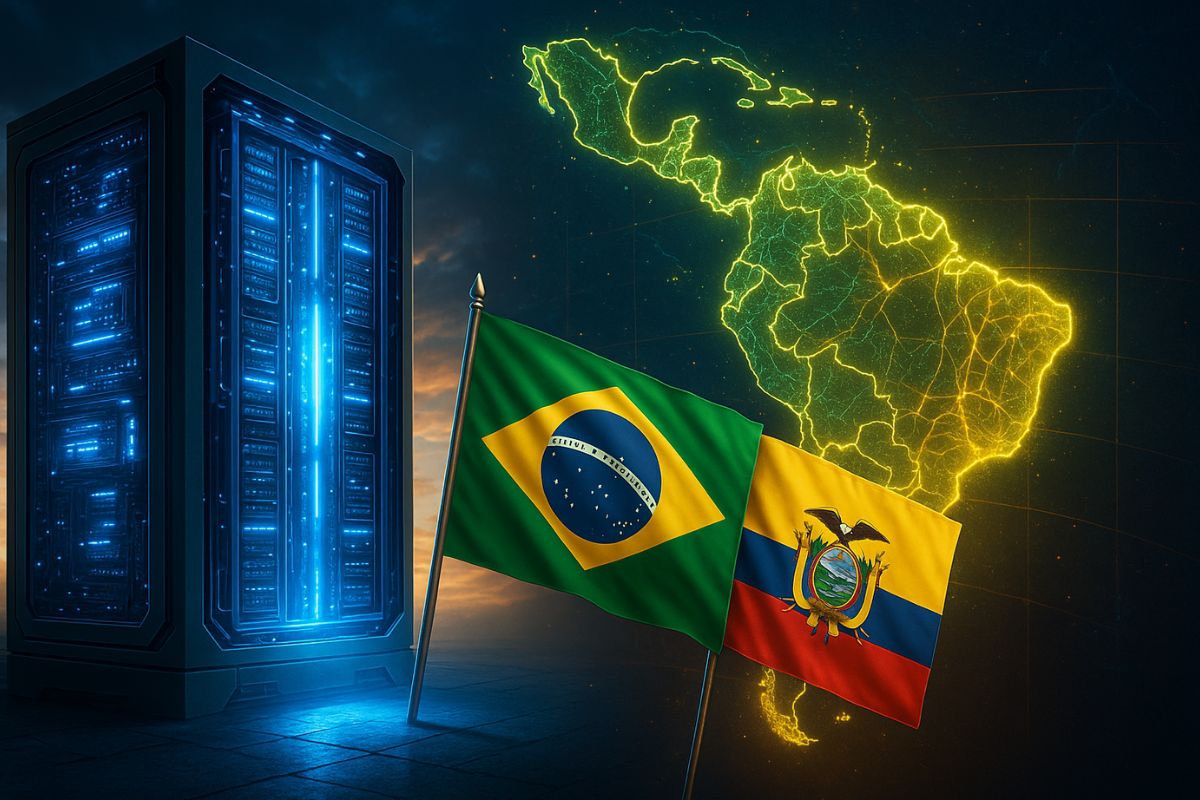

Brazil and Ecuador Sign Partnership to Create Latin American Artificial Intelligence. Agreement Foresees Investments in Research, Training, and Use of Supercomputers to Strengthen the Region’s Technological Sovereignty
Brazil and Ecuador have taken a strategic step by signing a memorandum of cooperation for the development of Latin American artificial intelligence. The agreement, signed in Brasília by Ministers Luciana Santos (Science, Technology and Innovation of Brazil) and Gabriela Sommerfeld (Foreign Relations of Ecuador), seeks to integrate regional efforts in research, professional training, and the use of high-performance computing infrastructure.
The partnership was celebrated during the official visit of Ecuadorian President Daniel Noboa to Brazil, welcomed by President Luiz Inácio Lula da Silva. According to the Brazilian government, the cooperation will allow countries in the region to advance in creating their own solutions in AI, reducing dependence on technologies controlled by industrialized nations.
Why Is Latin American Artificial Intelligence Strategic?
According to Minister Luciana Santos, technological dominance is a crucial element for the sovereignty of nations. Without investment in local innovation, countries in Latin America risk becoming mere consumers of external solutions, without autonomy over data and key processes for their economies.
-
China Develops Custom 140-Ton Electric Mining Truck with 770 kWh Swappable Battery, Deploys 290 Units in Xinjiang’s Largest Zinc Mine

-
Meta to Launch Arena, a New Prediction App Targeting 3.56 Billion Users, Competing with Polymarket and Kalshi

-
Scientist Challenges Famous Human Evolution Theory, Argues Homo Sapiens Evolved Gradually Over Thousands of Years
-
15-Year-Old American Builds Ocean Generator with PVC Pipe and 3D-Printed Propeller for $12, Wins National Prize, Presents at White House, and Makes Forbes 30 Under 30 List




In this context, Latin American artificial intelligence emerges as a tool for regional integration and affirmation of digital independence. The goal is to develop AI models adapted to the social, economic, and cultural realities of the region, capable of addressing needs from public health to smart agricultural systems.
Details of the Agreement Between Brazil and Ecuador
The memorandum of understanding foresees:
- Professional training in digital technologies and the use of supercomputers;
- Joint research projects in applied artificial intelligence;
- Sharing of existing infrastructure in Brazil with other countries in the region;
- Integration with the Brazilian Artificial Intelligence Plan (PBIA), which encompasses up to 100 collaborative AI projects by 2028, with an estimated investment of R$ 100 million.
In addition, Brazil commits to supporting at least 30 regional initiatives in AI, with an additional investment of R$ 50 million. Meanwhile, Ecuador will integrate the project into its Digital Transformation Policy 2025-2030, aligning national strategies with the demands of the Latin American bloc.
The Geopolitical Impact of Cooperation
The creation of a Latin American artificial intelligence also has a strong geopolitical dimension. The AI sector is currently dominated by the United States, China, and the European Union, competing not only for market share but also for leadership in global technological standards.
By strengthening South-South cooperation, Brazil and Ecuador signal their intention to carve out their own space in the international digital landscape. This includes enhancing autonomy in strategic sectors such as energy, health, defense, and agriculture, reducing external vulnerabilities.
The agreement between Brazil and Ecuador marks an important advance towards building a Latin American artificial intelligence, based on regional cooperation and strengthening digital sovereignty. More than a technological project, it represents a political and strategic movement to ensure that the countries in the region do not remain on the sidelines of the digital revolution.
And you, do you believe that Latin America can truly compete in developing its own artificial intelligence or will it always depend on major technological powers? Share your opinion in the comments — we want to hear from those who experience this debate in practice.






