






 Portuguese
  Spanish


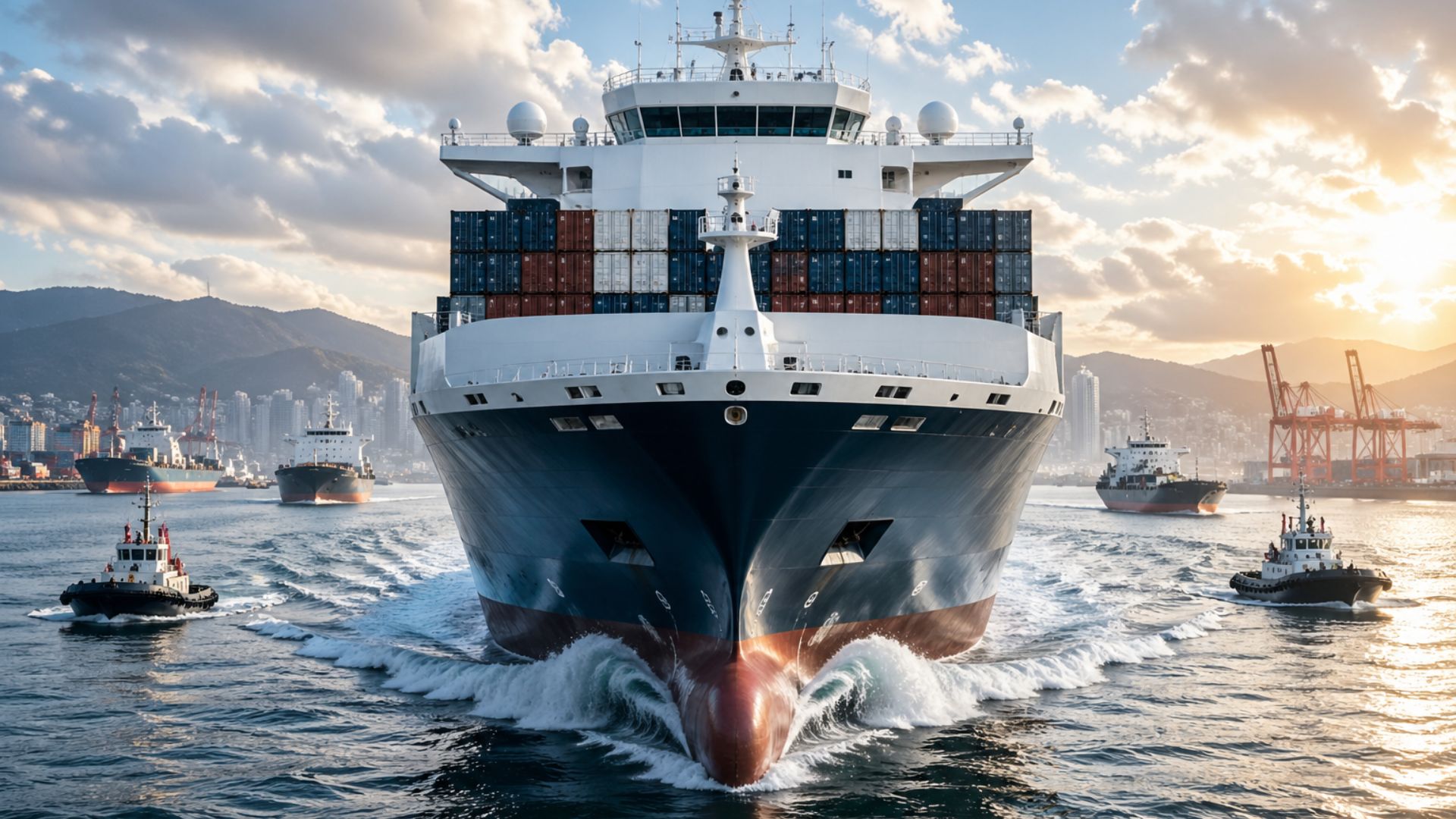

Maritime technology advances with real operation of autonomous ship in Japan, integrating sensors, navigation intelligence, and remote supervision on strategic commercial routes, amidst crew shortages and the pursuit of efficiency in coastal transport.
The coastal vessel GENBU entered regular service in Japan as the world’s first commercial container ship equipped with Level 4 autonomous navigation, according to the Nippon Foundation and Furuno, after a cycle of tests and technical validations conducted over the past few years.
Since January 30, 2026, the vessel has been operating with official authorization, after obtaining ClassNK certifications and passing inspection by Japan’s Ministry of Land, Infrastructure, Transport and Tourism, a milestone considered essential to enable the commercial use of the technology.
With approximately 134 meters in length and a capacity to transport up to 700 TEU, the GENBU connects Kobe to Tokyo, passing through Osaka, Nagoya, Shimizu, and Yokohama, integrating a route considered strategic for Japan’s domestic logistics flow.
-
Crab Trapped in Plastic Bottle for 62 Days Near Okinawa Highlights Little-Known Impact of Marine Pollution on Small Animals

-
Esperanza’s Bamboo Barrier in Oaxaca Redirects River and Reduces Erosion by 85% in Five Years

-
Family Builds Homemade Wind Turbine to Power Off-Grid Home, Video Reaches 555,000 Views on Ngô Thị Huyền’s Channel
-
Indian Brand Creates Sneakers from Recycled PET Bottles and Discarded Tires, Repurposing Over 1 Million Bottles and Raising $4 Million for Expansion





By being integrated into a regular cargo transport line, the ship ceases to be merely a technological experiment and begins to operate under real market conditions, including intense traffic, punctuality requirements, and integration with already consolidated logistics chains.
Autonomous ship enters commercial operation in Japan
Developed within the MEGURI2040 program, a Nippon Foundation initiative launched in 2020, the project seeks to address structural challenges in the Japanese maritime sector, such as the aging workforce and the increasing difficulty in replacing qualified crew members.
In this context, Level 4 autonomy allows the system to conduct navigation within previously established areas and conditions, reducing the need for continuous human intervention during transit in monitored sections.
From this basis, the onboard system can interpret the surrounding environment, cross-reference sensor information, and calculate alternative routes whenever it identifies potential risks or relevant changes in navigation conditions.
Responsible for a central part of the technological architecture, Furuno developed the so-called Maneuvering Support System, which gathers data from radar, AIS, and other instruments to consolidate information and support real-time operational decisions.
Intelligent system defines routes and avoids collisions
At the heart of this system is the SRU algorithm, short for Ship Routing Unit, which designs evasion routes by simultaneously considering the position of other vessels, identified obstacles, and the previously defined navigation plan.
With this, the model reduces the dependence on fragmented manual reading and centralizes risk analysis in an integrated interface, capable of suggesting maneuvers more quickly and consistently in scenarios of intense coastal traffic.
Although the degree of automation is high, the operation still relies on human supervision, especially through onshore centers that monitor navigation data and operational conditions throughout the voyage.
Furthermore, the Bridge Zero concept, known as B0, allows the bridge to operate without continuous crew presence during certain periods, provided the ship remains within previously authorized operational parameters.
To ensure this level of reliability, the project incorporates redundancy in critical systems, which prevents isolated failures from immediately compromising operation, keeping active the safety mechanisms necessary for automated navigation.
Certifications enable regular operation
Before commencing commercial operation, the GENBU underwent a rigorous certification process, receiving ClassNK approval on January 26, 2026, followed by inspection by the Japanese ministry just two days later, consolidating the vessel’s regulatory framework.
In this process, the vessel also received the AUTO-Nav2(All) notation, a recognition granted to ships with validated autonomous navigation systems, which reinforces the project’s technical credibility within the international maritime sector.
The regulatory basis that allowed this certification began to be structured in 2024, when the Japanese government created a working group dedicated to developing safety standards and specific protocols for this type of technology.
With the publication of these guidelines the following year, the way was paved for projects like GENBU to advance from the experimental phase to continuous commercial operation, within a regulated and supervised environment.
In this scenario, the ship begins to operate with real demands for reliability, interaction with port traffic, and strict adherence to logistical schedules, factors that differentiate practical application from isolated tests.
Crew Shortage Drives Maritime Automation
The adoption of autonomous navigation in Japan occurs amidst a significant structural challenge, as coastal transport accounts for about 40% of domestic cargo moved by weight, while the sector faces a shortage of professionals.
Given this context, the GENBU emerges not only as a technological innovation but also as an attempt to maintain route regularity and reduce pressure on increasingly smaller and aging crews.
By automating part of the operations, especially in repetitive and predictable sections, the system helps to alleviate the workload of onboard officers, without eliminating the need for human supervision.
In parallel, the bridge structure itself was redesigned to accommodate different operating modes, separating areas for autonomous monitoring, conventional navigation, and docking maneuvers into a single integrated environment.
Japanese Case Becomes Global Reference
The project’s relevance gains international dimension by demonstrating that a commercial vessel can operate autonomously on a busy coastal route, under real traffic conditions and logistical demands.
More than an experiment, the GENBU was conceived as part of a program aimed at the practical implementation of the technology, which expands the interest of other countries and operators in the maritime sector.
According to ClassNK, the certification granted to the ship represents an unprecedented milestone by recognizing autonomous navigation systems on medium and long-distance coastal routes, establishing a new benchmark for the segment.
With the GENBU’s entry into operation, autonomous navigation is beginning to consolidate as a viable alternative within maritime transport, although its expansion depends on new operational data and the evolution of international standards.


