






 Portuguese
  Spanish


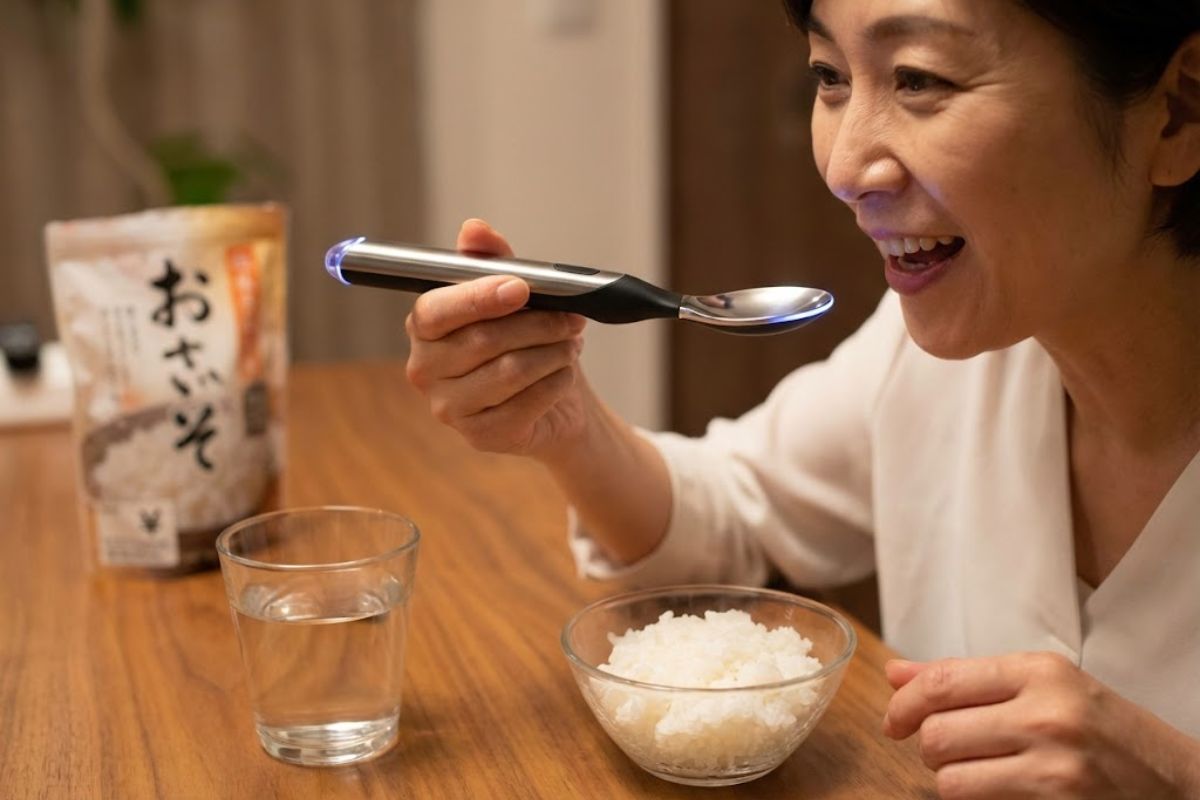


Developed by Kirin Holdings with Professor Homei Miyashita from Meiji University, the electric spoon was launched in Japan in 2024 and enhances the salty and umami flavors by acting on sodium ions with a weak electric field. Price ranges from 20 thousand to 27 thousand yen.
The electric spoon that started being sold in Japan in 2024 targets an automatic habit of those who find food tasteless: reaching for the salt shaker. The idea is to increase the sensation of saltiness without adding salt, using a controlled electric effect in the interaction between food and tongue.
With a price between 20 thousand and 27 thousand yen, which was presented as something in the range of US$ 650 to US$ 900, the electric spoon was developed by Kirin Holdings in partnership with Professor Homei Miyashita from Meiji University, and also inspired a mug with the same idea.
What The Electric Spoon Does To The Palate

The central promise of the electric spoon is to amplify the salty flavor and also enhance the umami in dishes that already have sodium present but seem “flat” to the palate. The goal is to change the perception, not the seasoning, making the food seem saltier without the step of pouring salt on top.
-
Top U.S. Bank Executive Fired After Dumping Trash on Street, Taking Bin Home, and Receiving Two Fines

-
Brazilian Man Arrested After FBI Alert on AI-Reported Plot to Harm Son and Attack Schools, Churches, and Officials
-
2,500-Year-Old Bronze Artifacts Unearthed by Detectorist in Eastern Poland

-
Over 5,000 Families Join Brazilian Network Providing 3D-Printed Prosthetics, Founded by Teacher Inspired by Daughter’s Limb Difference



The effect announced is especially relevant for those trying to reduce their salt intake in everyday life and feel that food “loses flavor.” The electric spoon serves as a shortcut to sensation, attempting to preserve the flavor experience while the amount of salt added can decrease.
How The Electric Field Works On Sodium Ions


The electric spoon is made of plastic and metal and operates with a very weak electric field between the spoon and the sodium molecules concentrated in the food and on the tongue itself. The electric field acts on the sodium ions, changing the way taste buds interpret the stimulus and thereby increasing the perception of saltiness.
A key point highlighted in the description of its operation is that it does not involve “shocking” the user. The idea is a controlled, low-intensity effect, applied to alter the sensory reading of the salt already present, raising the perceived saltiness and reinforcing the umami.
How Much It Costs And How Sales Began In Japan
The commercialization was presented as having started in Japan in 2024, following initial batches in limited editions. The price ranged between 20 thousand and 27 thousand yen, with the conversion mentioned in the range of US$ 650 to US$ 900, positioning the electric spoon as a high-ticket food tech accessory, not as a popular kitchen item.
Kirin Holdings has also advanced the concept by creating a mug with the same proposal, signaling a product line focused on flavor perception, and not just an isolated experiment.
Who Should Not Use The Electric Spoon
Despite the appeal of “salting without salt,” the electric spoon is not recommended for children or for individuals who use electronic medical devices, such as pacemakers. The restriction appears as a direct safety message, as the product involves an electric field, albeit weak.
The presence of this warning places the technology in the category of items that require basic screening for use, especially in homes with children or with users who depend on implanted electronic devices.
Would you have the courage to replace the salt shaker with an electric spoon at your daily lunch?


