Portuguese
  Spanish


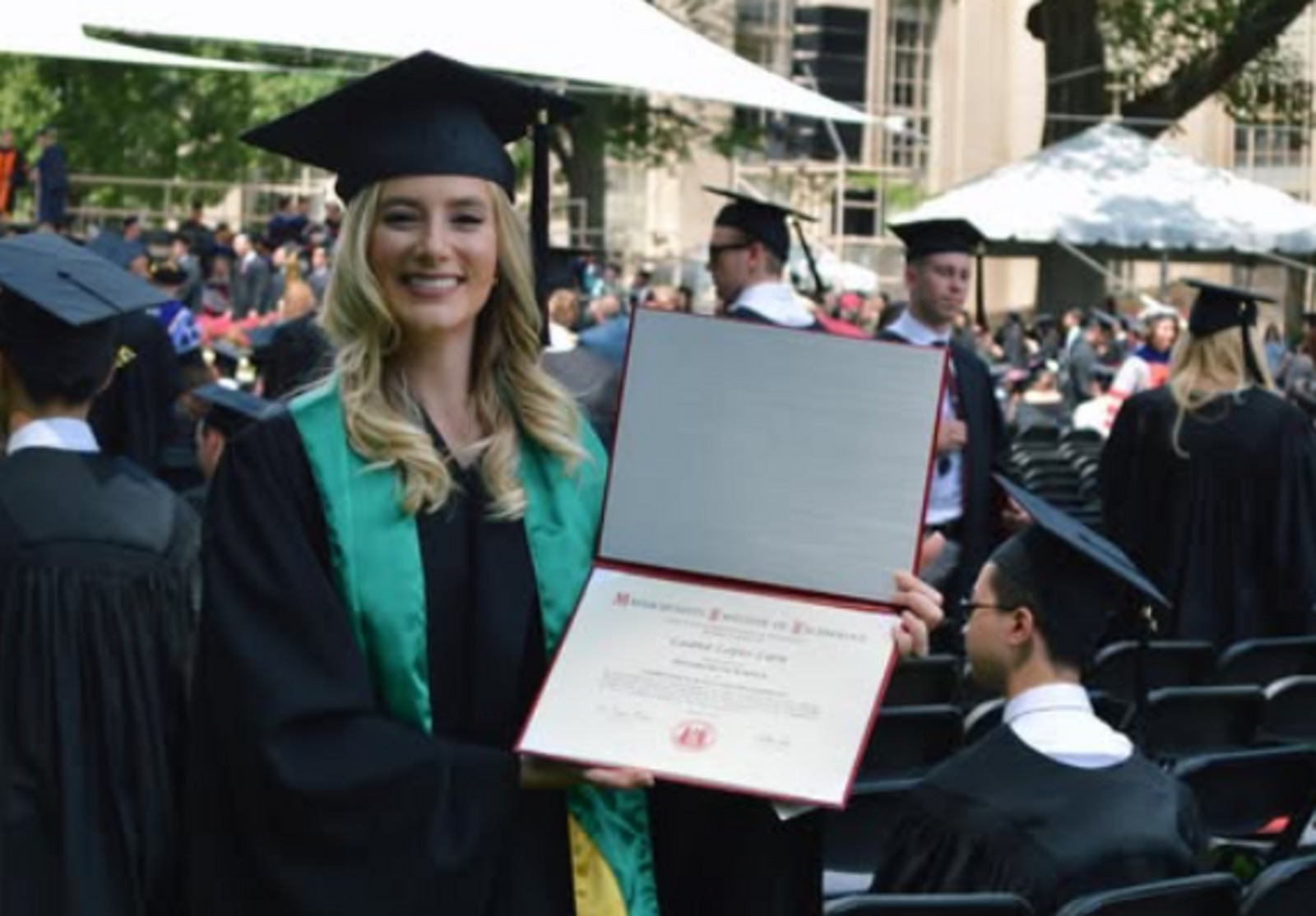

Luana Lopes Lara’s Journey Reveals How Years of Rigorous Ballet Training, Dedication to Studying, and a Decisive Partnership at MIT Resulted in the Creation of Kalshi, the Billion-Dollar Platform that Redefined the Prediction Market
Luana Lopes Lara’s story gained new weight after the startup she built with Tarek Mansour reached a market valuation of US$ 11 billion. The number grabs attention because it makes the 29-year-old Brazilian the youngest person in the world to become a billionaire with a company founded from scratch.
Still, she often remembers that nothing was harder than her formative years, when she studied ballet and faced a routine that few could endure.
During high school, Luana trained at the Bolshoi Theatre School in Brazil, where the physical rigor already shaped her discipline.
-
Steel Sphere Cylinder Achieves 14% Damping in Tests, Functions Without Sensors or Electricity, and Can Reduce Vibrations in Skyscrapers, Bridges, and Sensitive Equipment with US Patent Registered

-
Artist’s 15-Meter Lighthouse in the Mojave Desert, 160 km from the Sea, Intrigues Visitors with 19 km Range After Years of Bureaucracy

-
Bluetti AC70 Solar-Powered Station: Powers Fridge and Wi-Fi During Blackouts, Delivers 1,000W, 3,000 Charge Cycles, Priced at $900
-
Enormous Black Hole Phoenix A* Challenges Scientific Understanding with Mass of 100 Billion Suns, Surpassing Famous TON 618 in One of the Largest Known Galaxy Clusters


The teachers held lit cigarettes under her extended leg to measure how long she could keep it raised.
Moreover, dancers would hide shards of glass in others’ shoes to gain an advantage. All of this happened while she juggled academic classes from 7 AM to 12 PM and ballet from 1 PM to 9 PM.
Although ballet took up almost the entire day, Luana found motivation to study at night, driven by her mother, a math teacher, and her father, an electrical engineer.
This dedication resulted in medals like gold at the Brazilian Astronomy Olympiad and bronze at the Santa Catarina Math Olympiad.
After finishing high school, she spent nine months in Austria as a professional dancer.
Only then did she decide to leave the stage to follow a different path, embarking on a journey that would take her to the United States and MIT.
Luana, the Youngest Billionaire: From the Classroom to the Market
At MIT, Luana met Mansour, who had grown up in Lebanon and learned English on his own. The two shared interests and disciplines, making it easier for them to connect.
He recalls that she always sat in the front row in class, which inspired him to want to learn more alongside her.
The bond grew in 2018, when they secured internships at Five Rings Capital in New York. A nighttime walk back to the apartment changed everything because it was there that they imagined creating a market where people could trade probabilities of future events.
According to the billionaire, traders already considered external factors in their decisions, so it made sense to turn predictions into tradable products.
The first step was applying to Y Combinator, which approved the project in 2019. However, the legality of prediction markets was uncertain.
They consulted over 40 law firms, but no one wanted to take the case because the company was small and the founders were young.
During this period, the pandemic physically separated the duo. Luana managed the project from London, while Mansour remained in Beirut.
He experienced the explosion in the city’s port and spent his days helping neighbors while working through the nights.

The Search for Federal Approval
The turning point came when they found Jeff Bandman, a former CFTC employee. He agreed to help and guided the regulatory process.
In November 2020, Kalshi received permission to operate as an event contract market, something unprecedented.
This differentiated it from its main competitor, Polymarket, which did not have federal authorization and was fined in 2022.
The prediction market grew rapidly. In a few months, Kalshi jumped from a valuation of US$ 2 billion to US$ 11 billion.
The latest funding round, led by Paradigm, injected US$ 1 billion into the company. Investors such as Sequoia Capital, Andreessen Horowitz, and Y Combinator also participated.
Each founder holds about 12% of the company, which raised their individual worth to US$ 1.3 billion.
Theoretical trading volume increased eightfold since July, reaching US$ 5.8 billion in November.
Meanwhile, Polymarket also grew and reached a market valuation of US$ 9 billion. Therefore, the entire sector gained strength.
Legal Confrontation and Election Contracts
Despite advances, the regulatory battle is not over. The CFTC rejected Kalshi’s election contracts before the 2024 U.S. presidential election, arguing that they resembled gambling.
Luana proposed the idea of suing the agency, despite investor resistance.
In September 2024, the District Court ruled in favor of Kalshi. The company became the first, in over a century, authorized to offer regulated election contracts in the country.
This move helped multiply the user base. Bets exceeded US$ 500 million, mainly divided between Trump and Kamala Harris.
Platform users correctly predicted Trump’s victory a month before the election.
Polymarket also benefited from the moment, registering total bets of US$ 3.6 billion.
Growth After the Elections and New Alliances of the Billion-Dollar Company
After the election, some investors feared a drop in activity. However, Kalshi claims to trade over US$ 1 billion per week, with more than 90% of that volume coming from sports contracts, which gained traction quickly.
Donald Trump Jr. joined the company’s advisory board in January. He is also part of the board at Polymarket.
Additionally, Kalshi expanded partnerships with brokerages like Robinhood and Webull and received support from Susquehanna International Group to provide liquidity to the system.
More recently, the company made deals with the NHL and the StockX marketplace. It also began operating within the Solana ecosystem, strengthening its presence in the cryptocurrency market.
The new capital should finance the expansion of integrations with brokerages and partnerships with media outlets.
State Challenges and Renewed Confidence
Despite the good moment, some U.S. states are questioning sports contracts and have opened cases arguing that they should be regulated and taxed locally.
Nevertheless, investors believe that the founding duo will know how to face this further obstacle because they have already overcome greater challenges.
According to Michael Seibel, who has followed Kalshi’s evolution from the beginning, few companies have shown such a great potential for global impact.
For him, what started as an idea during a walk now represents a new way to understand predictions and markets.
The Strength That Came from Ballet
Many who worked with Luana attribute her resilience to dance training. According to Alex Immerman from a16z, ballet teaches how to cope with rejection and constant pressure.
Thus, the young billionaire would carry into business the same calmness she faced challenges on stage.
The journey illustrates how tough experiences, intense studies, and risky decisions built the path that now places her among the most talked-about names in the tech world.
Kalshi continues to grow, and its founder remains at the helm because she believes there is still room to turn predictions into a broad and accessible market.
With information from Forbes.