Portuguese
  Spanish


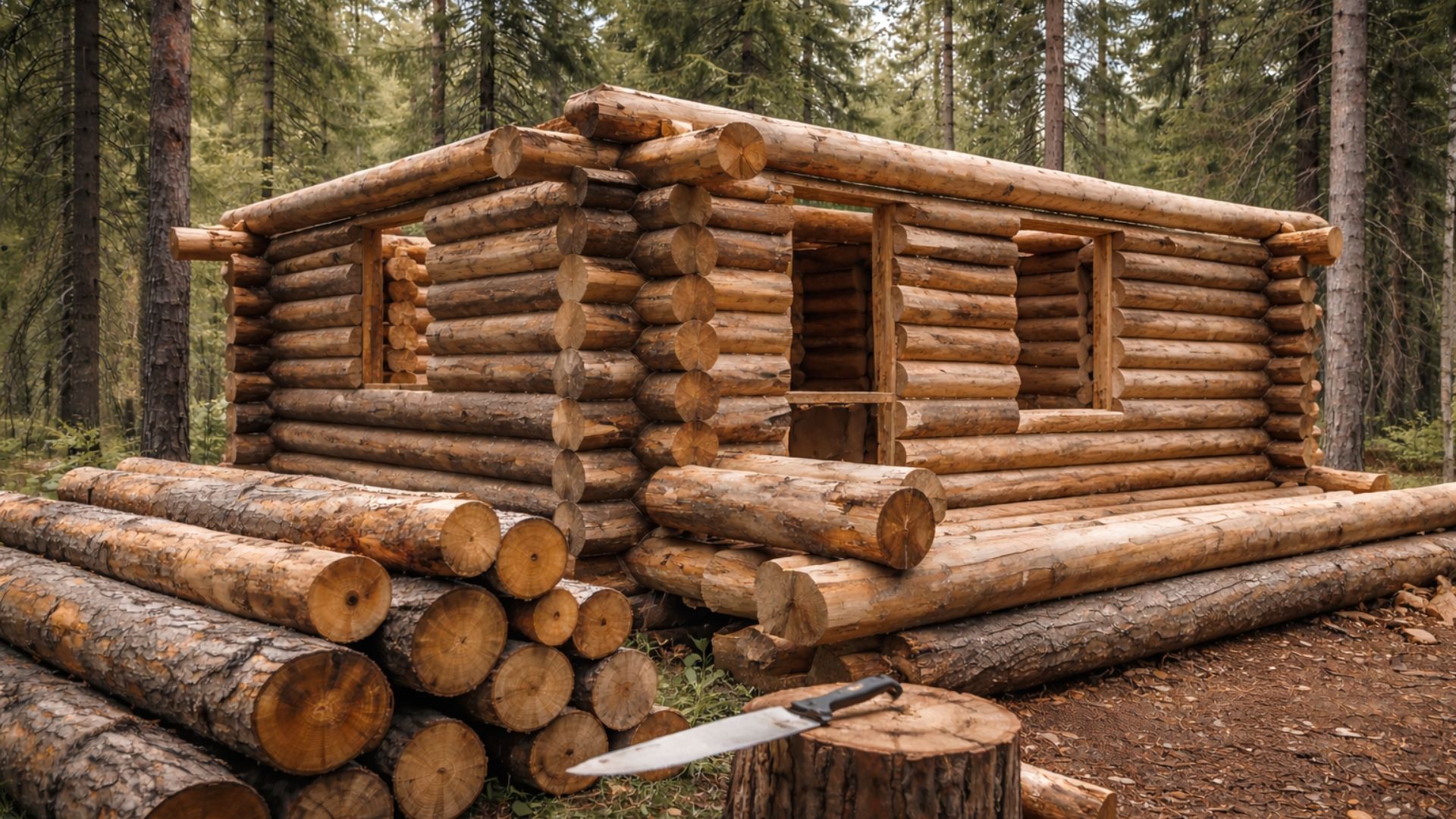


Project In The Forest Of Sweden Shows Slow And Handcrafted Construction, With A Log Cabin Built Almost Entirely By A Single Person, Hand Tools, Video Documentation, And A Routine Far From Urban Infrastructure, Attracting Attention For The Traditional Method.
A construction project taking place far from any conventional building site has been attracting attention in Sweden.
The young Swede Erik Grankvist decided to build, practically by himself, a traditional log cabin in a wooded area in the Västmanland region, near Sala.
The proposal, described by local media, is to carry out the work outside the urban model, using traditional methods and hand tools, such as axe and saw, avoiding the use of modern machinery as a rule of the process.
-
Brazilian Startup Sells Nearly 9 Million Surprise Bags of Near-Expiry Food, Prevents Thousands of Tons of Waste, Aiming for $42 Million Revenue by 2026

-
How to Prevent Brown Recluse Spider Bites: Common Hiding Spots and Free Tips to Reduce Risks

-
Natto: The Unusual Japanese Superfood Gaining Popularity on Social Media and Driving Record Exports
-
Brazilian Mayor Goes Undercover as Homeless for 24 Hours to Assess Public Services





The initiative gained visibility because the progress of the work began to be documented and followed by large audiences on the internet, with videos showing the work in stages and the construction routine in an isolated environment.
The attention is not only focused on the final appearance of the cabin but on the journey to get there: the felling and utilization of wood, the fitting of the logs, the rhythm determined by physical effort and weather, and the deliberate choice to keep the project simple and independent.
Hand Tools And Traditional Techniques
Reports from the regional Swedish press place the start of the project in February 2019, when Grankvist went to the forest area north of Sala with hand tools and the goal of building a timmerstuga, a Swedish term used for log houses made with traditional techniques.
The plan, according to these reports, was to work without machines, repeating solutions used before industrial construction became standard in the country.
The decision is also described as a life change after school: upon completing his studies, he sought a different, long-term project, with a clear goal of building a log house from the ground up.
The choice of axe, saw, and other hand tools is not an aesthetic detail but the central point of the method.

The pace of execution is conditioned by tasks that, in an urban building site, would be accelerated by equipment: preparing the material, leveling, adjusting fittings, and transporting pieces.
In this logic, “building” includes, in practice, the very obtaining and preparing of the wood, respecting the time of individual labor and the typical access limitations of work in the woods.
The result is a process that, even with constant progress, does not resolve in weeks: it extends over years, as the title suggests, because each stage depends on repetition and precision for the structure to remain firm.
The Sala Region And The Decision To Build Outside The Urban Standard
According to local coverage, the cabin is being built in an area connected to the family, which reduces access barriers to the land but does not eliminate the physical and technical demands of the work.
The description by Swedish media emphasizes that the work takes place far from common conveniences and that the decision to avoid machines brings the project closer to a practical exercise of traditional carpentry, focusing on resource utilization and on controlling the process by the builder himself.
Videos And Audience: How The Work Became A Narrative
The impact is also linked to the type of narrative that is formed when a project develops in chapters.
The construction of a log house is usually understood as a collective achievement, with teams, equipment, and timelines defined by budget.
In Grankvist’s case, the story revolves around a single character, an environment that imposes restrictions, and a method that slows down the execution.
Instead of a contractor’s schedule, the sequence is defined by visible stages: preparing the site, raising the first logs, adjusting fittings, moving slowly through the structure, and returning repeatedly to the same point until the piece “fits” correctly.
Another reason for the interest is the combination of tradition and digital platform.

The construction is described as traditional in method but modern in the way it circulates: the process is shown through videos, with an audience that does not depend on daily television coverage.
Thus, an old job in content, such as log carpentry, becomes a contemporary product in form, capable of reaching audiences outside of Sweden.
In reports from Swedish public television, the case is presented precisely as a project that has begun to attract the attention of many people following the step-by-step online while the work continues.
Work Time And What The Reports Confirm
The fact that the project is not finished in two years is part of the story itself.
Instead of signaling failure, the long time is treated as an expected consequence when the rule is to do everything oneself and maintain traditional methods.
By highlighting that, after two years, he still hadn’t finished, the coverage reinforces the character of prolonged undertaking and the distance between this type of construction and the urban model of tight deadlines.
The didactic dimension also attracts attention: for those following, the value lies not only in the “before and after” but in demonstrating how a log cabin takes shape through fittings, cuts, and repetition of tasks.
Debate On Self-Sufficiency And Simple Living
At the same time, the case exposes the limits and choices of this type of project.
The Swedish press presents the work as an experiment in simplicity and independence, with an idea of utilizing resources and keeping the construction as autonomous as possible.
This tends to generate recurring debates among readers: to what extent is it possible to replicate the method, what is particular to the local context, which parts require prior knowledge, and which rely more on persistence and time.
For Brazilian readers, the hook often works by contrast: while construction in the country is marked by rising costs, bureaucracy, logistics of materials, and dependence on services, the story foregrounds a work conducted in an artisanal and patient manner, where the main “infrastructure” is the decision to continue.
The interest does not come from a promise of a universal formula but from following a real and verifiable process, with a defined start, identified location, and method described by local sources, in addition to public documentation.
What remains open, and thus continues to draw attention, is the curiosity about the boundary between inspiration and practical possibility: after watching someone spend years building a house with an axe and saw in the middle of the forest, which part of this idea seems most difficult for those living in a city — the physical work, the time required, or the willingness to forgo the urban standard?